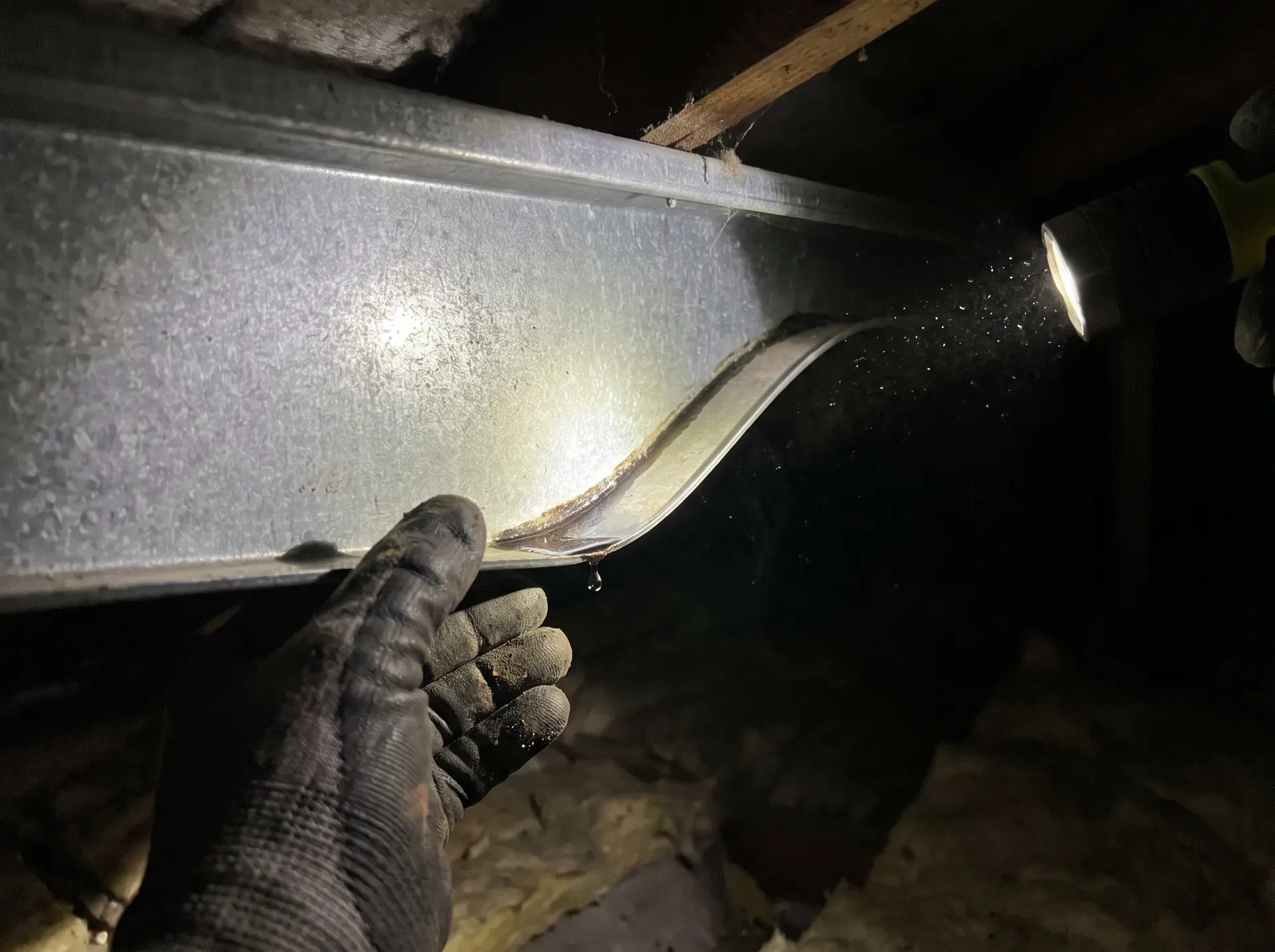
Metal Roof Leak Repair
Water shows up on a ceiling a long way from where it got in. We work backwards from the stain to the real entry point, repair that detail, and leave the twenty other places somebody would have sealed alone.
See how we fix it
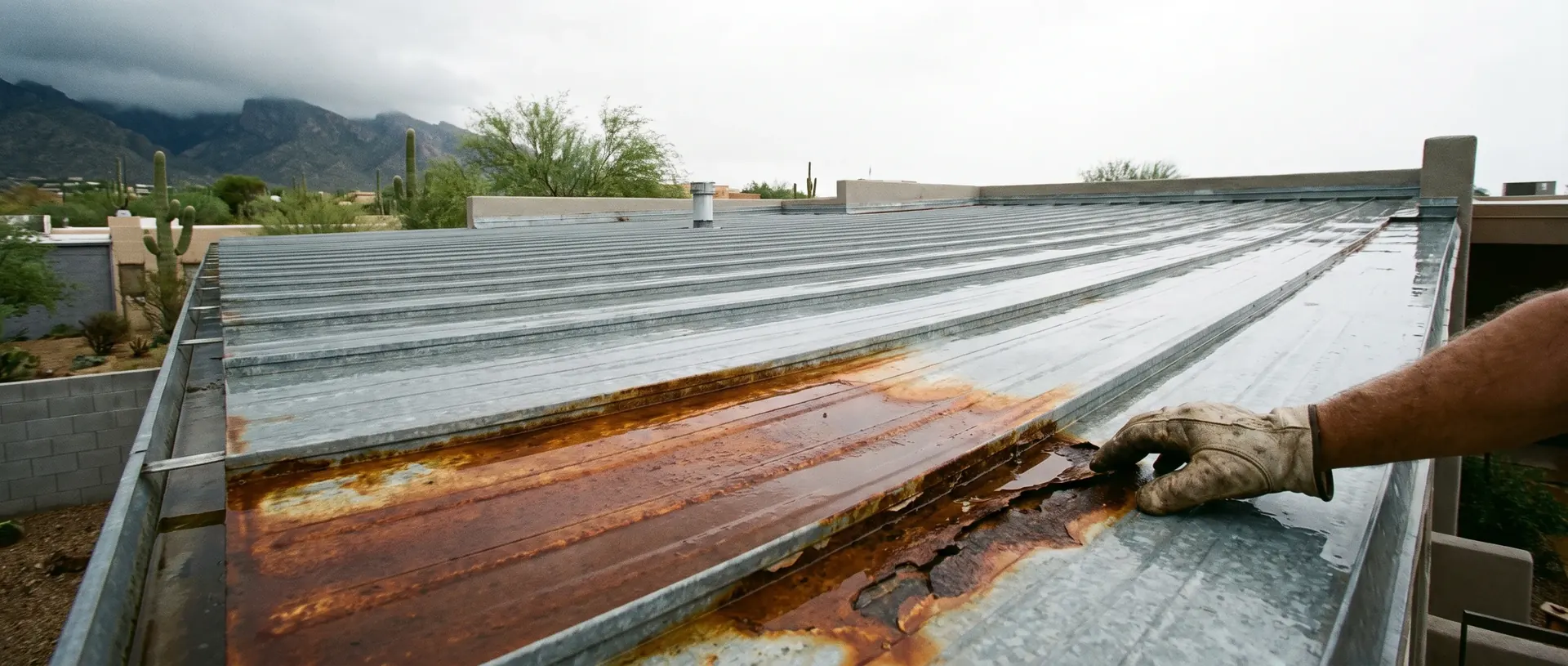
Rust on a desert roof looks worse than it usually is, right up until the day it is worse than it looks. The difference is whether the metal is still there.
People point at an orange patch on a roof and ask whether it needs replacing. The honest answer depends entirely on what stage the corrosion has reached, and the stages are genuinely different problems.
Surface rust on a coated steel panel is a coating failure. The paint film has broken somewhere, usually at a cut edge, a scratch or a fastener hole, and the steel underneath is oxidising where it has been exposed. The panel is still full thickness. Cleaned back and recoated, that roof carries on.
Progressive corrosion is when the rust has been feeding for years, has crept back under the paint film and is lifting it, and has started to reduce the actual thickness of the steel. This is still repairable but the window is closing, and treating it properly means getting back to sound metal rather than painting over the colour.
Perforation is when the corrosion has gone through. Now there is a hole, or an area thin enough that there shortly will be. No coating fixes this. It is a panel section repair or, if it is widespread, a roof that has genuinely reached the end.
Tucson helps in one way and hurts in another. There is no salt air and comparatively little standing moisture, so corrosion here progresses more slowly than it does on a coast. But the ultraviolet load is brutal on the coating that is supposed to be preventing it, and the low ribs hold water for days after a monsoon cell in exactly the places that are already vulnerable.
Anywhere the panel was cut or drilled after it was coated, the protective layer stops at the cut. Eaves, rakes, valleys, penetration cut outs and every fastener hole. Corrosion here is normal ageing rather than a fault, and it is where nearly all of it begins.
A tool dragged across the panel, a ladder foot, something dropped, or damage from when it went on. The mark can be invisible from the ground for years and then bloom into a spreading patch that feathers along the original scratch line.
Low slope sections, valleys, the uphill side of a curb, and anywhere debris collects. Water that cannot leave sits against the panel for days after a storm. In a climate where everything else dries out in an hour, these are the spots that do not.
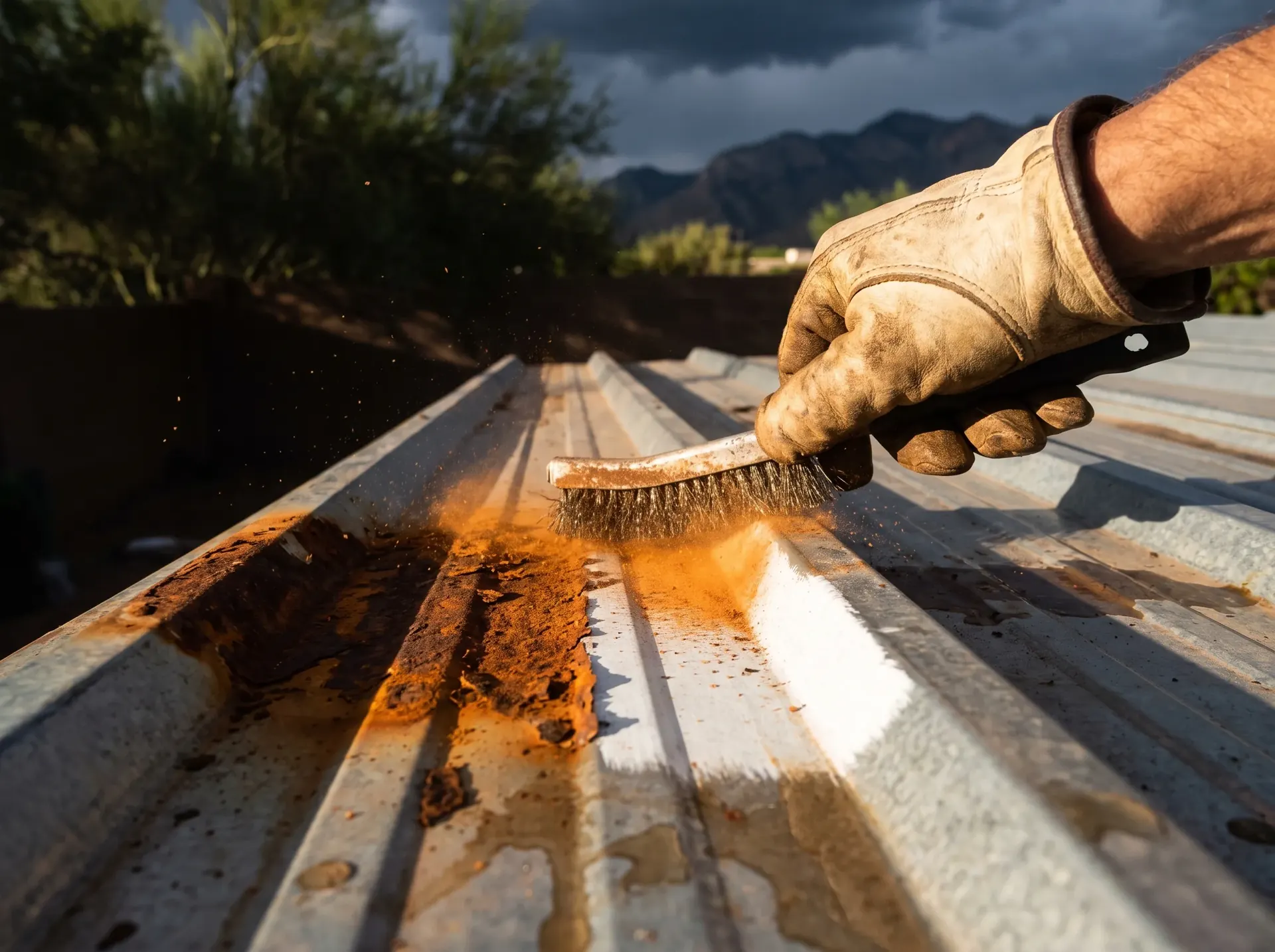
Rust along every cut edge is a different story from rust in the middle of a panel, and a great deal less serious.
Whether the steel is still sound underneath is the entire question, and it is answered by probing and sounding it, not by looking at the colour.
Corrosion that started because water stands somewhere will come back after any repair unless the reason it stands is dealt with too.
Loose material removed, the area cut back to clean sound metal, cleaned and treated. Preparation is most of this job and it is what almost every failed rust repair skipped.
Sound steel gets treated and recoated. Perforated or badly thinned areas get a panel section, because nothing you paint on will bridge a hole for long.
How far along the other cut edges are, and whether this is an isolated repair or the first of several.
A great many desert metal roofs look far worse than they are, and get replaced on the strength of it. Edge rust on a full thickness panel is a maintenance job. We are not going to tell you otherwise, because there is no replacement contract at the end of it for us.
The opposite mistake is coating a roof that has already started to perforate, which buys a season and wastes the money. If the metal has gone, we say so plainly.
Cutting back to sound material is slow, unglamorous and the entire reason a rust repair lasts. A repair that skips it looks identical on the day and different within a year.
If the corrosion started because water stands behind a curb or a blocked valley, the drainage gets dealt with. Otherwise you have bought exactly the same repair again on a schedule.
Whatever the detail that failed, the two jobs below are where most of this work actually lands. If the description above did not quite match your roof, start with one of them.
Water shows up on a ceiling a long way from where it got in. We work backwards from the stain to the real entry point, repair that detail, and leave the twenty other places somebody would have sealed alone.
See how we fix it
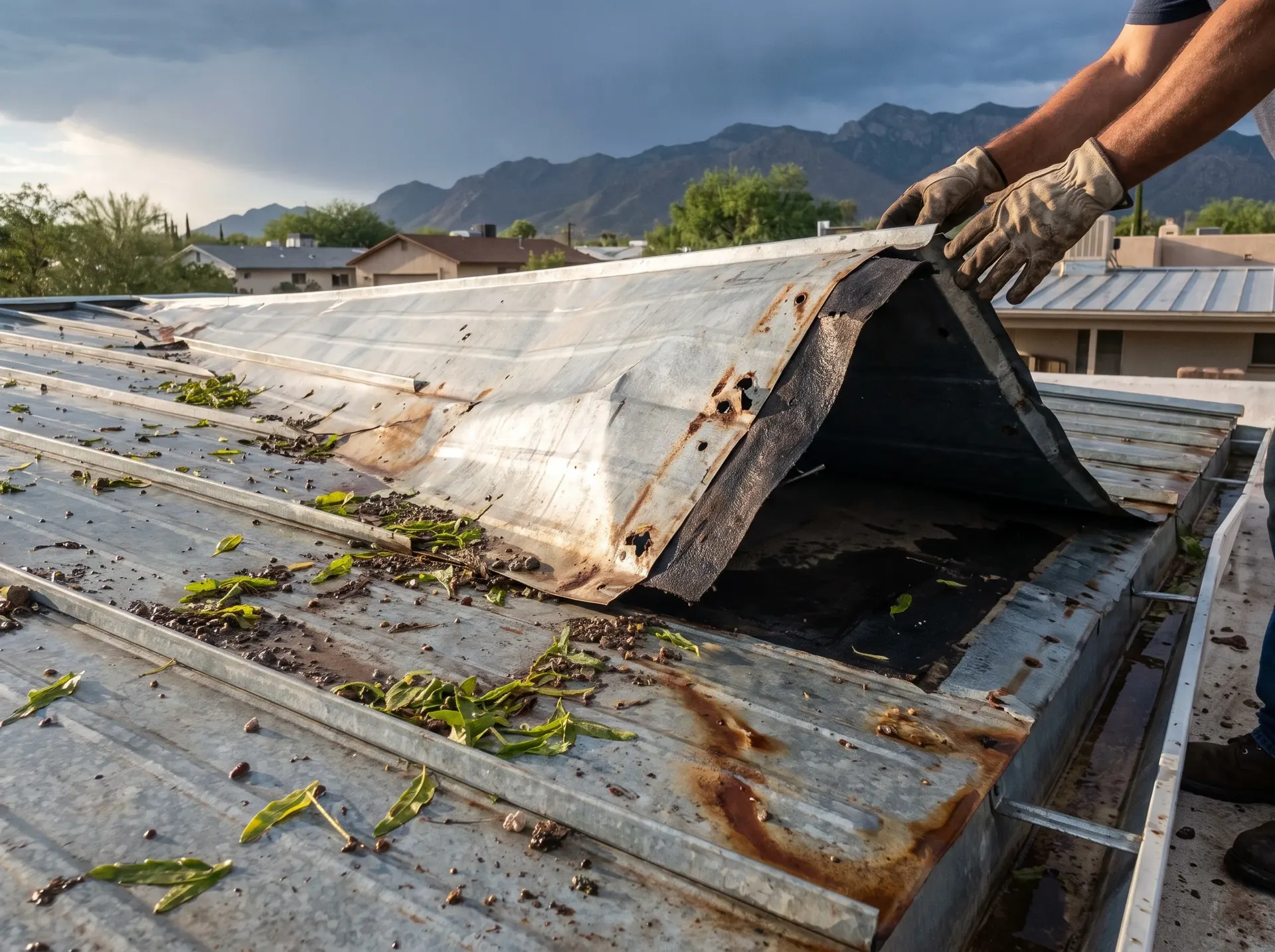
Lifted panel edges, fastener holes torn into slots by wind loading, driven rain forced under laps, and hail bruising out toward the Rincons. Storms break some things and simply expose others.
See how we fix it
Get a second opinion from somebody who does not sell roofs. Send us photographs and tell us roughly how old it is.
We have not collected any reviews yet. When we do they will appear here in full, in the customer's own words.
Usually, and more often than people expect. If the steel still has its thickness, the corrosion is cleaned back to sound material, treated and recoated, and the roof carries on. What cannot be repaired by coating is metal that has already perforated or thinned badly, and that needs the section replaced. The question is never how much rust there is, it is whether the steel is still there.
The loose flaking scale can and should be removed, but scraping alone is not the repair. What is underneath has to be taken back to clean, sound metal and then treated and coated, because bare steel left exposed in this climate simply starts again. Scraping and repainting without treating is why so many rust repairs reappear within a year or two.
By preparing it, not by sealing it. Remove loose material, clean back to sound metal, treat the surface so the remaining oxidation is stabilised, then apply a coating system suited to metal that moves as much as this does. Any product applied straight onto active rust is bonding to a layer that is itself letting go of the steel, which is why it lifts.
Less important than the preparation underneath it. Any competent metal roof coating system will perform if it goes onto clean, sound, properly treated steel, and the best product available will fail if it goes onto loose rust. What the coating does need is enough flexibility to survive the daily thermal movement here and enough ultraviolet resistance to last, which rules out ordinary paint.
It will adhere to the rust, which is the problem. The rust is not firmly attached to the steel, so the whole layer eventually lifts together and takes the coating with it. It is a reasonable emergency measure to slow water down. It is not a rust repair, and it has to be removed before a proper one can be done.
On a roof this is mechanical rather than chemical for the most part. Loose scale comes off with wire brushing or abrasive work back to sound metal, and then a rust converting treatment stabilises what is left in the pitting. Household remedies that work on small items are not practical or safe across a roof area, and several of them leave residues that stop a coating bonding.
Anywhere else in Pima County, call and ask.
Something went wrong sending that. Please call (520) 555-0132.
We have your details. If you said water is coming in right now, that goes ahead of scheduled work. Otherwise expect a call back during opening hours.