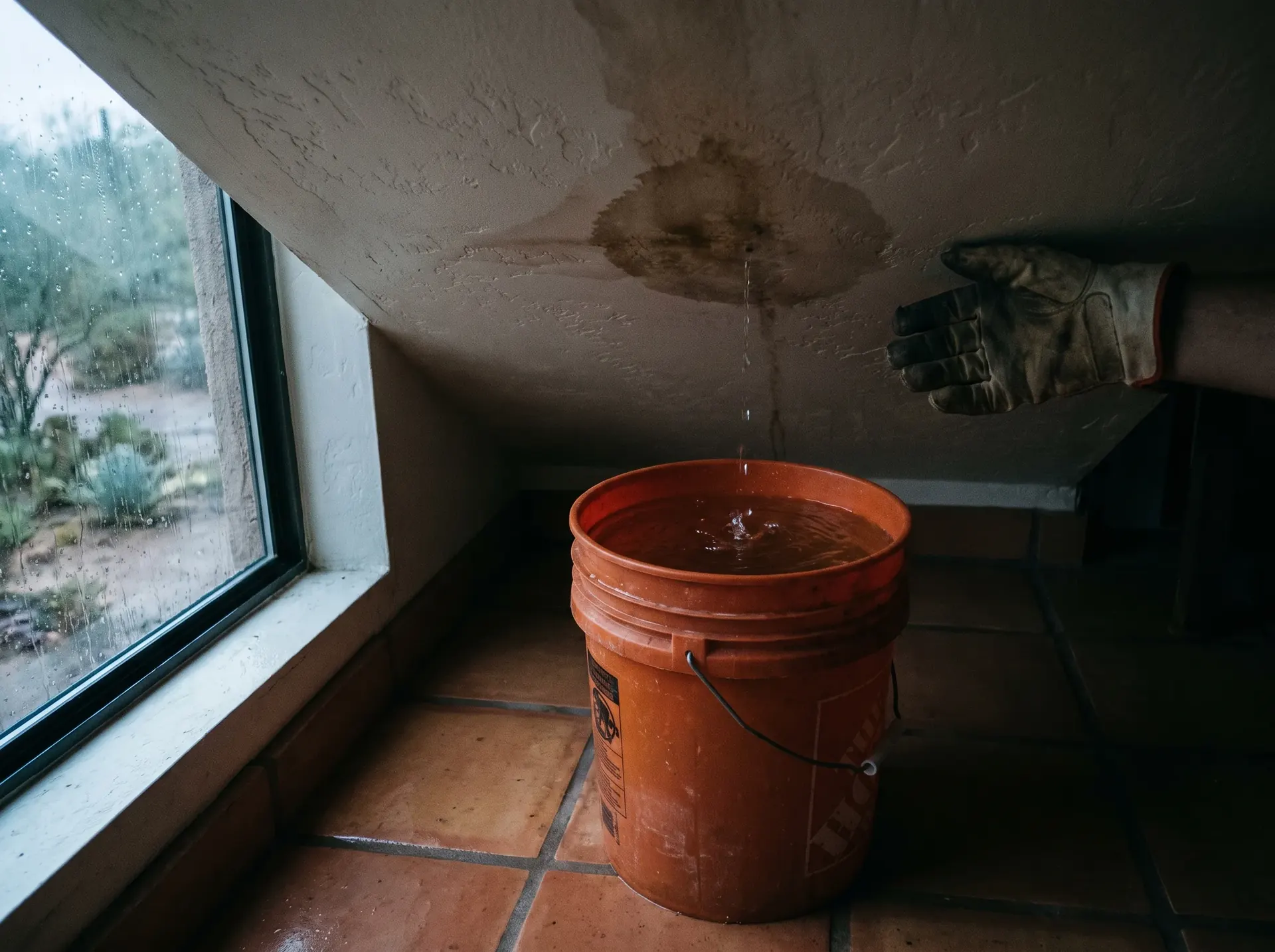
Emergency Roof Leak Repair
Water coming into the house while the storm is still going. We stabilise the intrusion, then come back and do the repair properly once the roof is dry enough to stand on safely.
See how we fix it
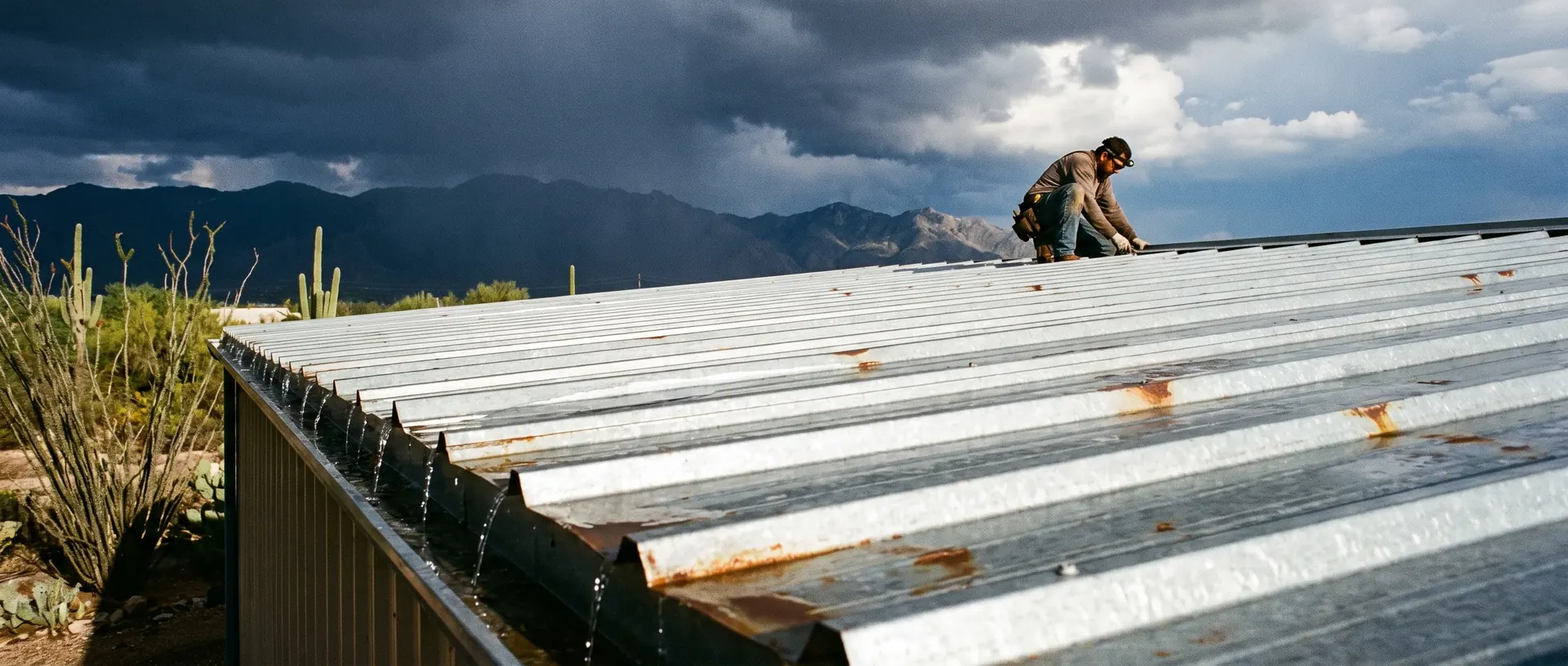
The stain on your ceiling is almost never underneath the hole. We work backwards to where the water actually gets in, and we repair that.
This is the single thing that makes a metal roof leak harder to find than any other kind, and it is the reason so many of them get repaired twice.
Water comes through a small opening high on the roof, lands on the top of a purlin or a batten, and then runs sideways along that steel. It can travel a long way. It only drops when it reaches an obstruction, a fastener, a low point or the end of the run. Then it finds the ceiling, and the ceiling is where you see it.
So the stain in your hallway may be telling you almost nothing about where the hole is. The common repair is to seal everything within a few feet of the ceiling stain, which does no harm and no good, because the actual entry point is still open. The leak comes back with the next storm that has wind behind it, and by then everyone has decided the roof is finished.
Finding it properly means working the other way round. Get under the roof, find the water track, follow it back uphill to where it starts, and only then go up top and look at what is directly above that point. It takes longer than sealing a ceiling. It is also the only version of this job that stays fixed.
Pipe boots, swamp cooler curbs, vents, skylights and solar mounts. Somebody cut a hole in a perfectly good roof and wrapped a detail around it, and that detail has a shorter life than the panel does. This is the first place we look and it is the answer more often than everything else combined.
Hundreds of screws, each sealed by a rubber washer that heat and ultraviolet are steadily destroying, and a side lap or end lap every few feet. Any one of them can be the entry point. On an older exposed fastener roof it is frequently several at once, which is why the leak seems to move around.
Where the roof meets something that is not the roof. Headwall and sidewall flashing, counterflashing into stucco, valleys, and the point where a patio cover ties into the house. These are the details that get done last and worst, and they leak in driven rain long before they leak in ordinary rain.
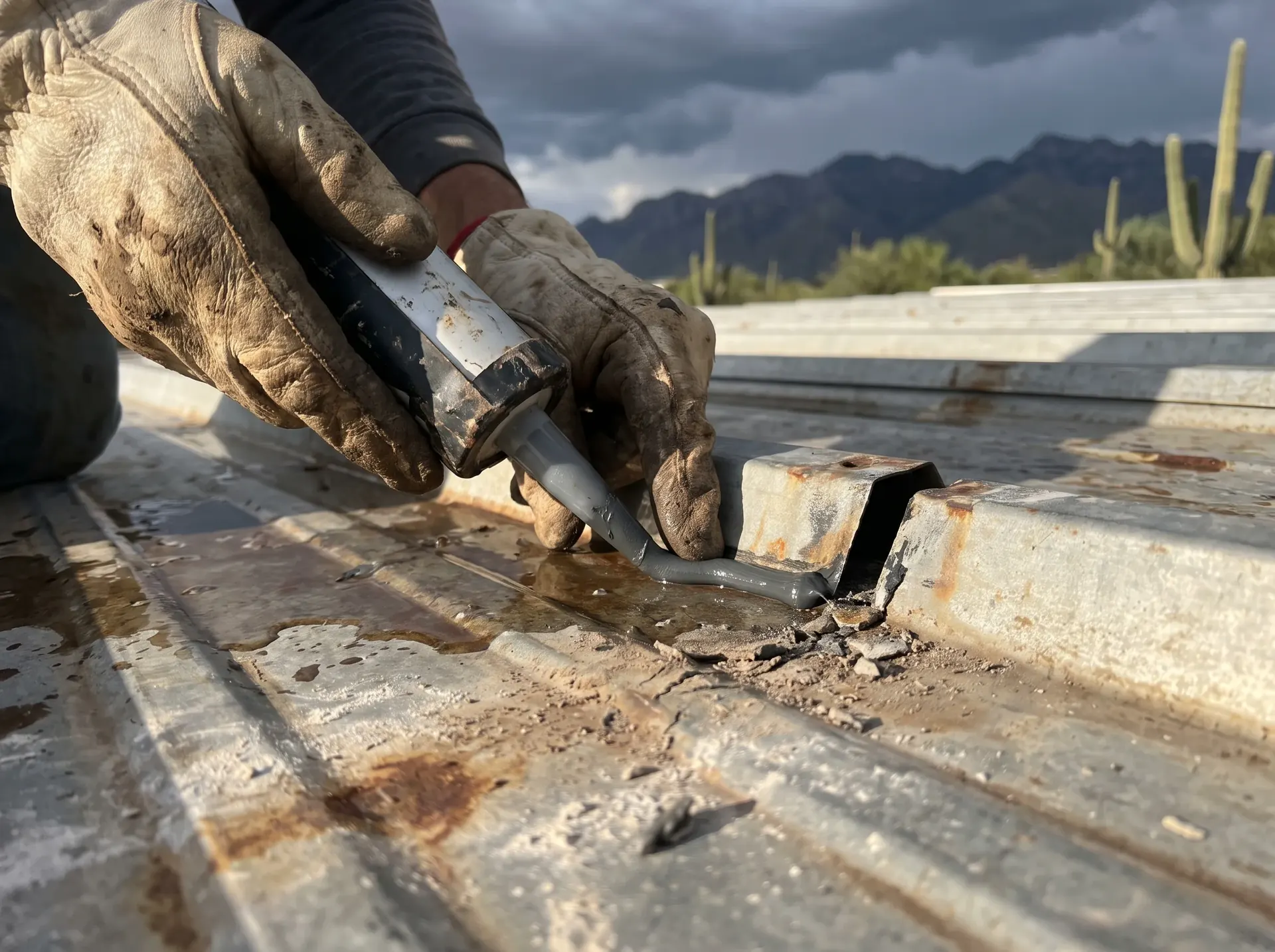
The location of the stain, the timing, and the weather it takes. If it only happens in a monsoon cell with wind behind it, we are looking for a different kind of failure than if it drips in any rain at all.
Find where the water arrives, then find the track it arrived along. On a metal roof this step is most of the diagnosis.
Along the purlin, the batten or the underside of the deck, uphill, to where the water first appeared. That point is directly under the entry.
Now the search area is a few square feet rather than a whole roof, and the failure is usually obvious once you are standing on it.
Not everything nearby. A repair that covers a wide area to be safe is a repair that hides the next failure instead of preventing it.
Everything we photographed, with an honest view on what has years left and what does not.
We do not install metal roofs and we do not replace them. There is no larger job at the end of this for us, which means the diagnosis is not being steered toward one.
Running sealant over every fastener within reach of a ceiling stain is quick, looks like work, and buries the evidence. When the leak returns, the next person has nothing to read. We repair the detail we found and leave the rest of the roof legible.
Low slope roofs, long purlin runs and driven monsoon rain make lateral tracking the rule on Tucson metal roofs. Anyone treating the ceiling stain as the location has not looked at many of these.
Every detail we looked at, including the ones that were fine. It is your roof and you should be able to see the condition of it without taking anyone's word for it.
Finding the failure is one job. Putting it right is usually one of these, and which one depends on what the roof turned out to be doing.
Water coming into the house while the storm is still going. We stabilise the intrusion, then come back and do the repair properly once the roof is dry enough to stand on safely.
See how we fix it
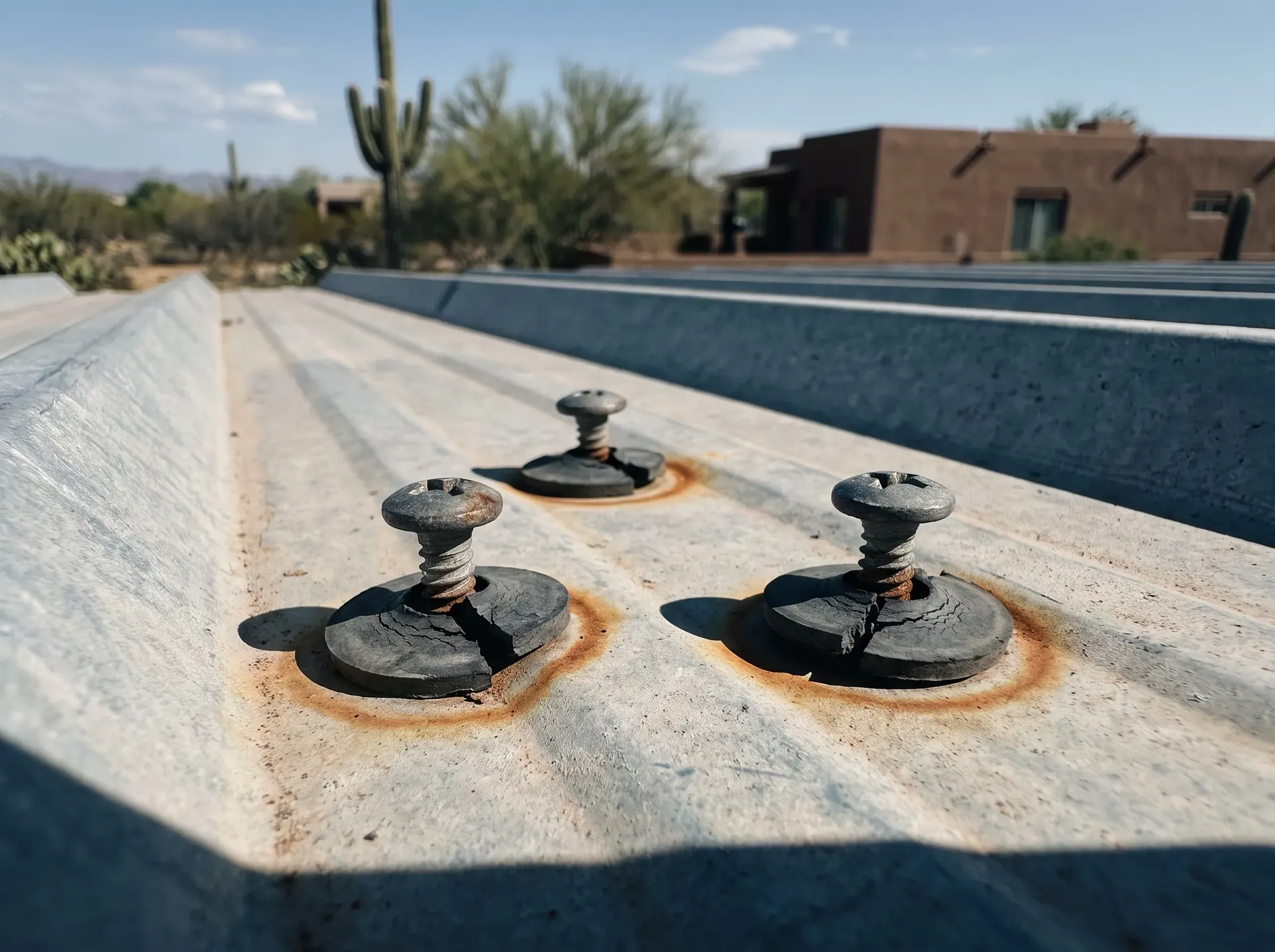
An exposed fastener roof holds itself down with hundreds of screws and seals itself with hundreds of rubber washers. Both have a service life in this climate, and it is shorter than the roof's.
See how we fix it
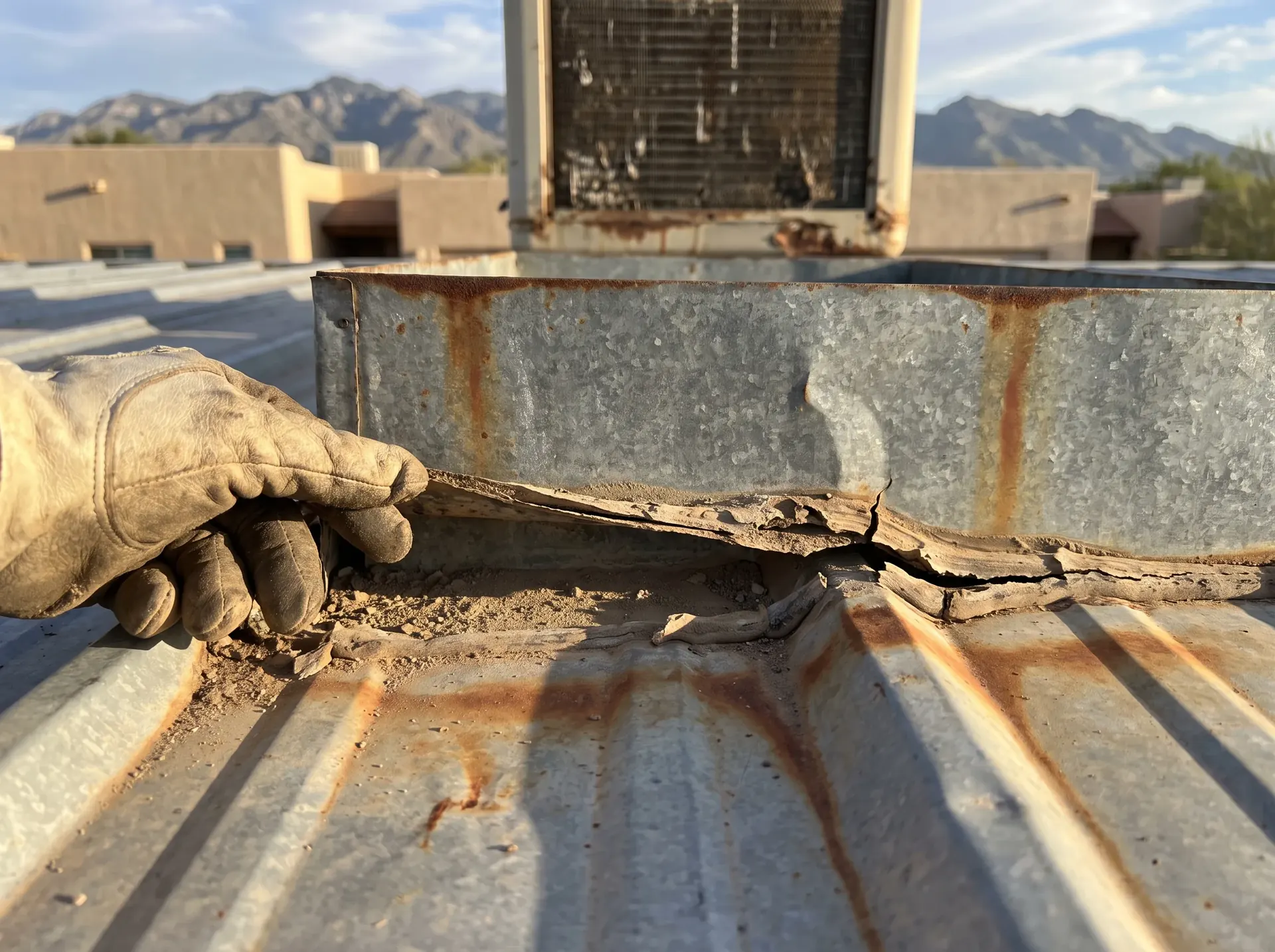
Pipe boots, swamp cooler curbs, vents, valleys, headwall and sidewall flashing. More metal roofs leak here than anywhere else, and almost none of them leak through the middle of a panel.
See how we fix it
That is the normal starting point. Tell us where it is and what the weather was doing, and we will tell you what it usually turns out to be.
We have not collected any reviews yet. When we do they will appear here in full, in the customer's own words.
Start underneath, not on top. Find where the water arrives, then look for the dry salt line or dark track it left on the steel and follow it uphill to its highest point. That point is under the entry. Doing it the other way round, standing on the roof looking for something wrong above a ceiling stain, is how people end up sealing the wrong ten feet of roof.
A penetration. Anywhere somebody cut a hole through the panel and built a detail around it: a pipe boot, a swamp cooler curb, a vent, a skylight, a solar mount. Fasteners come second and laps third. The middle of an undamaged panel is very rarely the answer, which is why a roof covered in rust can still be perfectly watertight.
Do not fix it. A leak you cannot find is a diagnosis that has not finished, and sealing likely looking details until it stops is guesswork that gets expensive. If the track cannot be followed from underneath, the next step is a controlled water test, wetting the roof in sections from the low point upward with somebody watching inside, until the leak reproduces.
Easily, and it is common here. Water can track along steel and soak into insulation or decking for a long time without ever reaching a visible ceiling. In a dry climate people also assume any small stain has dried out and stopped, when what has actually happened is that the wet material is hidden. This is the main argument for looking at a roof after a bad monsoon season rather than waiting.
Because most metal roof leaks need help. A slightly open lap sheds ordinary rain without trouble and only fails when wind drives water sideways underneath it. Others need sustained volume before enough water backs up to reach the opening. If yours only leaks in a real monsoon cell, that is diagnostic information and worth telling us.
The roof itself will tolerate it for a long time. What is underneath will not. Wet insulation stops working almost immediately and does not recover, decking and framing start to deteriorate once they stay damp, and drywall marks permanently. The metal is usually the last thing to suffer, which is exactly why the repair cost and the damage cost move in opposite directions the longer it runs.
Anywhere else in Pima County, call and ask.
Something went wrong sending that. Please call (520) 555-0132.
We have your details. If you said water is coming in right now, that goes ahead of scheduled work. Otherwise expect a call back during opening hours.