Tucson
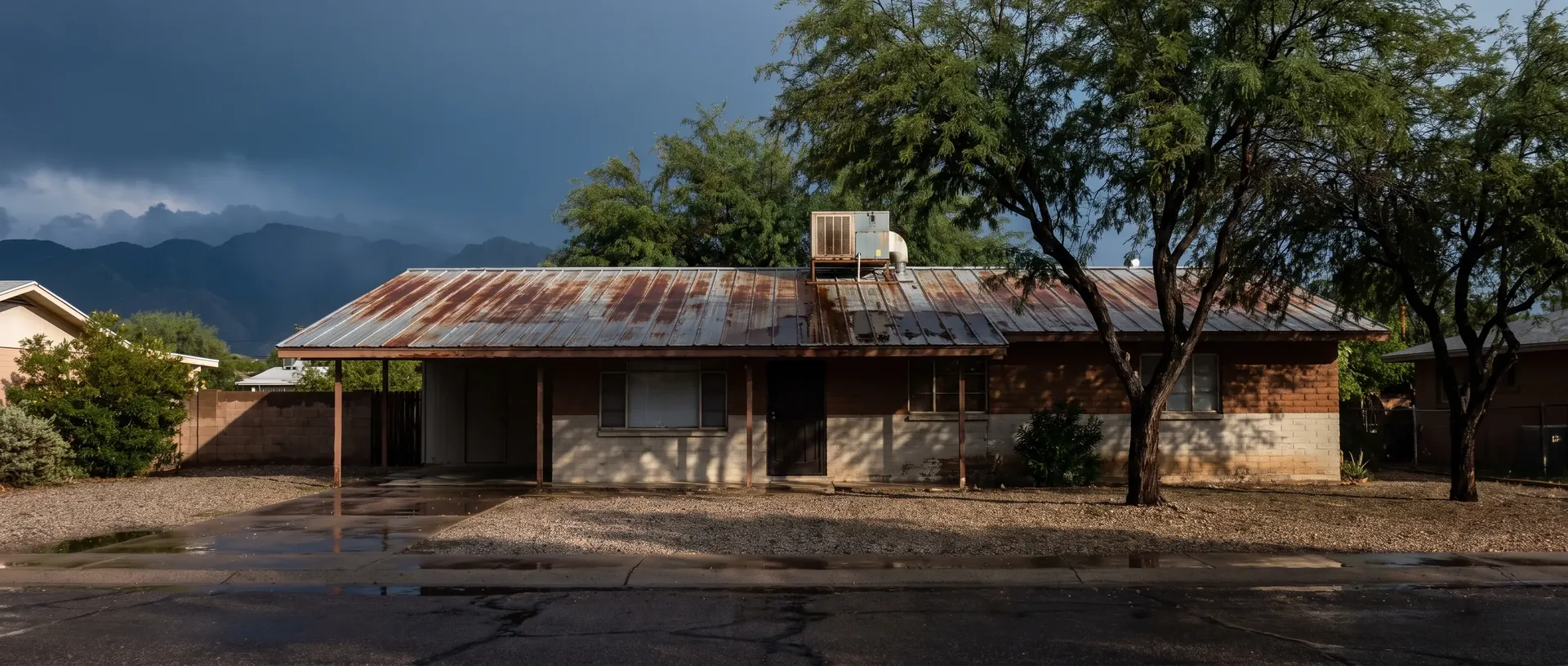
Sam Hughes, Blenman Elm, the Sunshine Mile and the whole east and south side. Burnt adobe and midcentury ranch, exposed fastener panel over what were often built up roofs, and a swamp cooler curb on a very large share of them.
What fails here
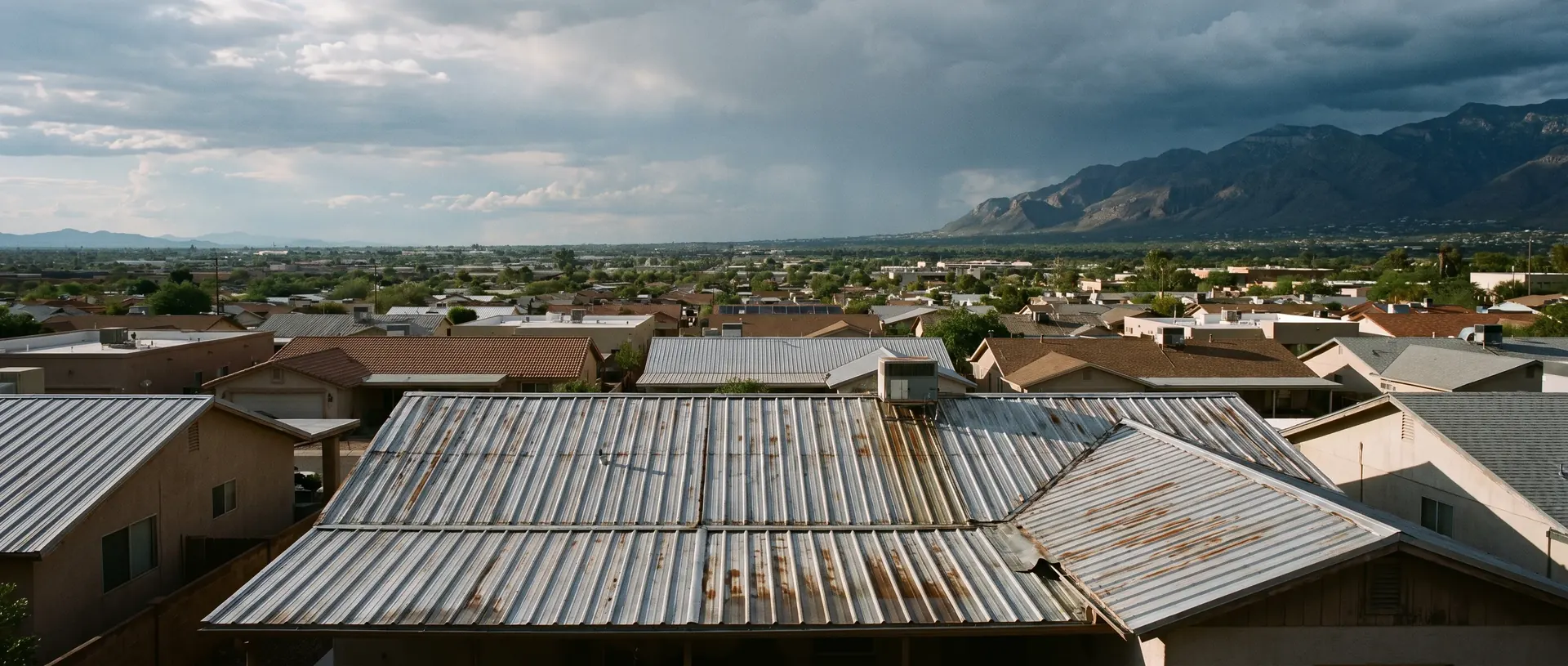
Tucson and the towns around it, from the Catalina foothills down the Santa Cruz valley and out east to the Rincons.
Pima County is big enough that the weather is not the same at both ends of it, and metal roofs notice.
Up against the Catalinas in Oro Valley there are genuine freeze nights each winter and a harder daily temperature swing, so panels there move through a wider range than panels down in the valley. Out along the corridor at Marana, blowing dust and haboob grit scours the coating off west facing slopes in a way it never does on a sheltered foothills lot. Southeast toward Vail and the Rincons is the corner of the metro that actually gets hail, so dented panels and bruised coating are a real category out there and almost unheard of in central Tucson.
The housing tells a similar story. Midcentury and burnt adobe stock in the older Tucson neighbourhoods, most of it carrying swamp coolers and exposed fastener panel added at some point in the last thirty years. Post 1990 HOA subdivisions in Oro Valley and Sahuarita with low profile standing seam chosen to read as tile. Custom hillside houses in the Foothills with half a dozen separate roof planes and access that turns a two hour job into a day.
Knowing which of those you are standing on before you get there is most of the reason a repair goes right.
Sam Hughes, Blenman Elm, the Sunshine Mile and the whole east and south side. Burnt adobe and midcentury ranch, exposed fastener panel over what were often built up roofs, and a swamp cooler curb on a very large share of them.
What fails here
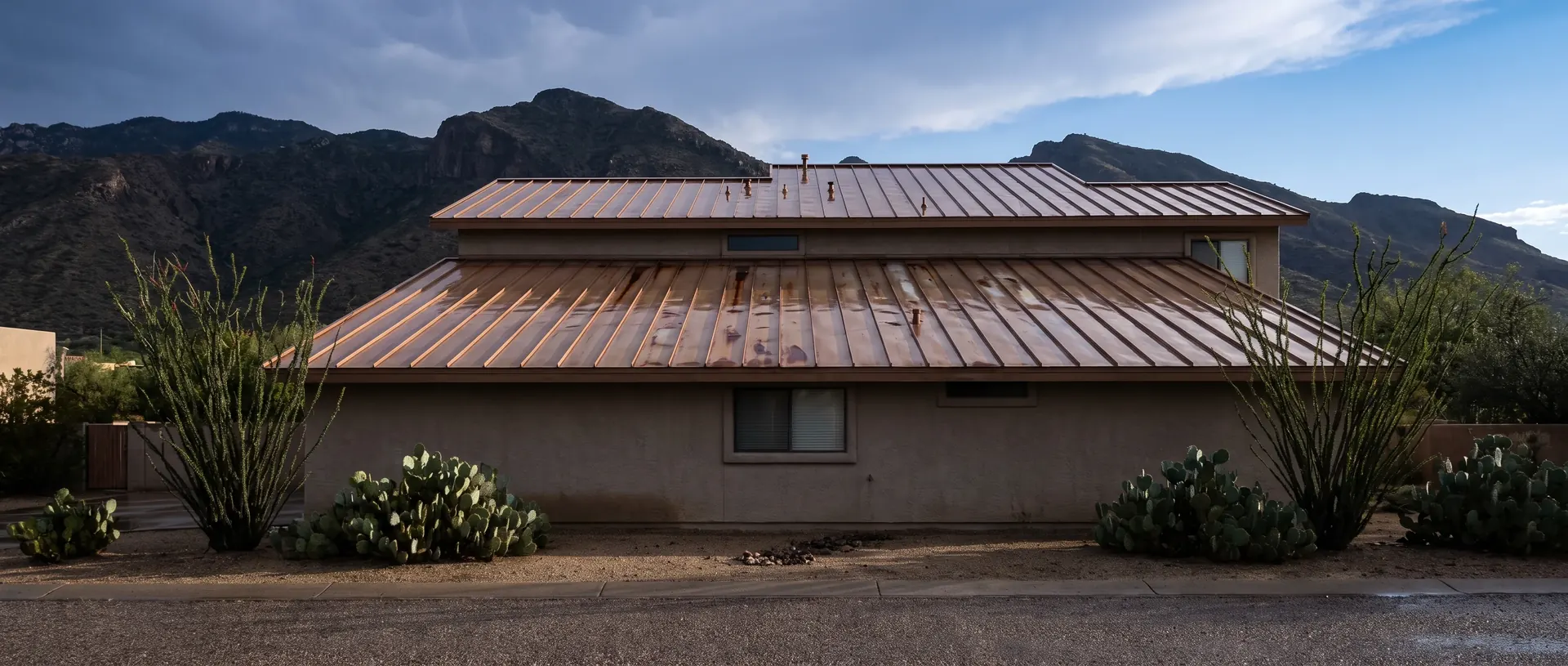
Post 1990 HOA housing against the Catalina foothills, largely low profile standing seam laid to look like tile. Higher and colder than the valley floor, with real freeze nights and steep monsoon runoff off the mountain.
What fails here
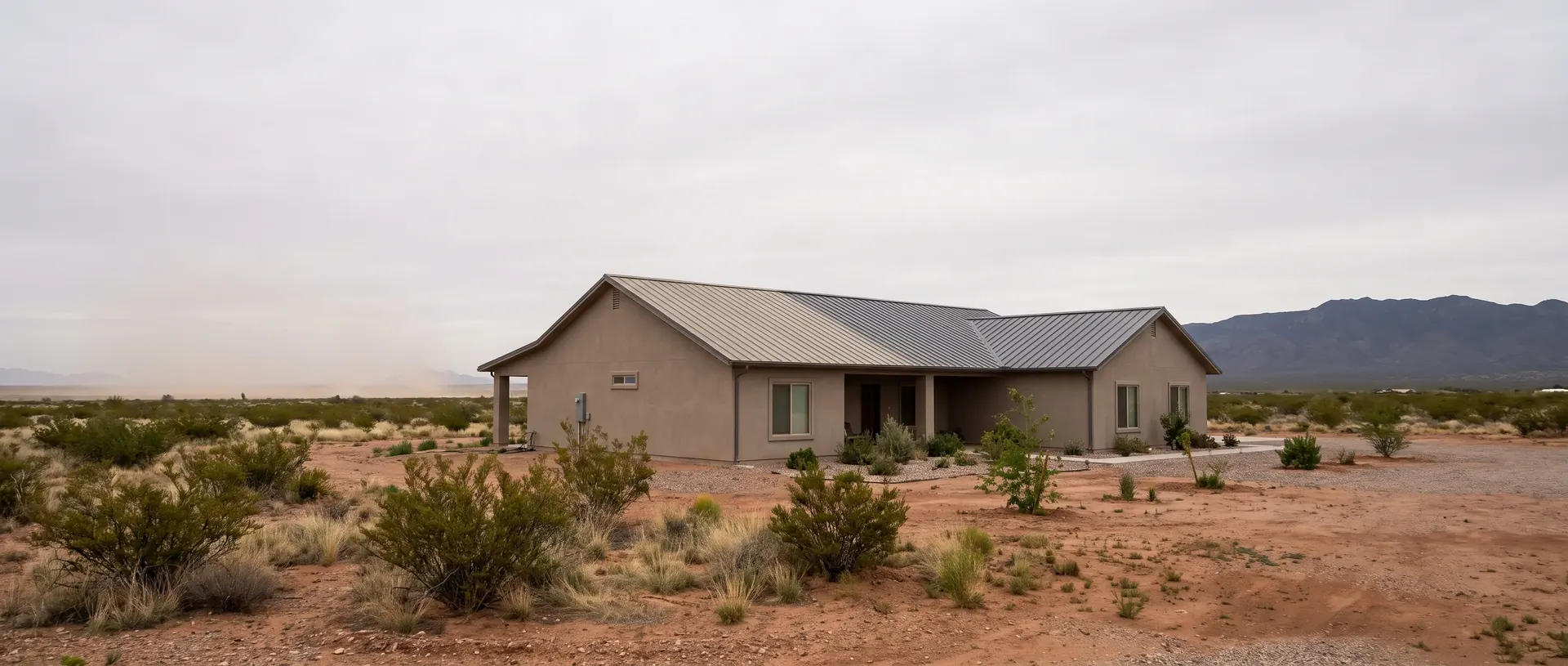
Dove Mountain, Gladden Farms and out toward Avra Valley. The corridor takes the worst of the blowing dust, which sandblasts coatings on west facing slopes and packs grit into every lap and seam.
What fails here
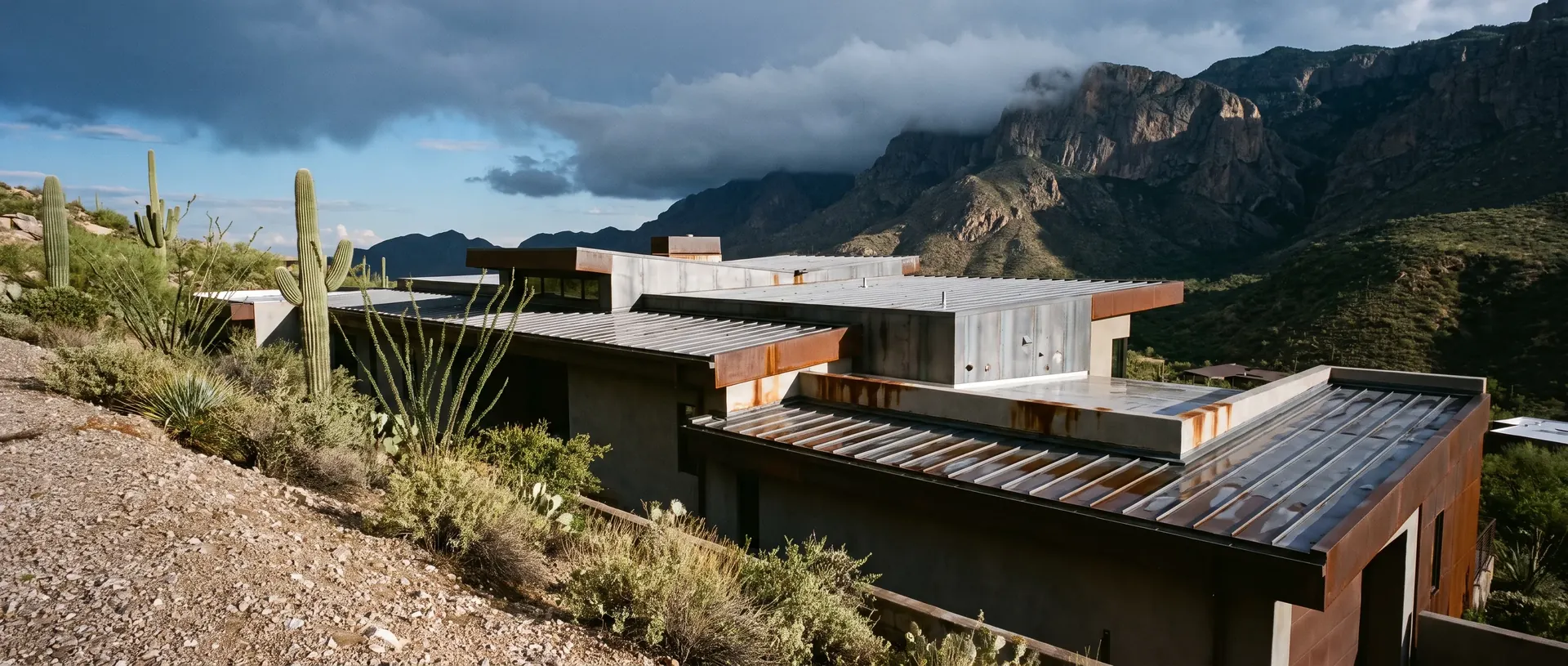
Custom and architect designed houses on steep lots above River Road. Complex geometry, many separate planes, low slope sections behind parapets, and access that is a genuine part of the job rather than an afterthought.
What fails here
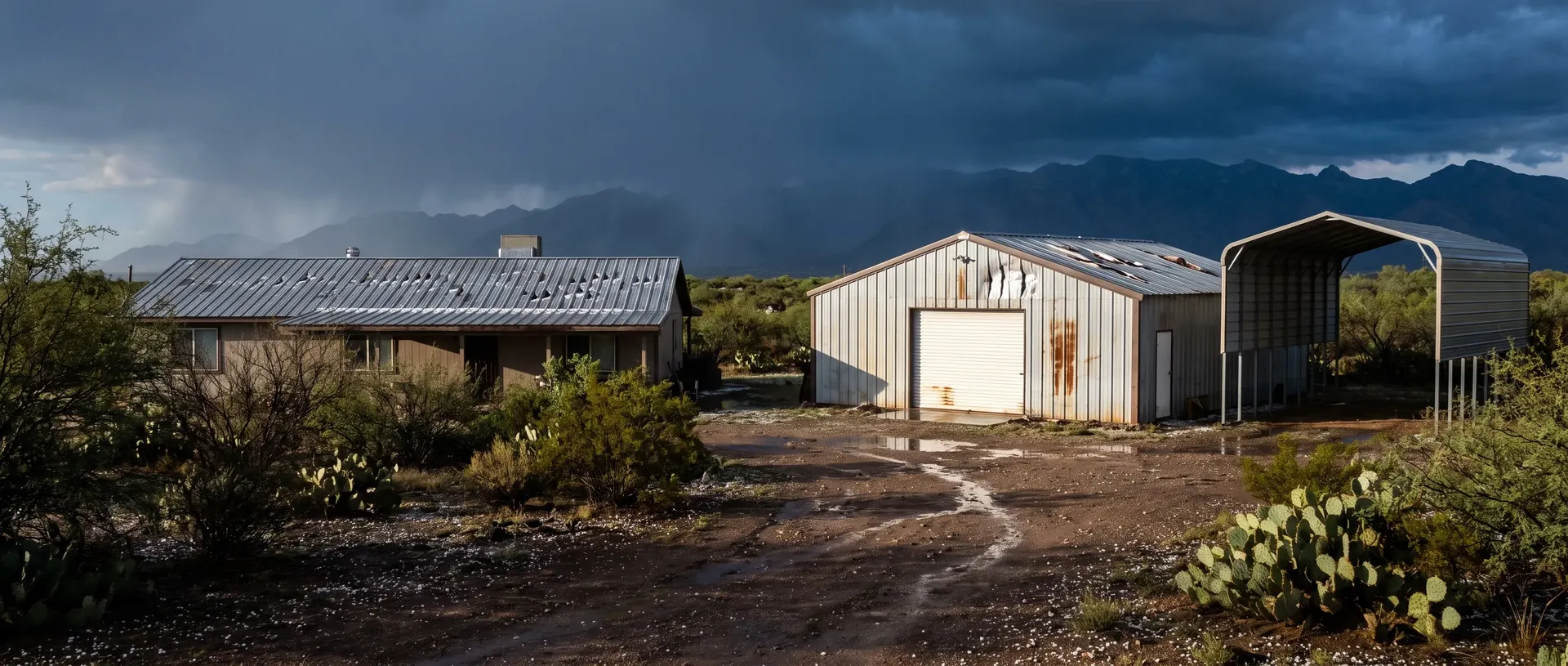
Southeast toward the Rincons and Colossal Cave. This is where the metro's hail actually lands, on houses, detached shops and RV covers alike. Large lots, newer construction, more exposure.
What fails here
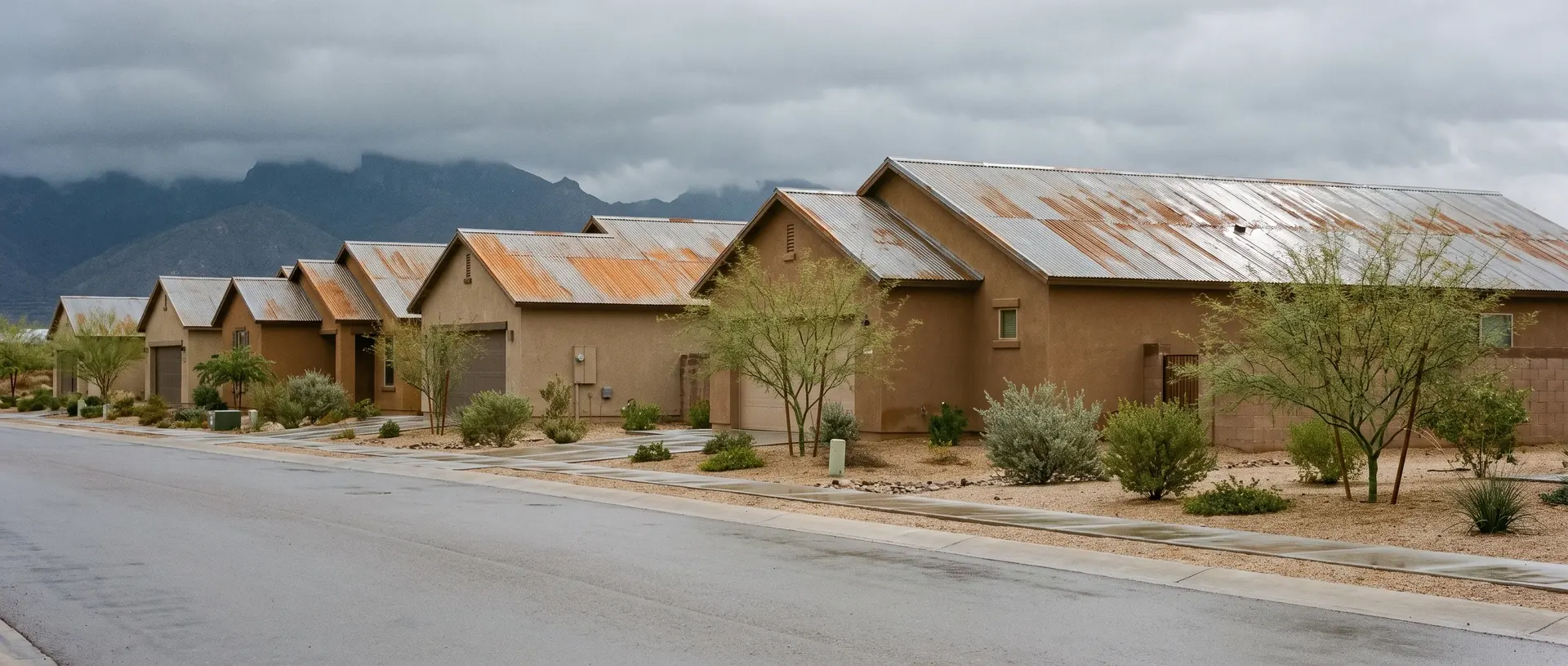
Rancho Sahuarita and Quail Creek, down the Santa Cruz valley on the I-19 side. Uniform post 2000 housing, which means whole streets of roofs reaching the same age and failing in the same way at the same time.
What fails here
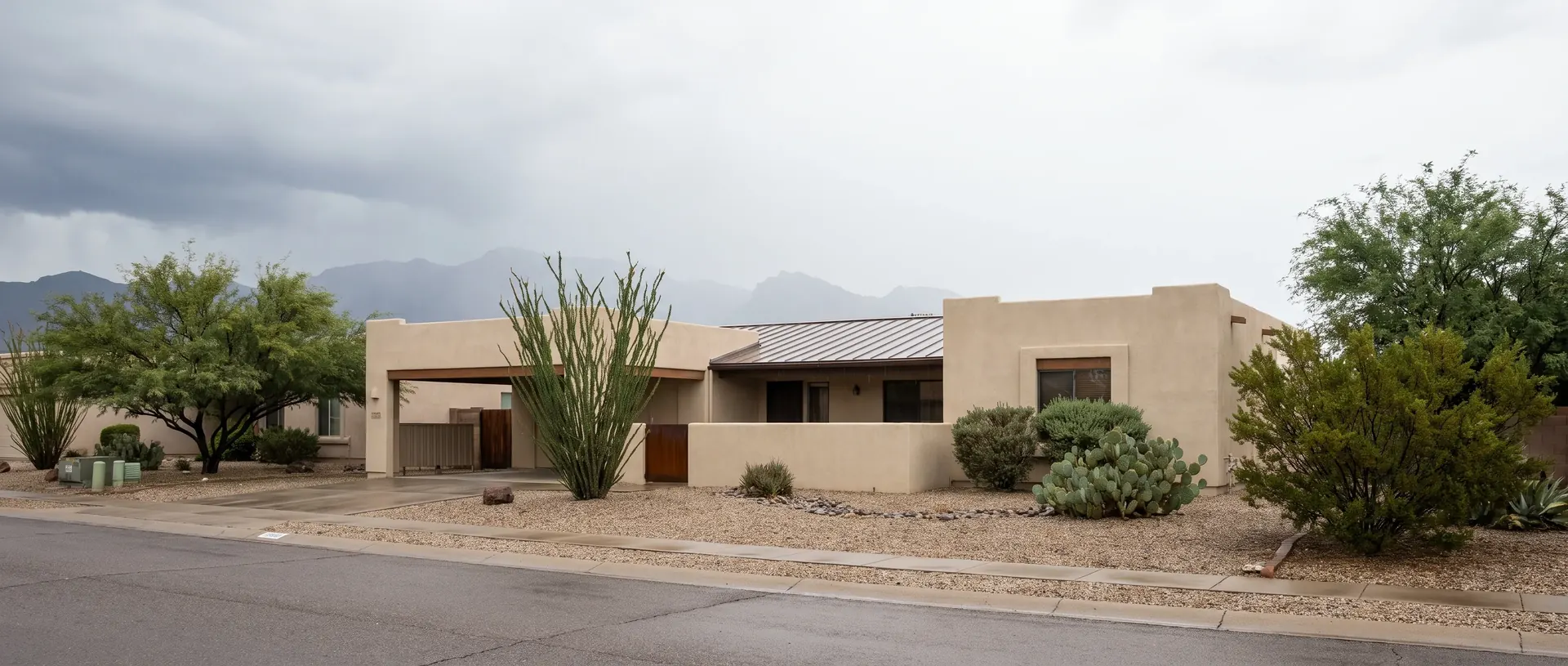
Single storey, largely HOA governed, with a high proportion of low slope roof sections behind parapets. A lot of seasonal owners, so a leak that starts in July is frequently discovered in October.
What fails here
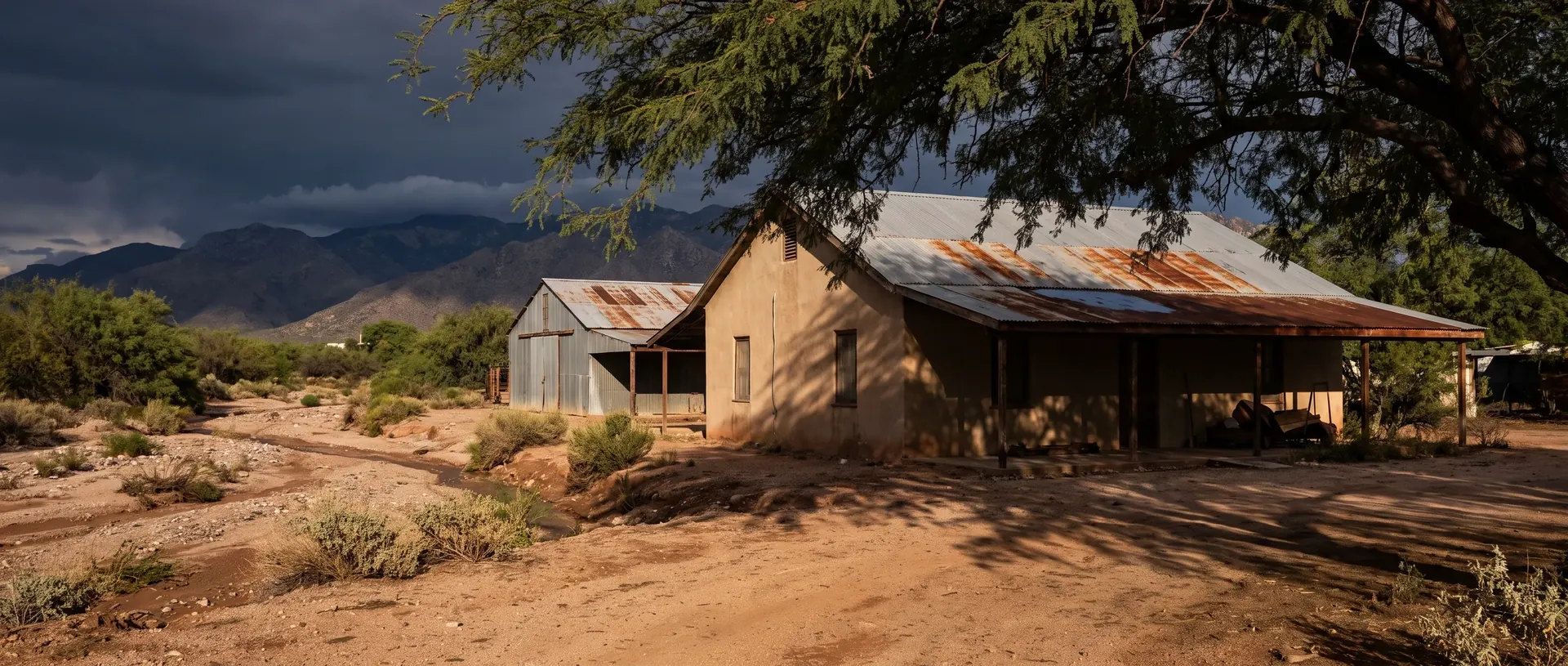
East side against the Rincon foothills. Acreage lots with barns, shops and equipment covers alongside the house, and heavy mesquite canopy dropping debris into valleys where it holds moisture.
What fails here
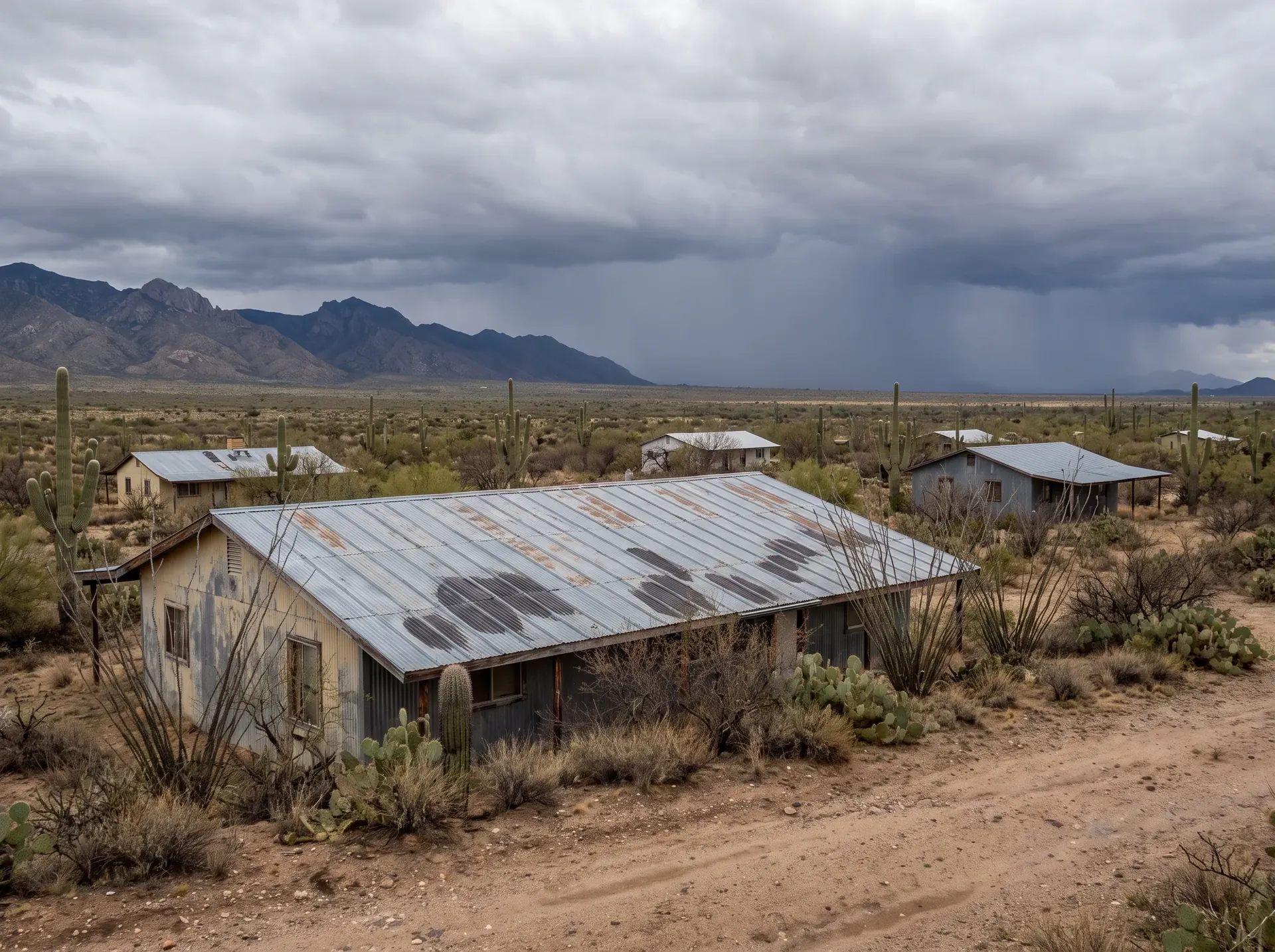
Small and exposed, southeast toward the Santa Ritas and higher than the valley floor. Wind loading on edges and ridge caps matters more here than it does in town.
What fails here
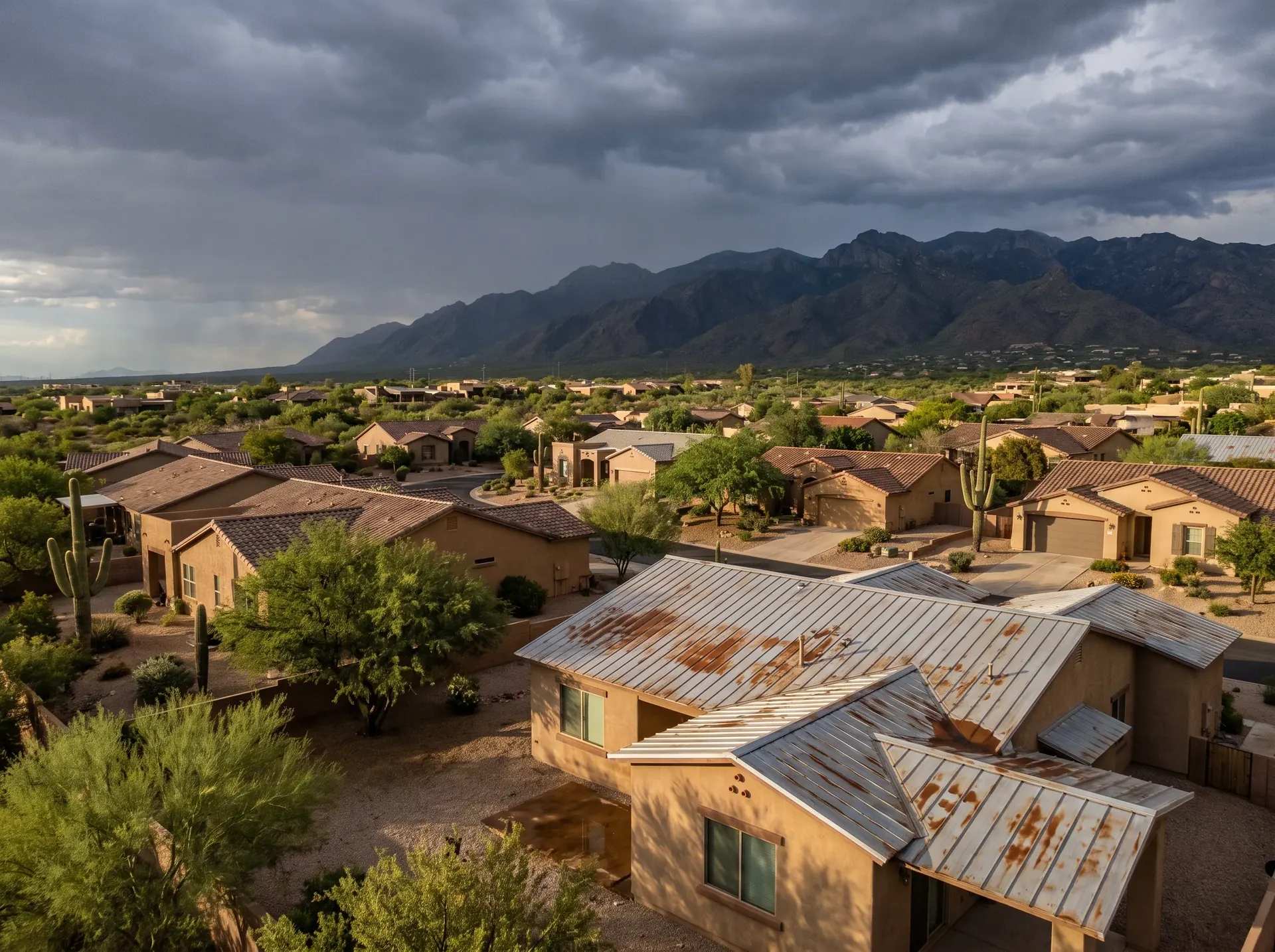
At the far north edge of the metro where it crosses into Pinal County. High enough for a proper winter freeze cycle, which is harder on long panel runs than most of Pima County ever gets.
What fails here
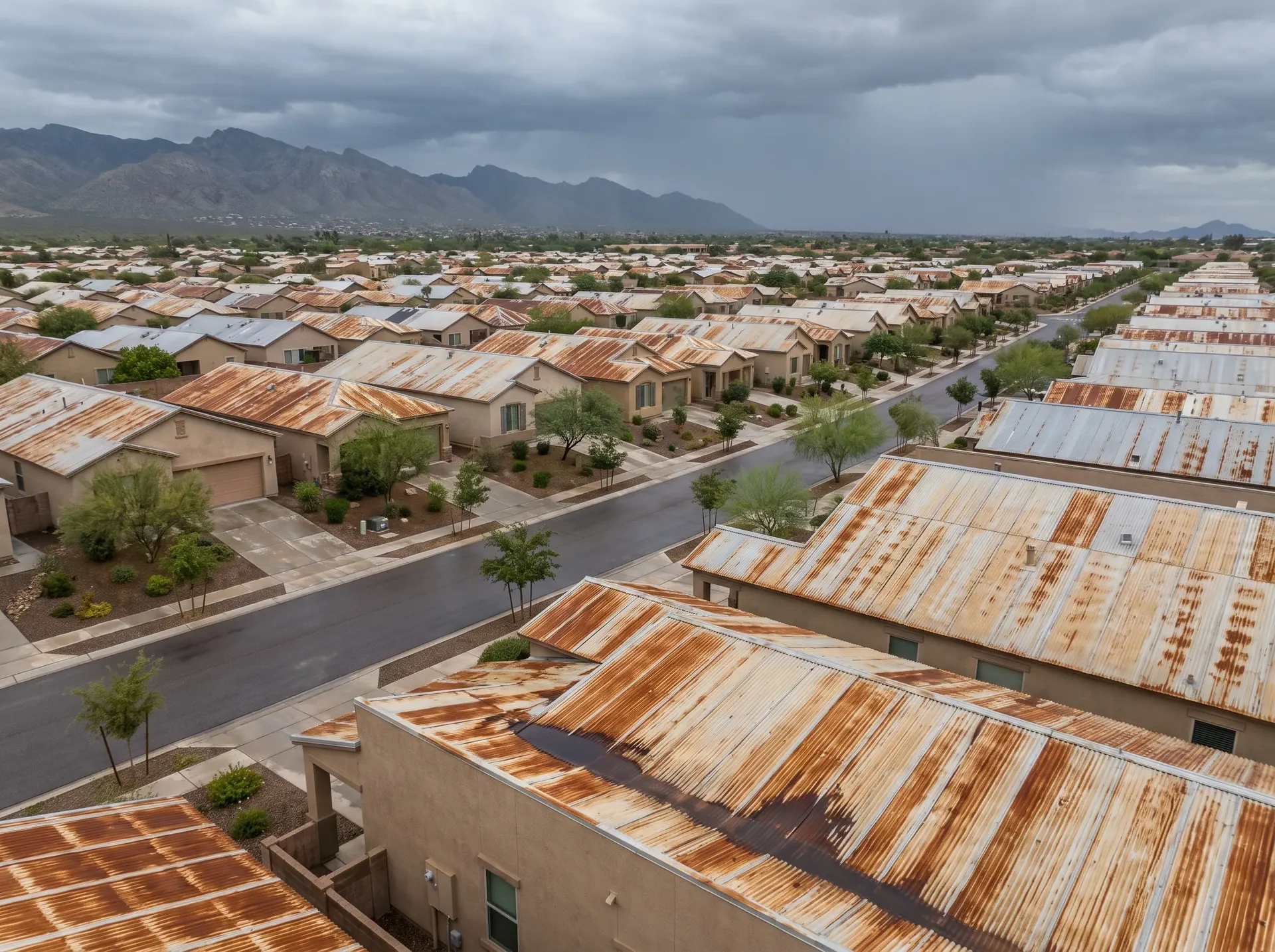
Southeast Tucson near Davis Monthan. Dense post 1995 subdivision housing on near identical roof designs, so what one roof is doing is usually what the street is doing.
What fails here
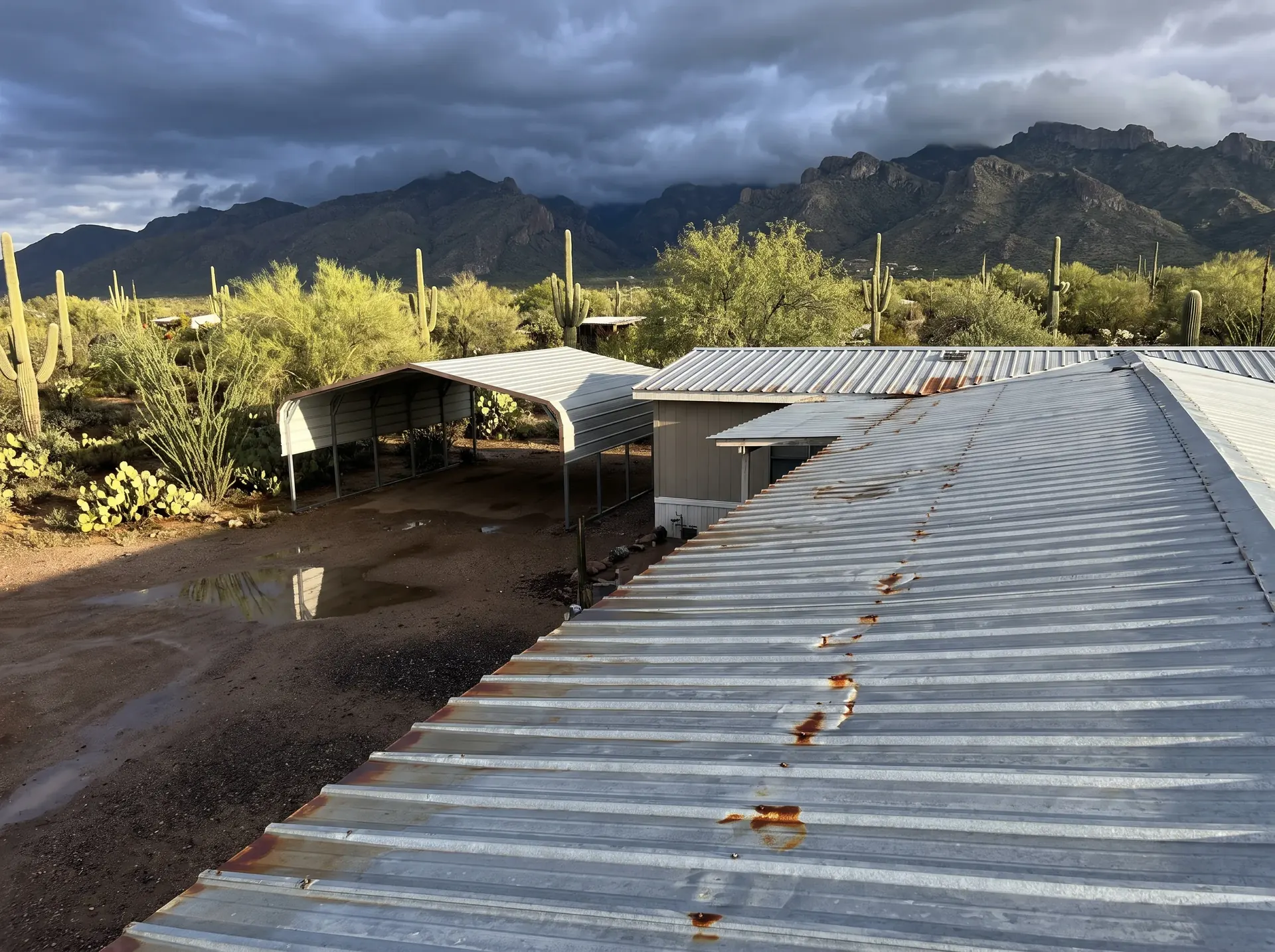
Northwest beyond the Tucson Mountains. Rural, with a high proportion of manufactured homes and metal over park models, plus carports and shade structures that were never detailed as carefully as a house roof.
What fails here
Pima County is larger than the towns above and we cover a good deal more of it than we have written about. If you are somewhere else in the county, call and ask rather than assuming the answer is no. If you are far enough out that it genuinely is a problem, we will say so on the phone instead of after a drive.
Something went wrong sending that. Please call (520) 555-0132.
We have your details. If you said water is coming in right now, that goes ahead of scheduled work. Otherwise expect a call back during opening hours.