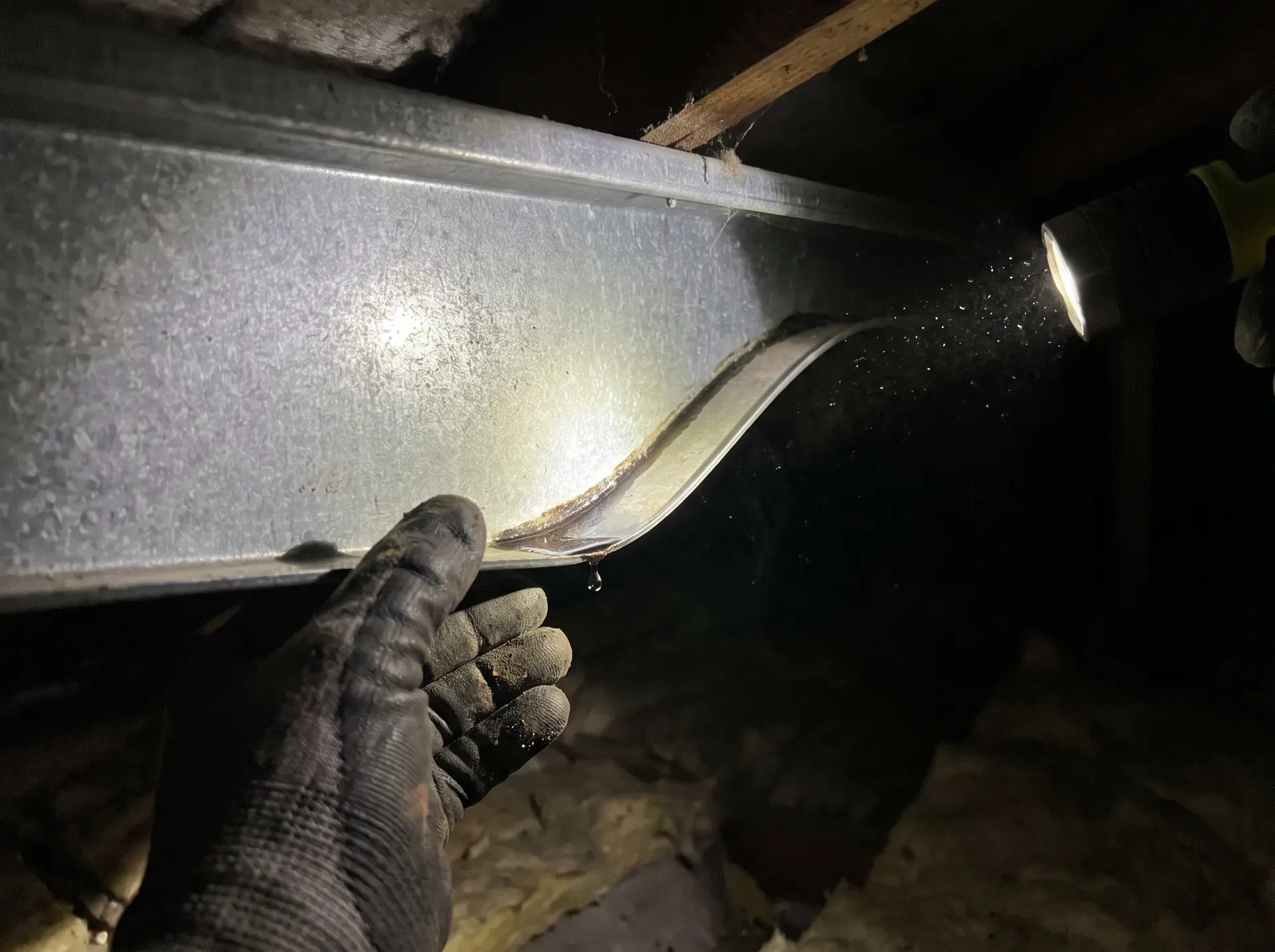
Metal Roof Leak Repair
Water shows up on a ceiling a long way from where it got in. We work backwards from the stain to the real entry point, repair that detail, and leave the twenty other places somebody would have sealed alone.
What this involves
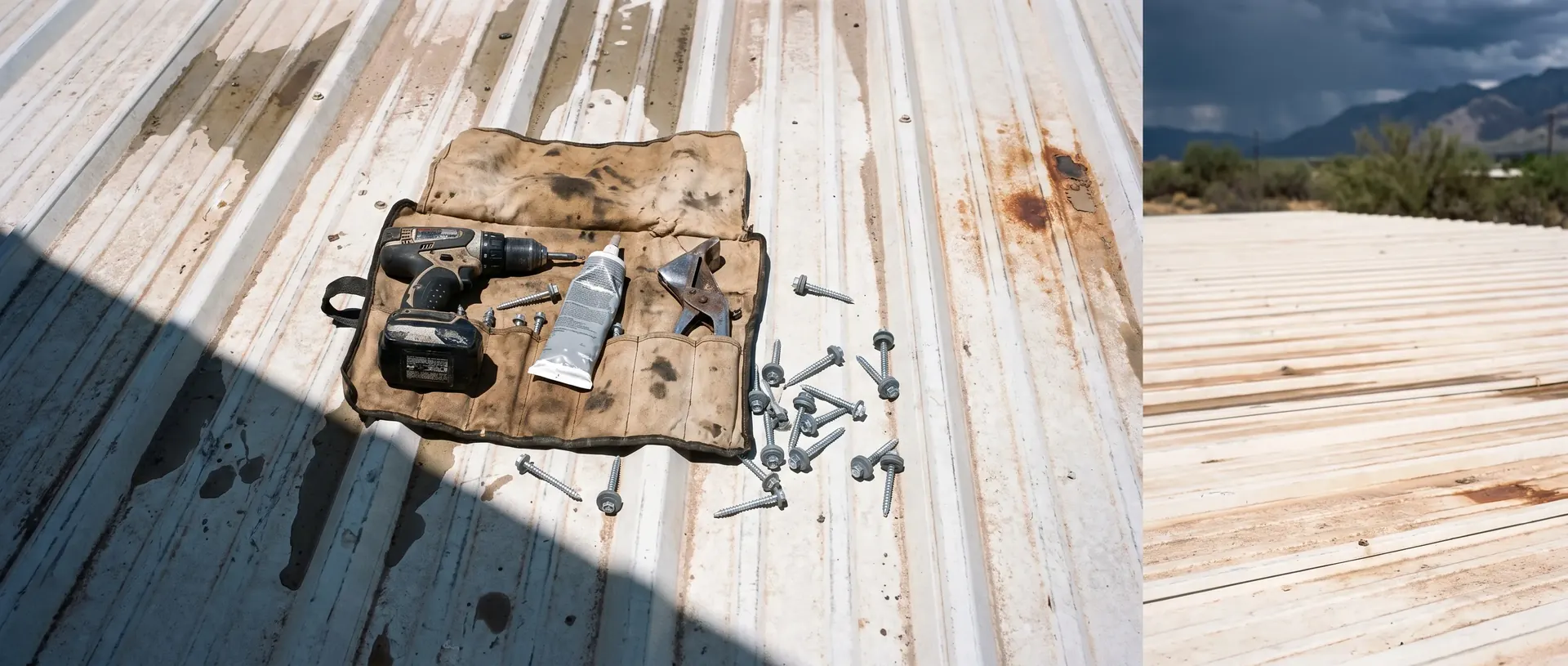
Twelve kinds of metal roof failure, one trade. Everything below is repair work on a roof that stays where it is.
Metal roofs fail in a small number of well understood ways, and in the Sonoran Desert they fail in an even smaller number. Heat moves the panel, the movement works the fasteners loose and tears the sealant, ultraviolet destroys the washers and the coating, monsoon wind lifts anything that was already marginal, and water finds the one detail nobody has touched in twenty years.
Every job below is one of those. What none of them is, is a new roof. We repair metal roofs and that is the whole trade. We do not install, we do not tear off and replace, and we do not work on tile, shingle, foam or built up flat roofs.
That narrowness is the point. It means the truck is loaded for this every day, and it means that when we tell you a roof can be saved we are not talking ourselves out of a bigger job.
Water shows up on a ceiling a long way from where it got in. We work backwards from the stain to the real entry point, repair that detail, and leave the twenty other places somebody would have sealed alone.
What this involves
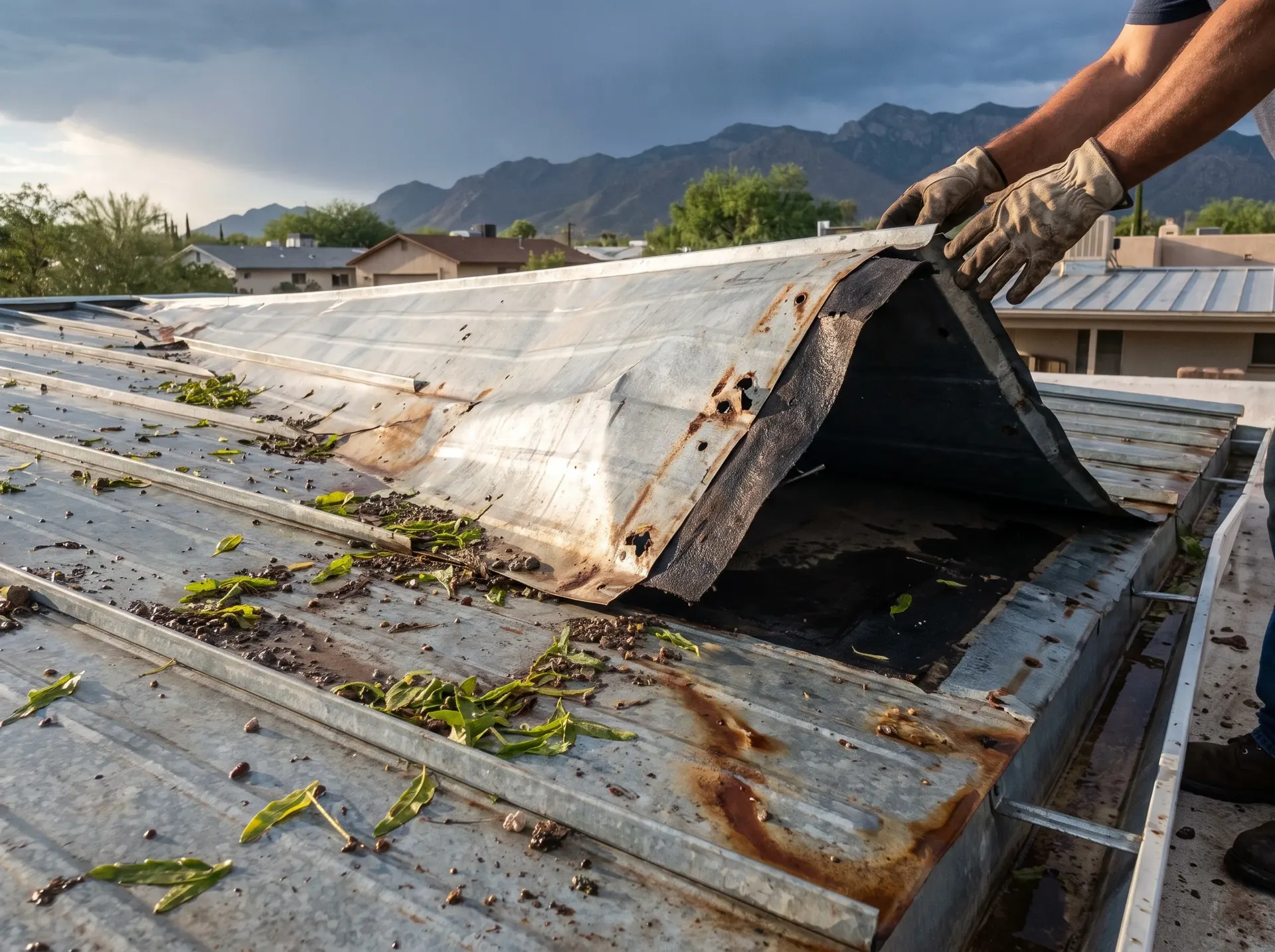
Lifted panel edges, fastener holes torn into slots by wind loading, driven rain forced under laps, and hail bruising out toward the Rincons. Storms break some things and simply expose others.
What this involves
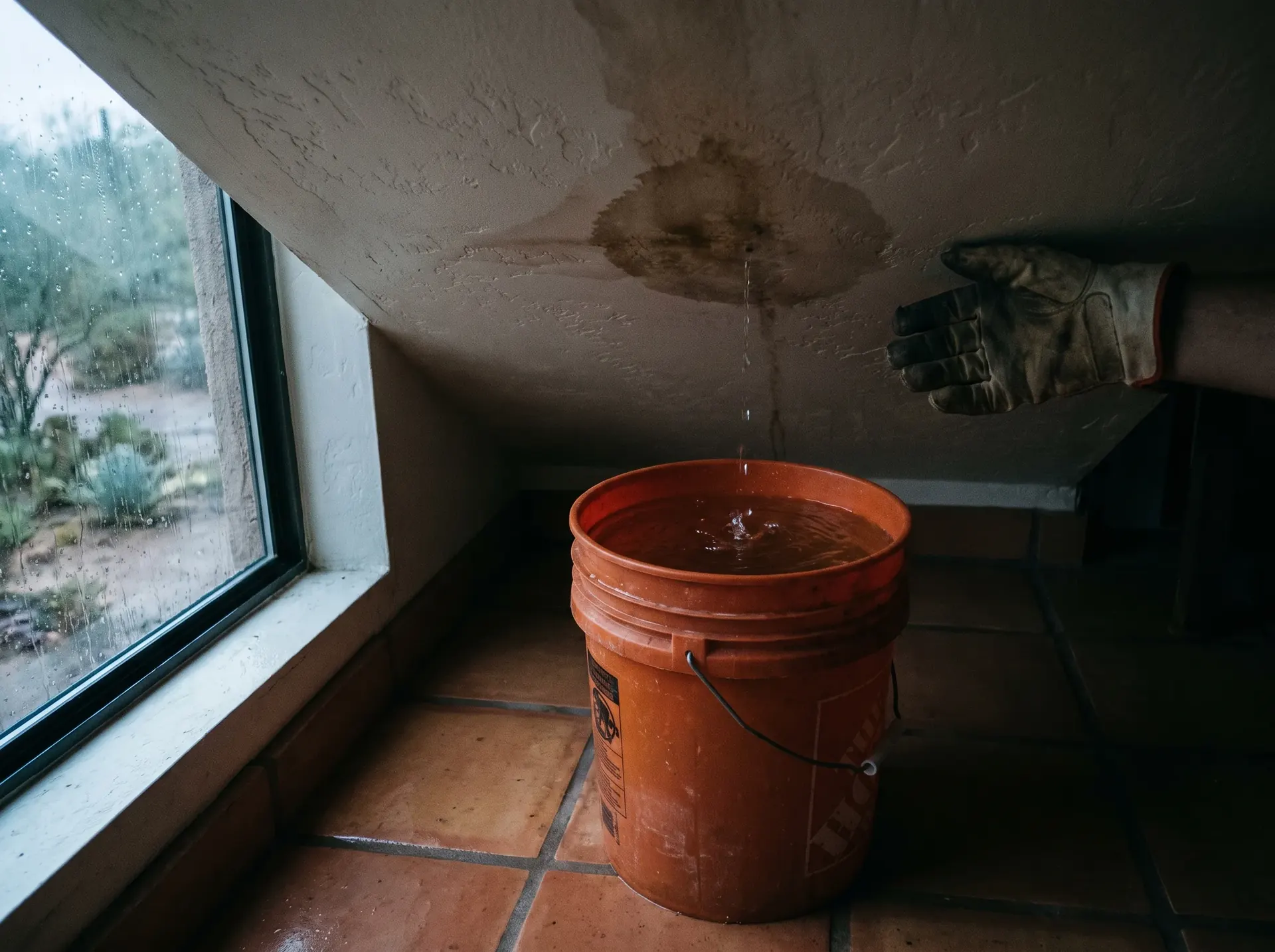
Water coming into the house while the storm is still going. We stabilise the intrusion, then come back and do the repair properly once the roof is dry enough to stand on safely.
What this involves
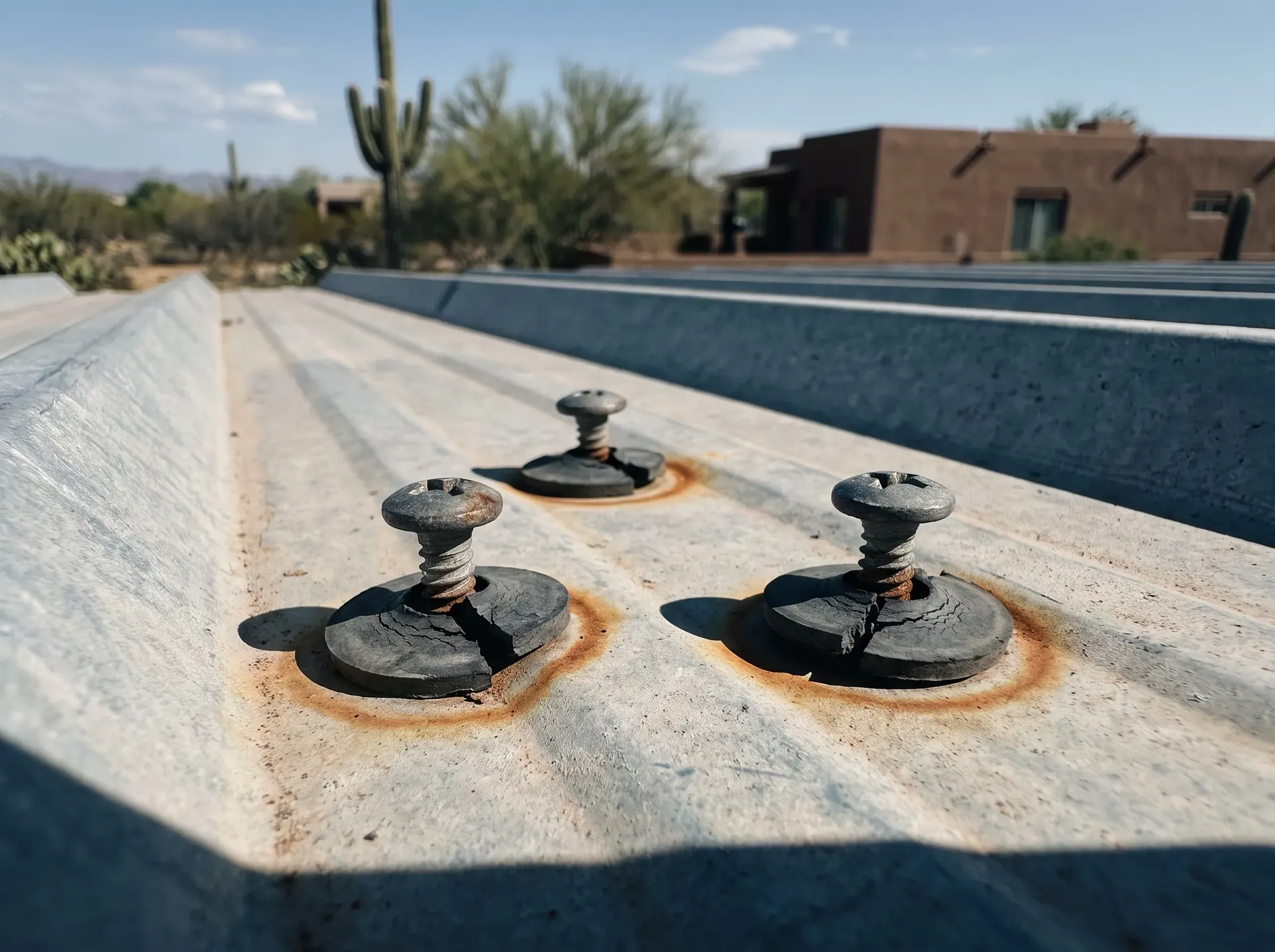
An exposed fastener roof holds itself down with hundreds of screws and seals itself with hundreds of rubber washers. Both have a service life in this climate, and it is shorter than the roof's.
What this involves
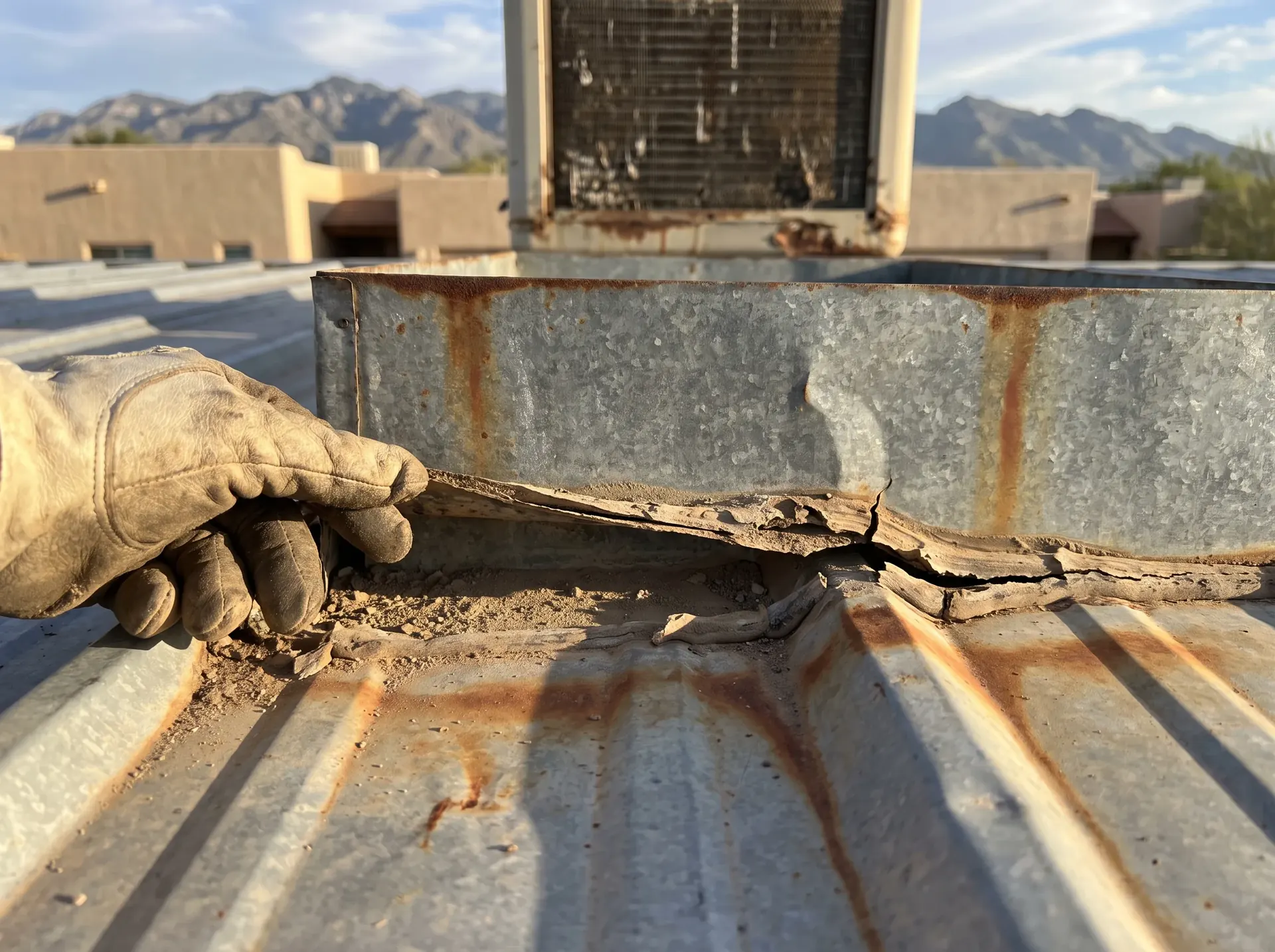
Pipe boots, swamp cooler curbs, vents, valleys, headwall and sidewall flashing. More metal roofs leak here than anywhere else, and almost none of them leak through the middle of a panel.
What this involves
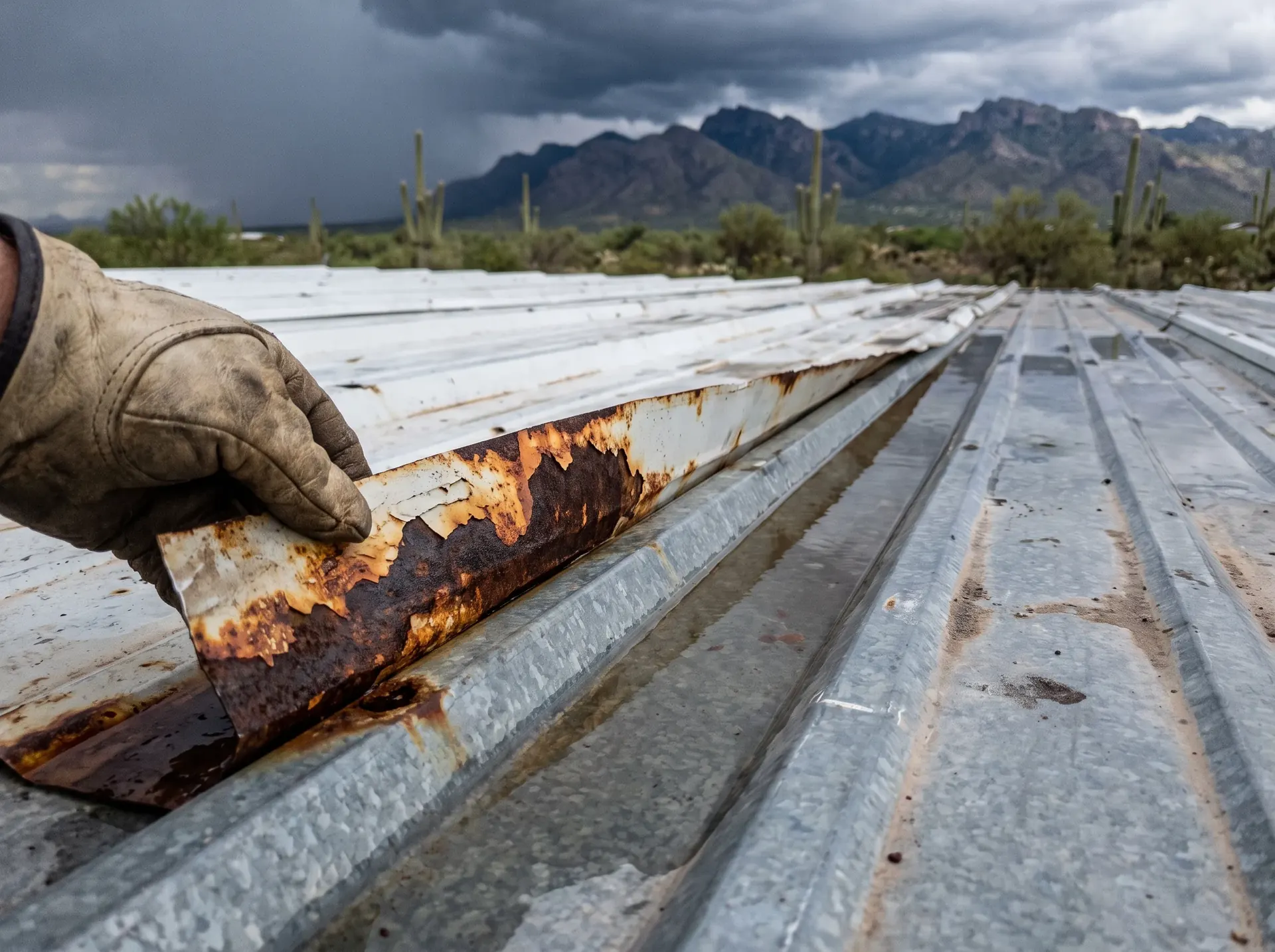
Cut edges, scratches, fastener holes and the low ribs where water stands after a storm. Caught early it is a cleaning and coating job. Left long enough it becomes a panel.
What this involves
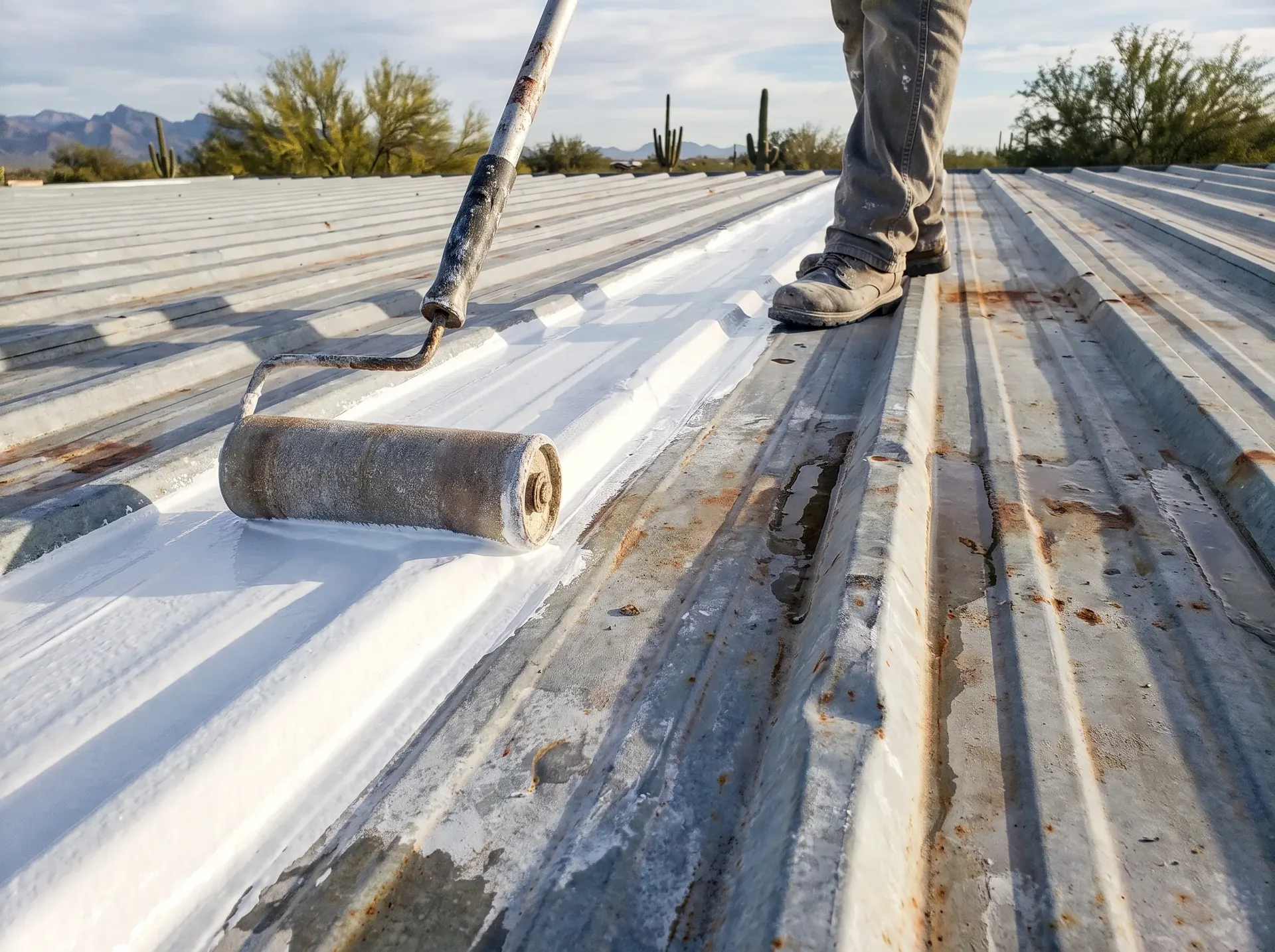
For a roof that is sound but tired everywhere at once. A restoration coating bridges every lap and fastener head in one pass and drops the surface temperature the panel has to live with.
What this involves
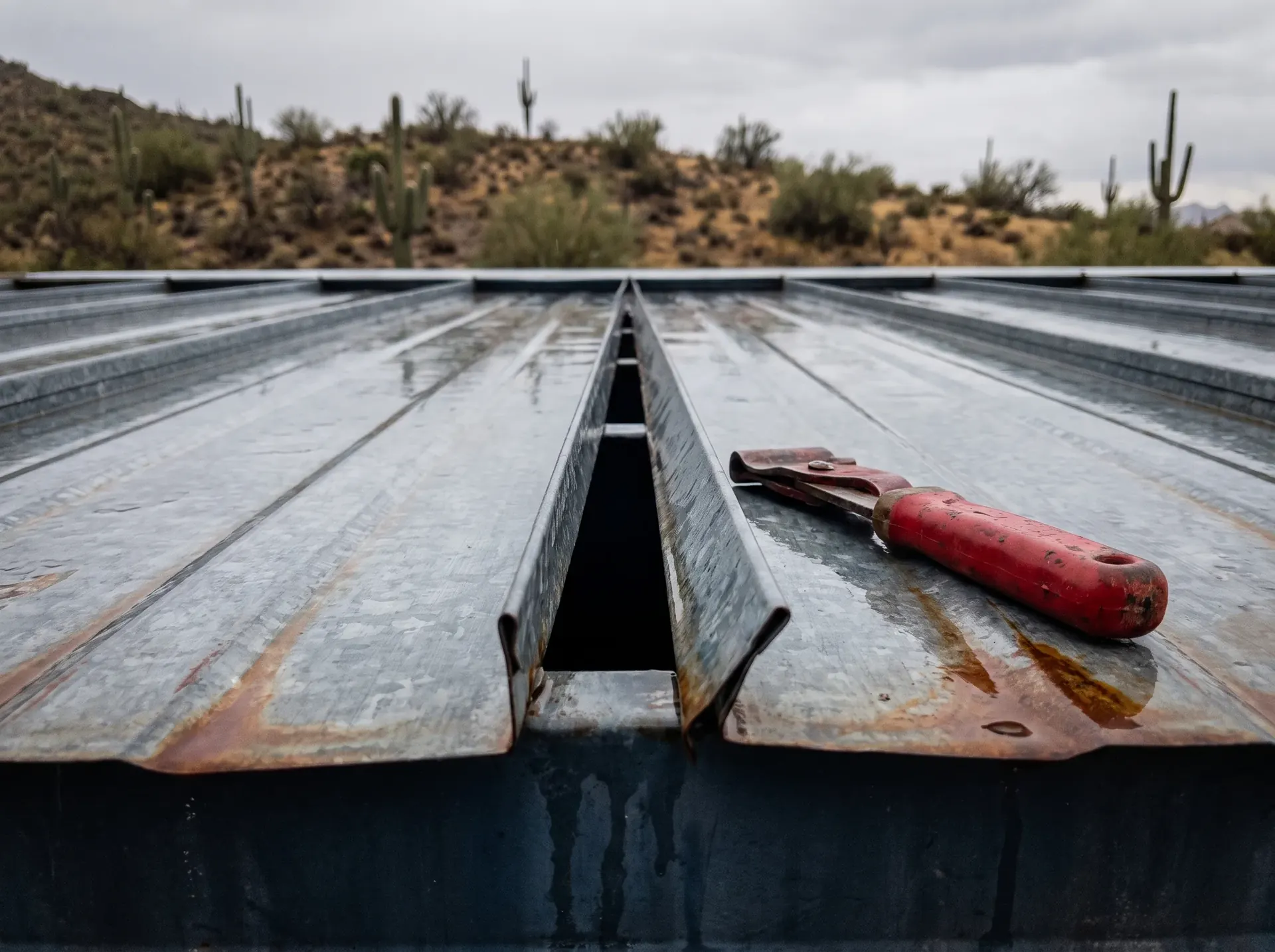
Standing seams that have sprung, oil canning that has torn at a fastener, dented panels and failed end laps. Repaired in place where that will hold, replaced a section at a time where it will not.
What this involves
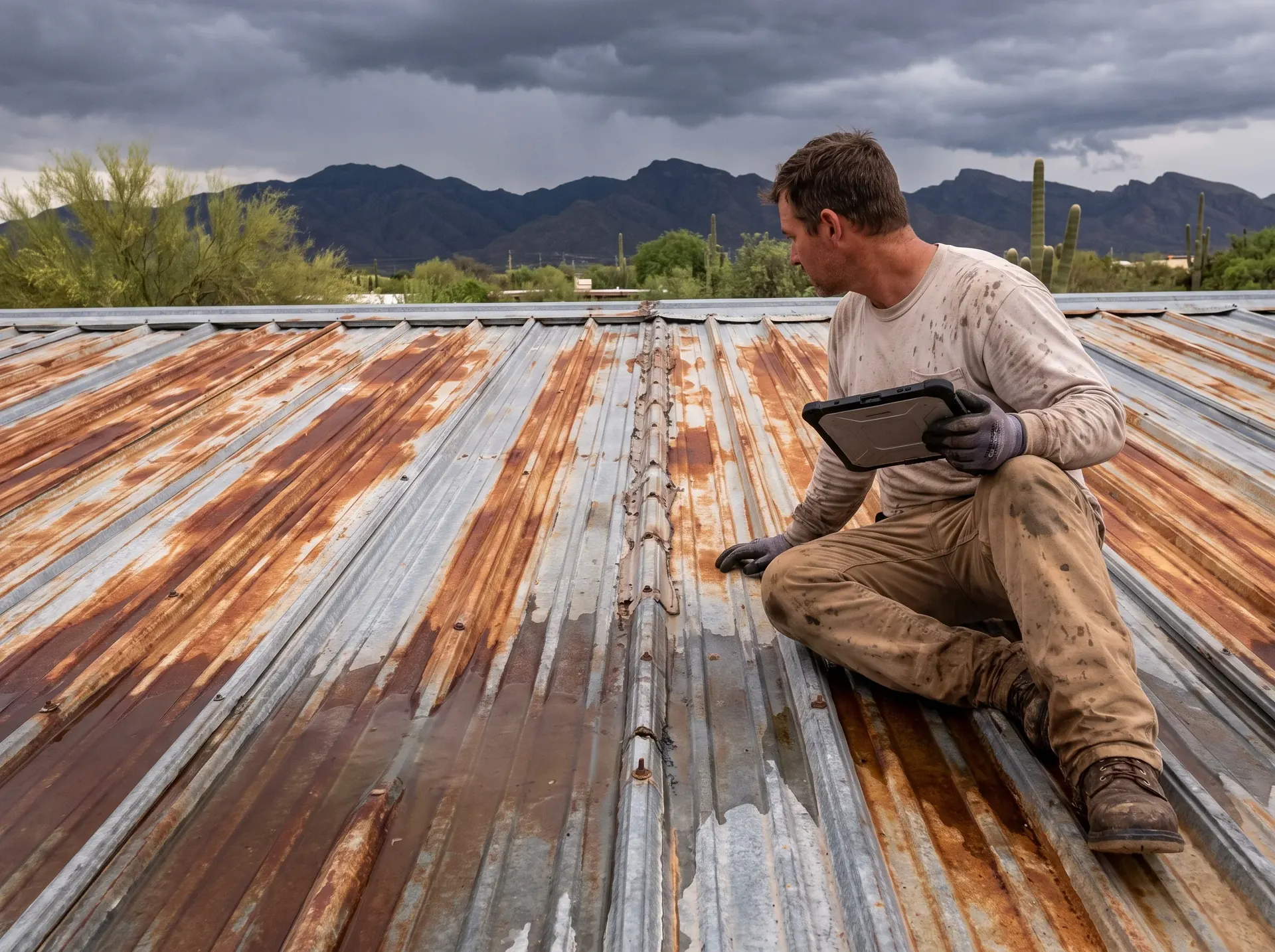
Every fastener run, lap, penetration and flashing detail walked and photographed, with an honest condition report. Worth doing before you accept anyone's opinion that a roof is finished.
What this involves
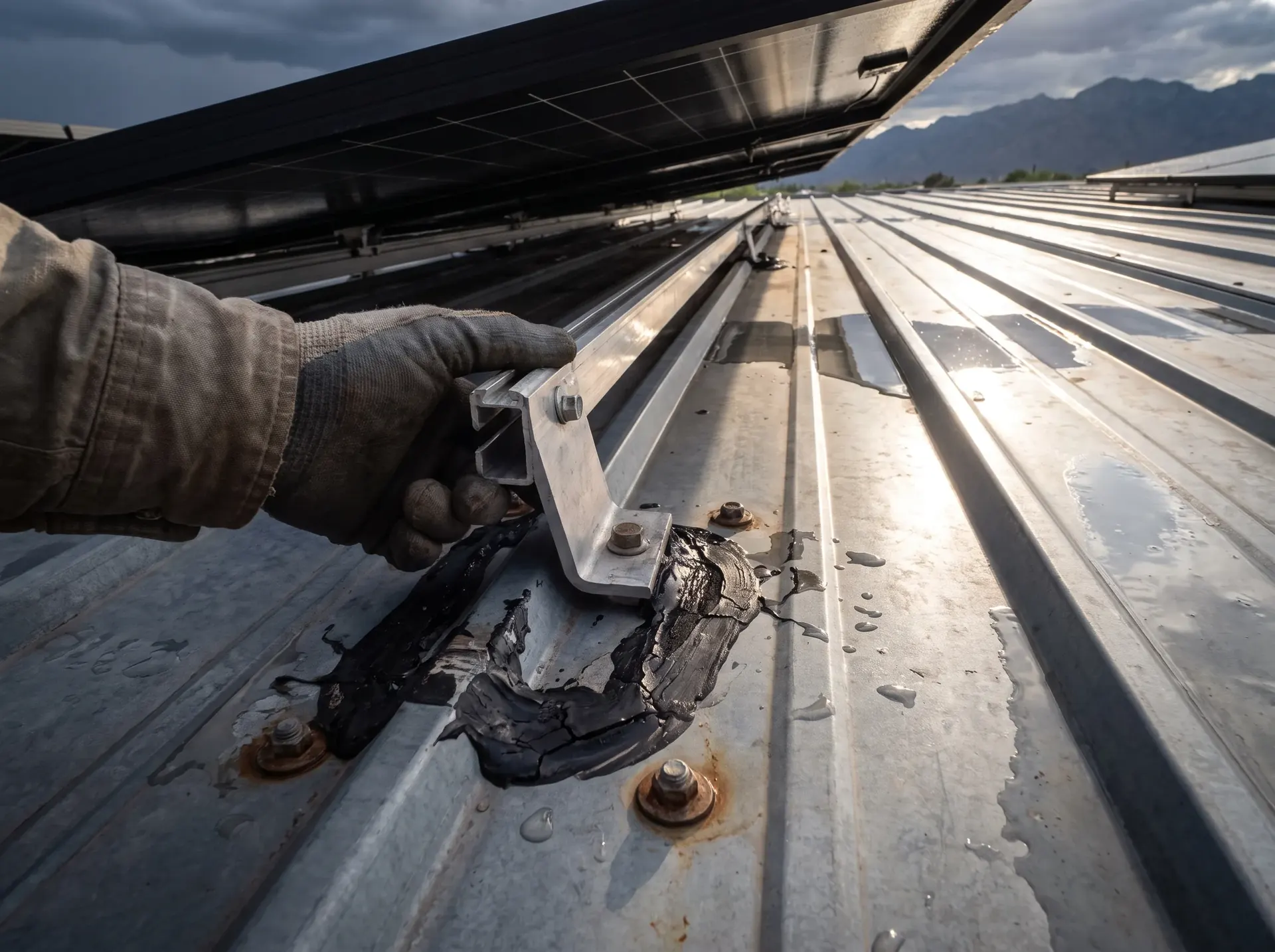
Curb mounted skylights and solar standoffs that were flashed into the metal badly, or bolted straight through it with a smear of sealant. Extremely common where an array went on after the roof.
What this involves
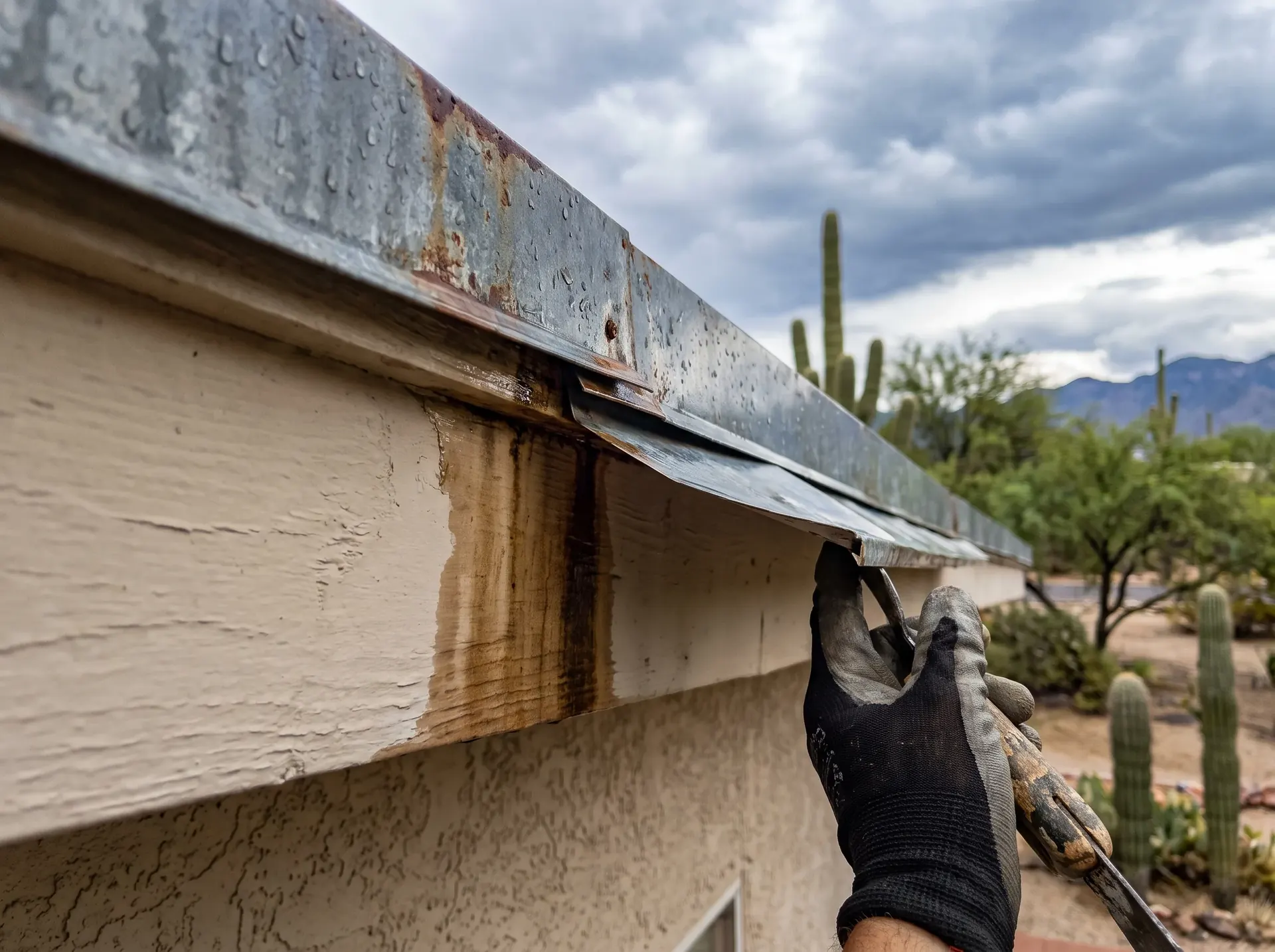
Eave trim, drip edge and gutter detail. When monsoon runoff gets in behind the fascia instead of away from the house, the damage lands on timber rather than metal.
What this involves
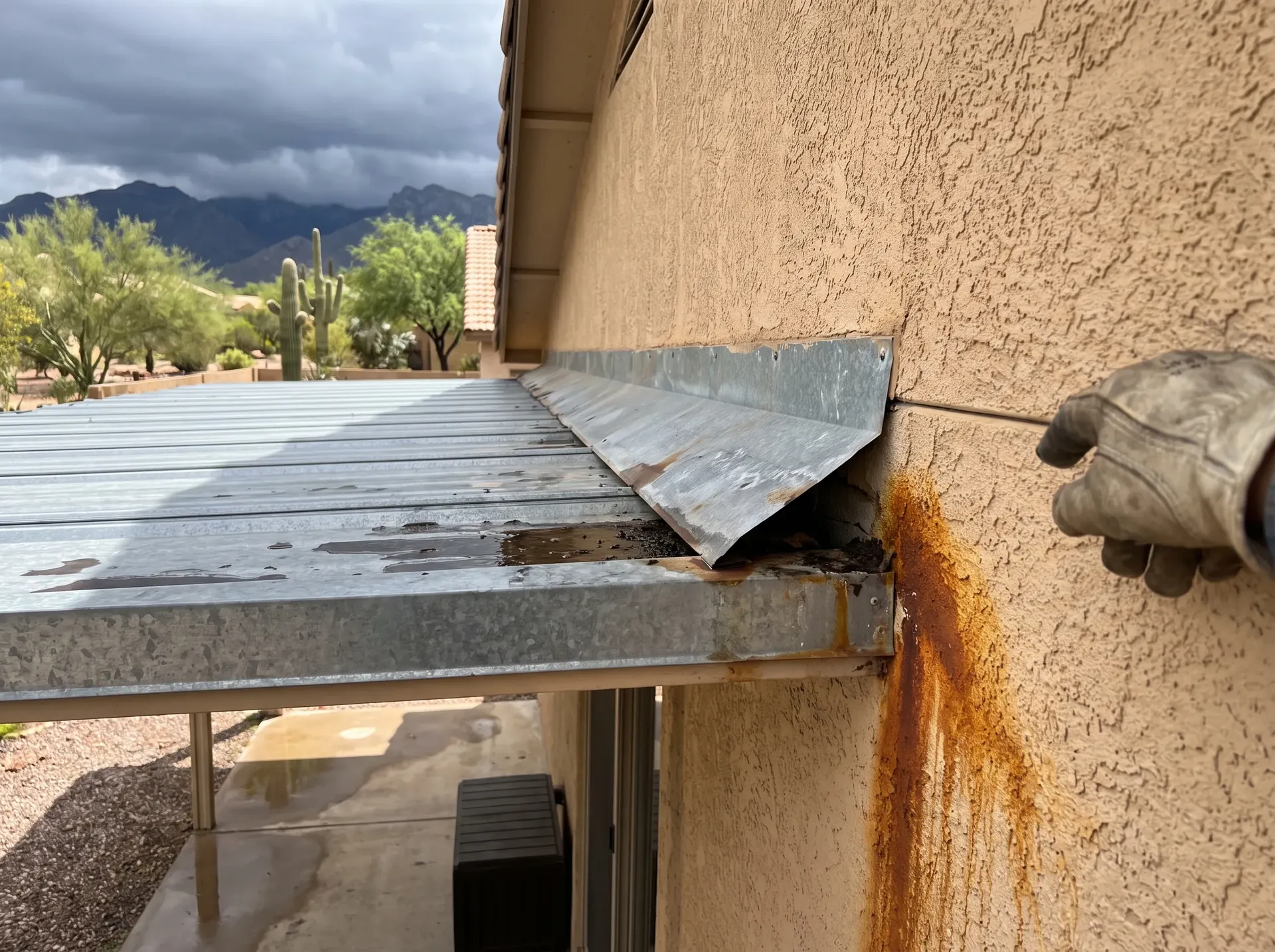
Attached metal patio covers, ramadas and carports. Lower slope than the house roof, less well detailed when they went up, and usually leaking at the wall tie in.
What this involves
Most people are not, and that is fine. Tell us where the water is showing up and what the weather was doing, and we will tell you what it usually turns out to be.
Something went wrong sending that. Please call (520) 555-0132.
We have your details. If you said water is coming in right now, that goes ahead of scheduled work. Otherwise expect a call back during opening hours.