Metal Roof Leak Repair
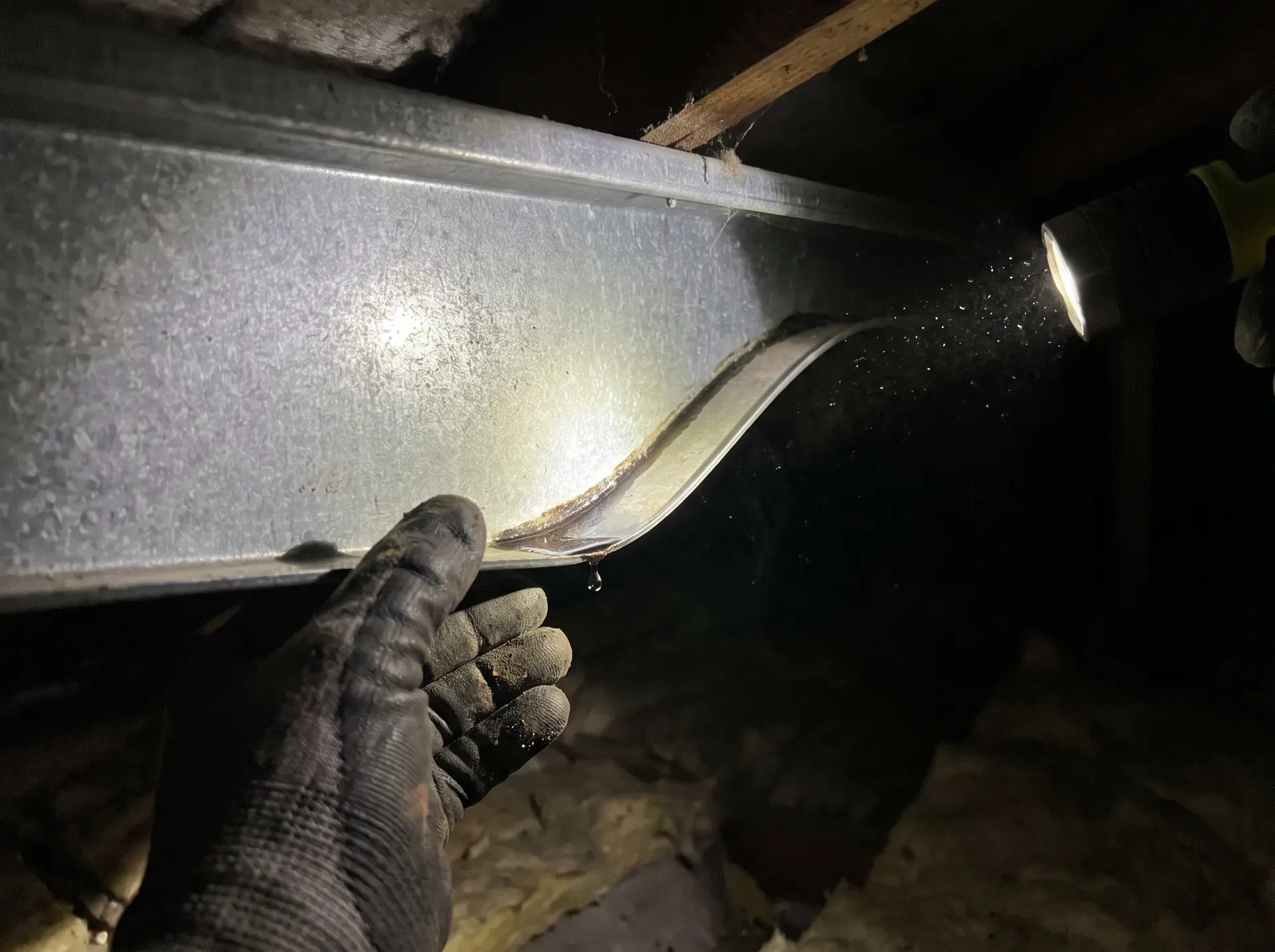
The stain on your ceiling is almost never directly under the hole. We trace the water back to where it actually enters and repair that point.
What this involves
Repair only. We do not sell replacements.
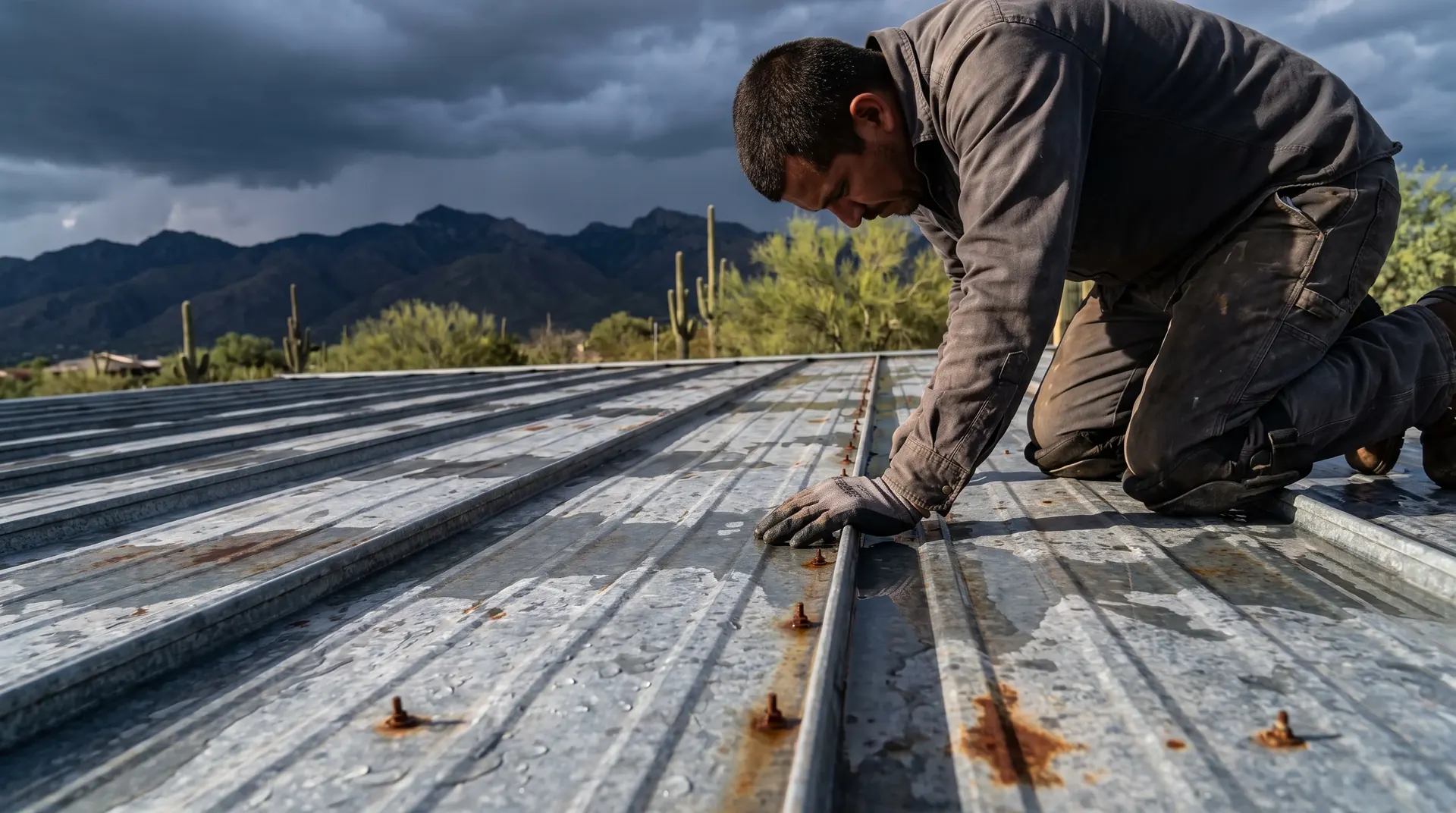
A stain on the ceiling, screws standing proud, rust at a cut edge, a seam that has let go. We find where the water is actually getting in and we repair that, without turning it into a new roof.
A metal roof in the Sonoran Desert takes a beating that almost nothing else on the house takes. Surface temperatures swing enormously between a July afternoon and a July night, and the panel grows and shrinks along its whole length every single day. Do that for fifteen years and the fasteners work loose, the sealant beads go hard and shrink back off the joints, and the coating chalks down to bare metal at the cut edges.
None of that means the roof is done. It means the roof needs the work it has never had.
The reason so many desert metal roofs get replaced anyway is that a leak is frightening and a replacement is easy to sell. Somebody looks at a stained ceiling, walks the roof for five minutes, points at the rust and quotes a tear off. What they have not done is find out where the water actually entered, because that takes longer and it does not lead anywhere as profitable.
We only do the repair. If the panels are structurally sound, there is almost always a repair that holds, and it is a fraction of the disruption. If they genuinely are not, we will tell you that too, and we will not be the ones quoting you for the replacement.
The stain on your ceiling is almost never directly under the hole. We trace the water back to where it actually enters and repair that point.
What this involves
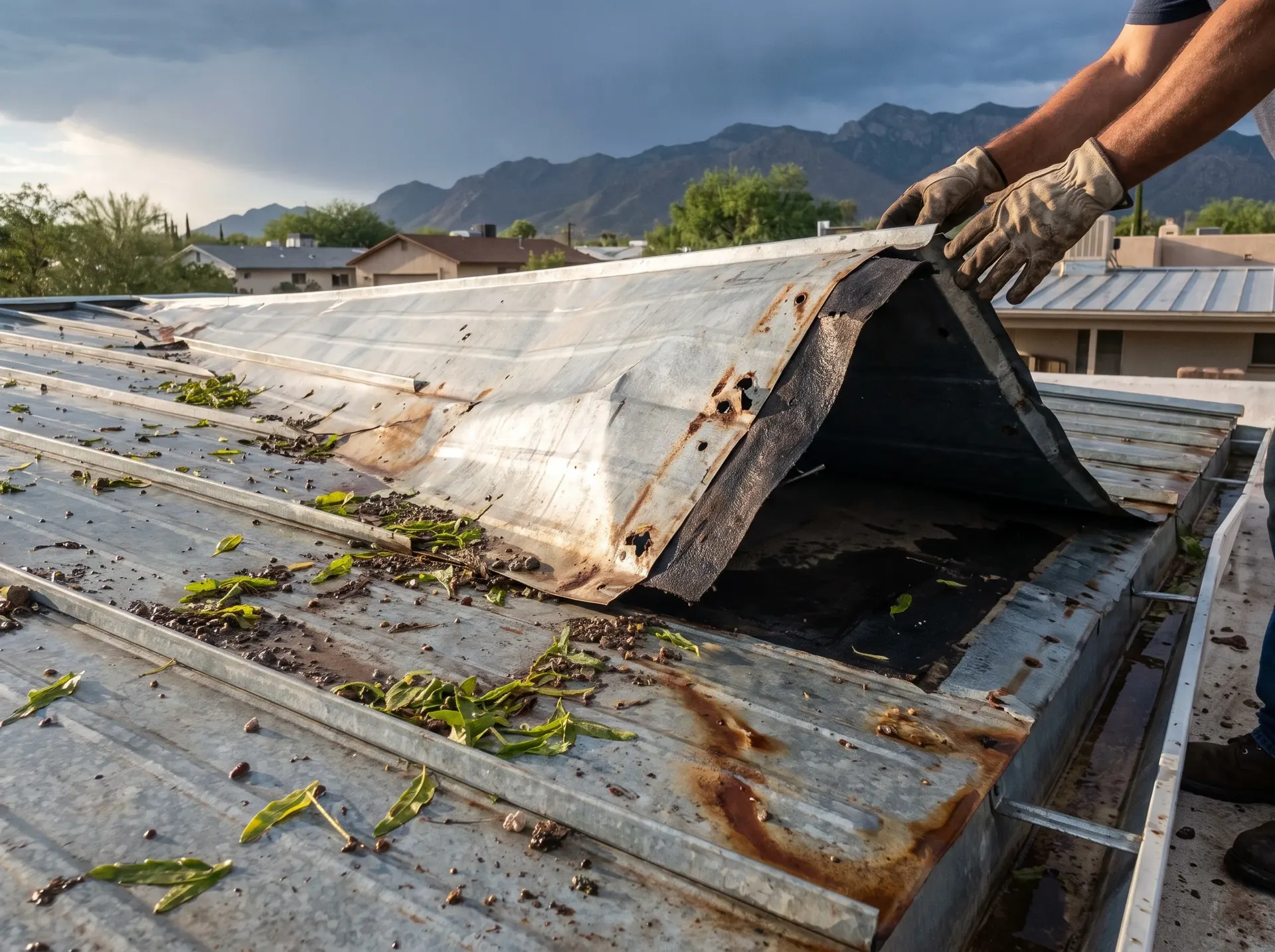
Lifted panels, torn fastener holes and driven rain after a July microburst. What the storm broke, and what it only revealed.
What this involves
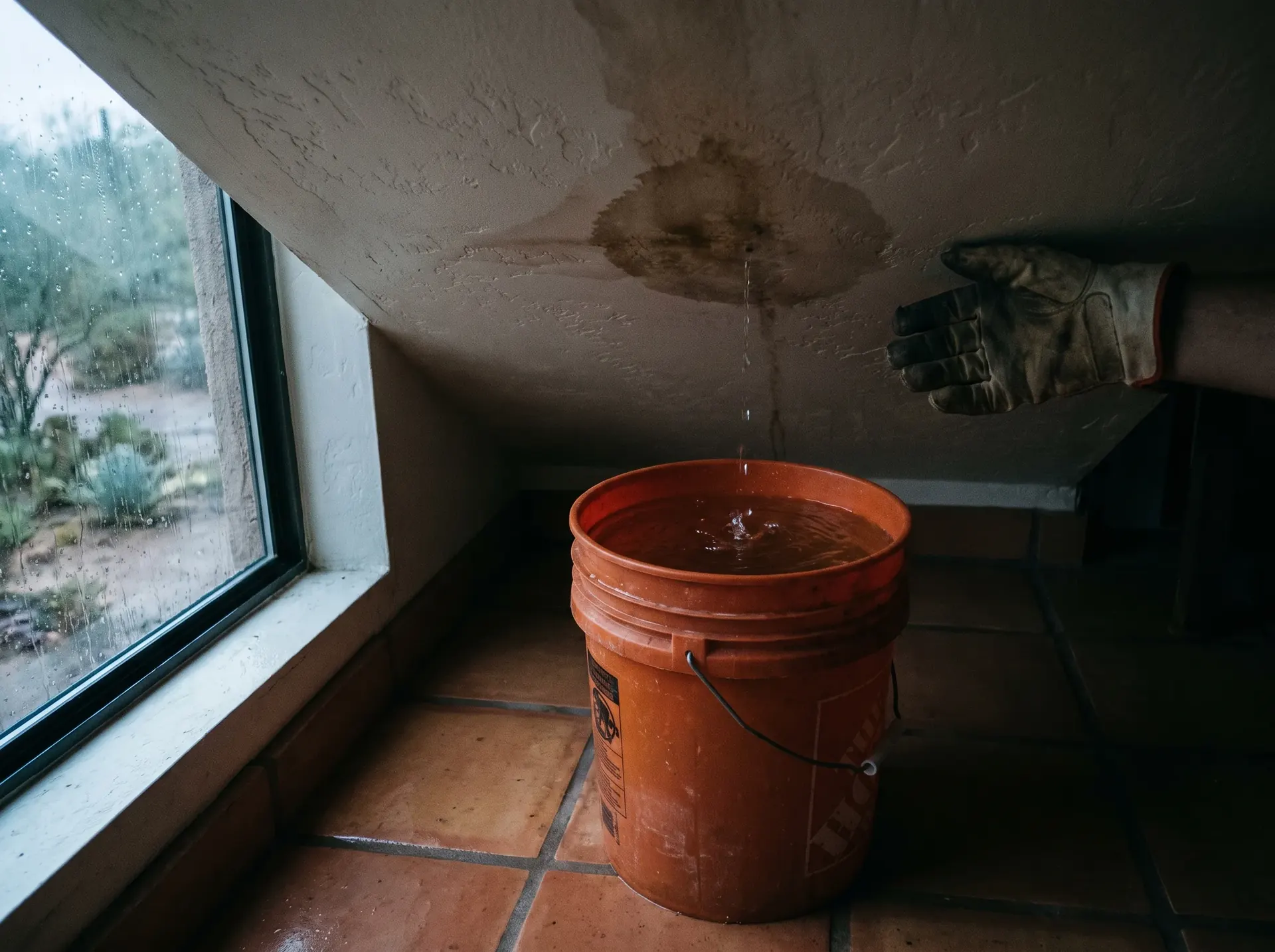
Water coming in right now. We stabilise the intrusion first and repair it properly once the roof is dry enough to work on safely.
What this involves
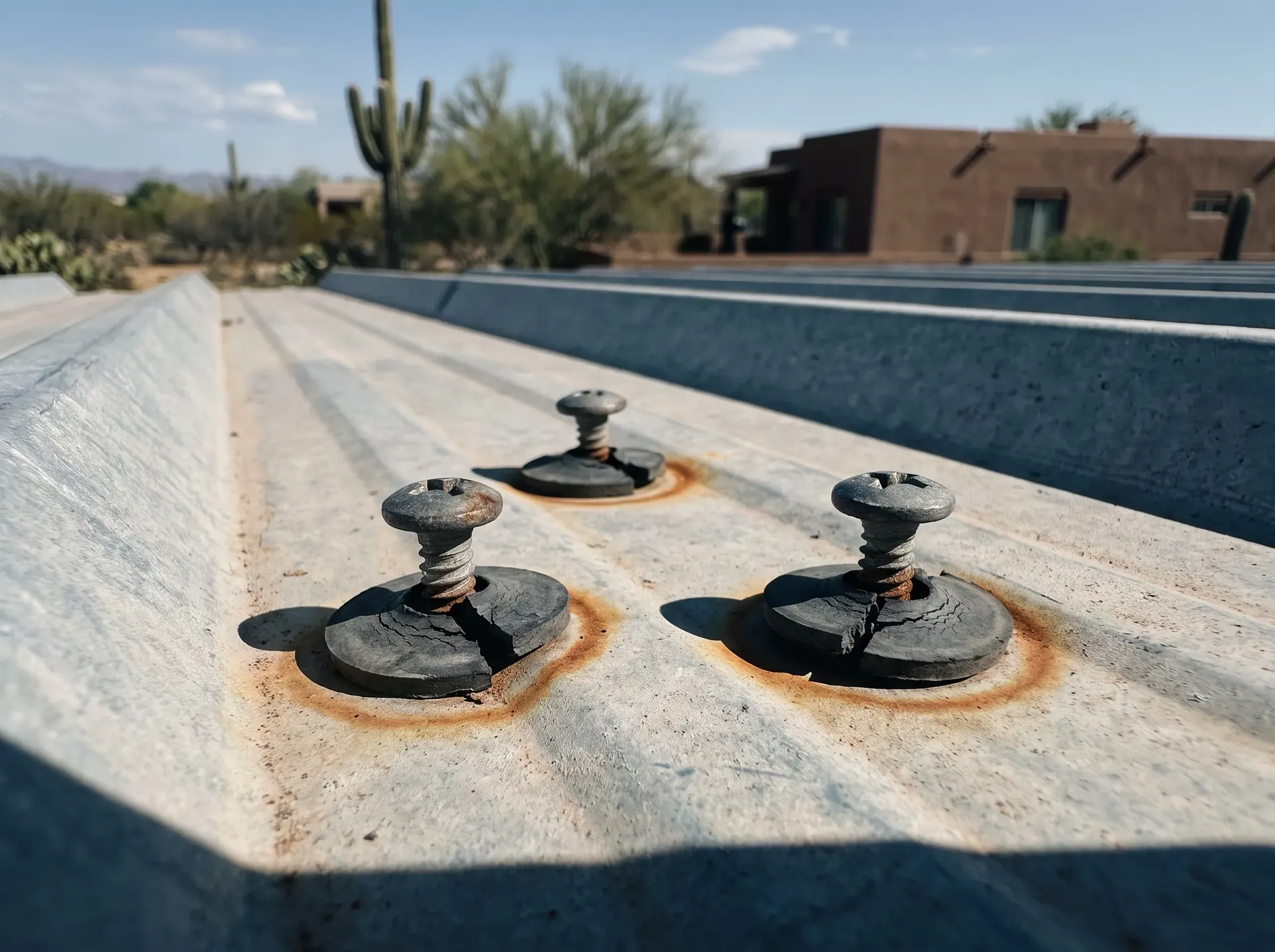
Tucson heat walks exposed fastener screws loose. Oversize replacements with new washers across the whole field, not only the ones you can see.
What this involves
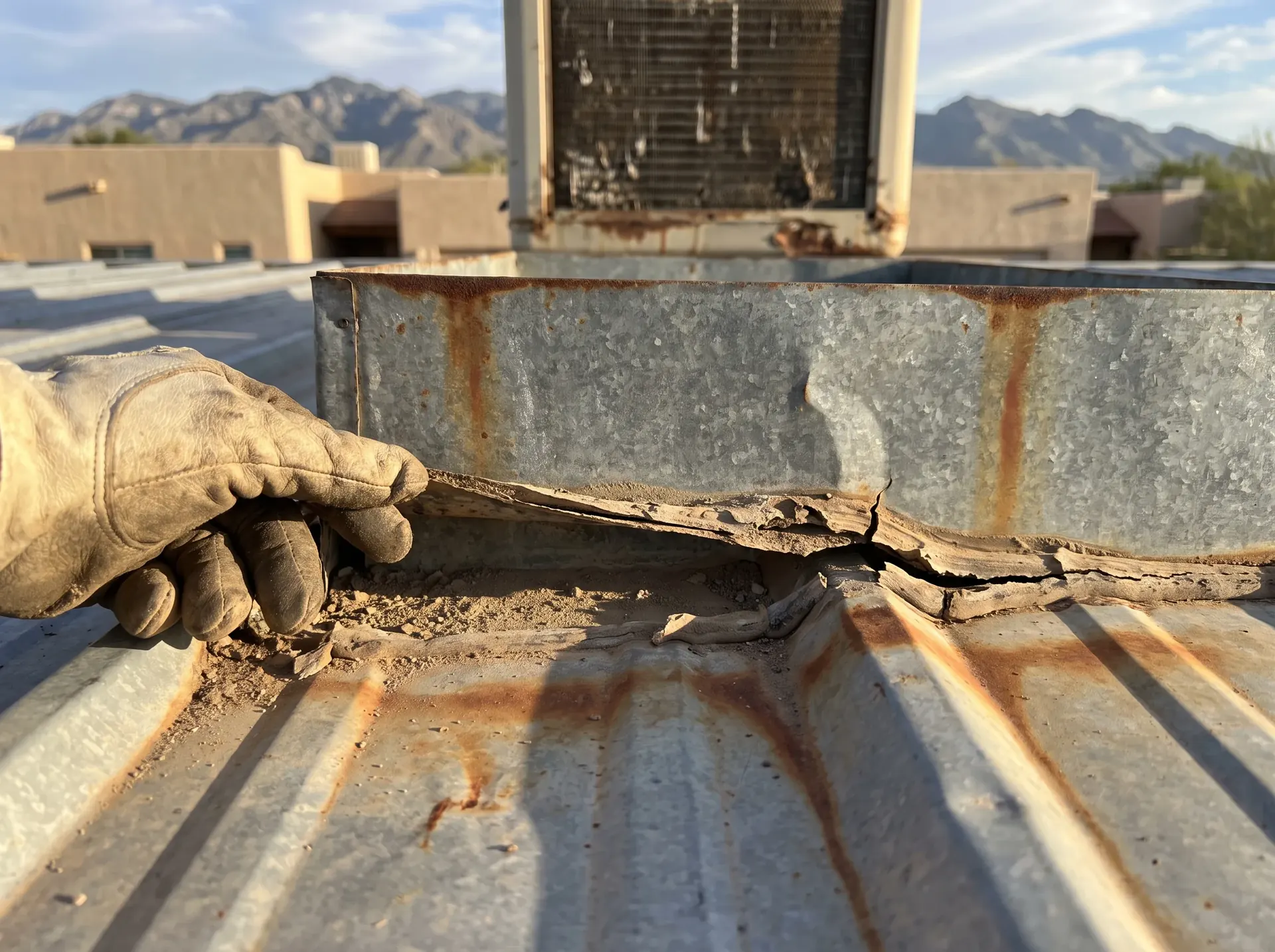
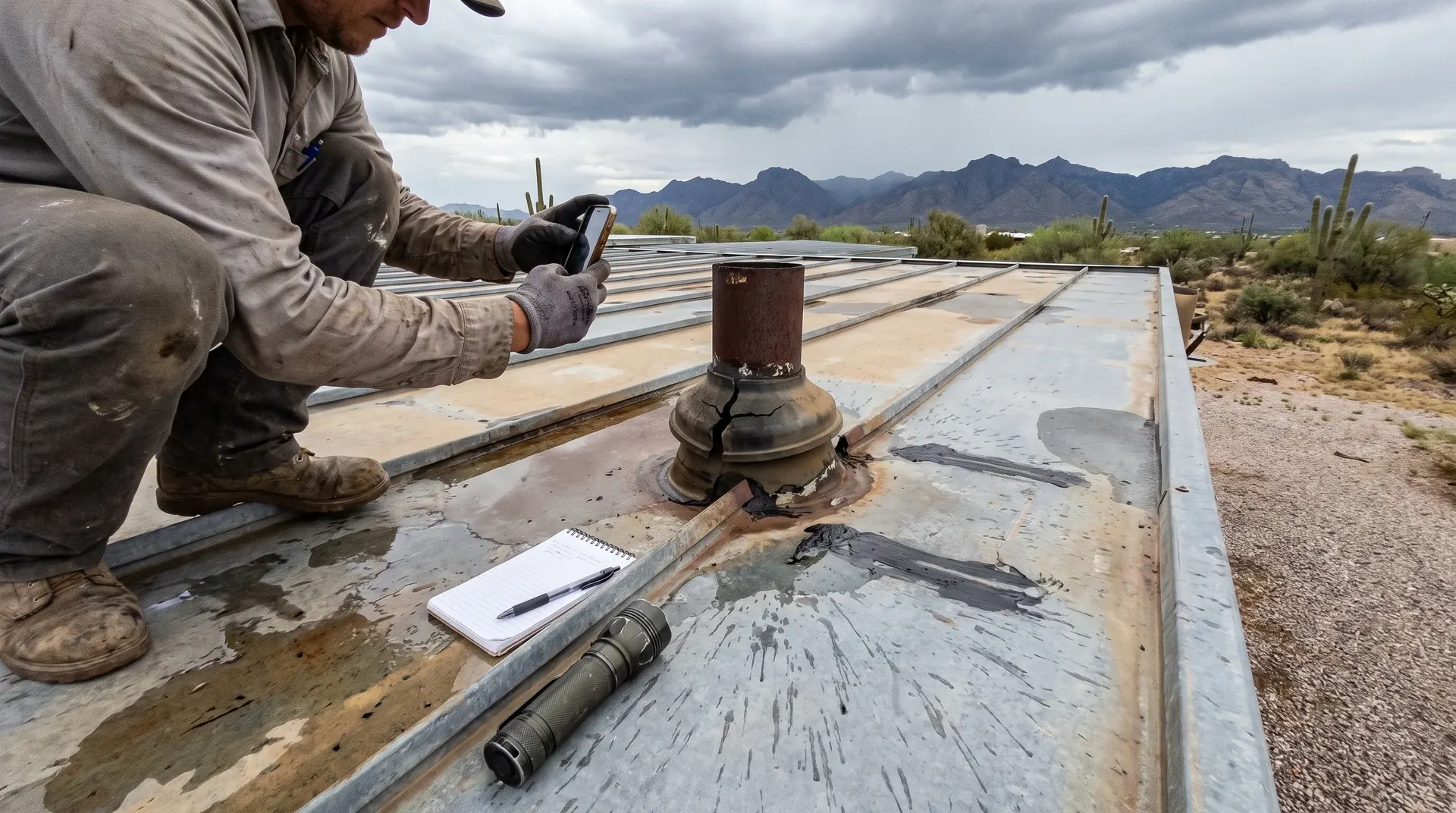
Pipe boots, swamp cooler curbs, vents, valleys and wall transitions. This is where metal roofs actually leak, far more often than the panel.
What this involves
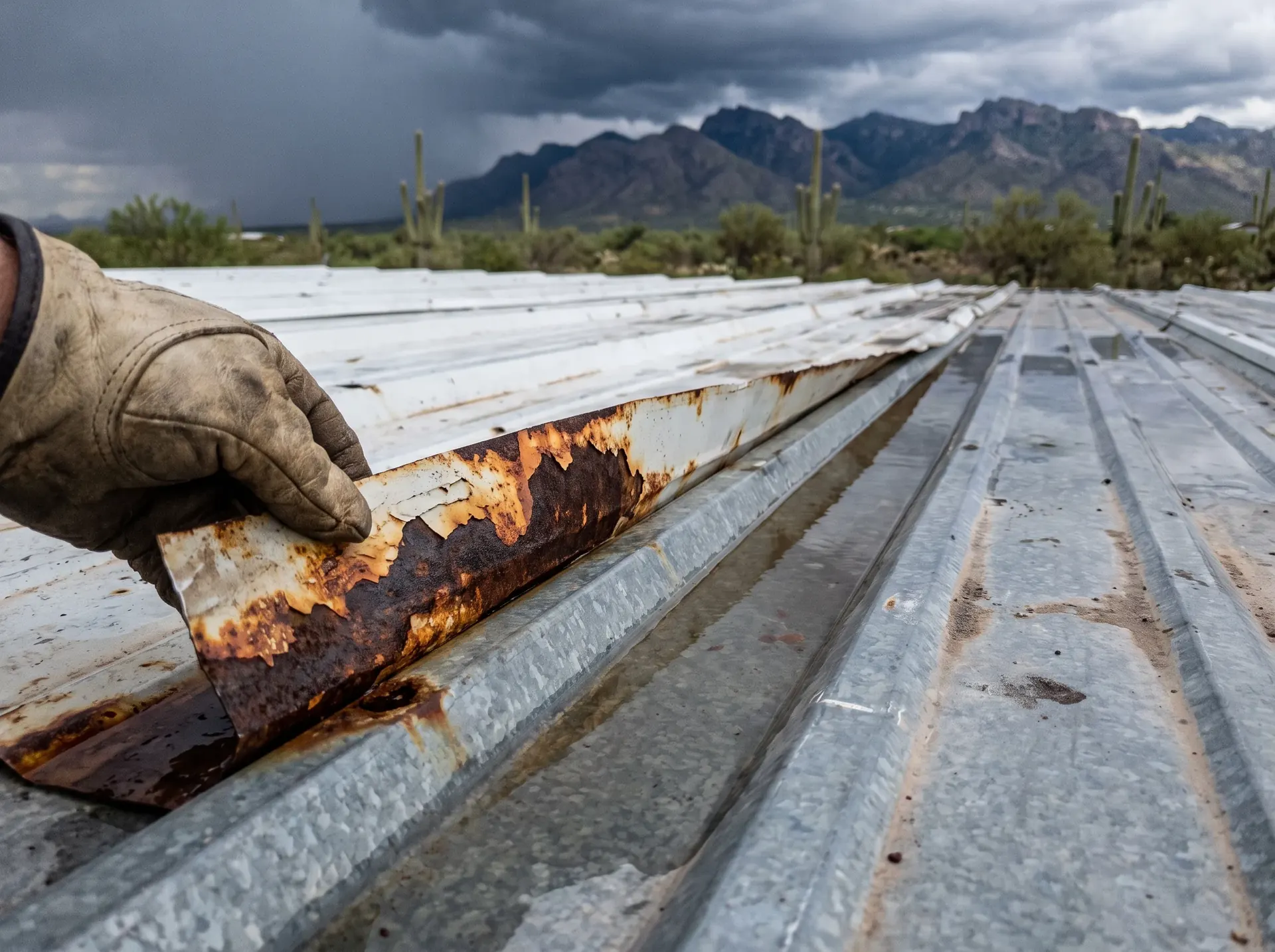
Rust starts at cut edges, scratches and fastener holes. Treated and recoated before it perforates, or the section replaced where it already has.
What this involves
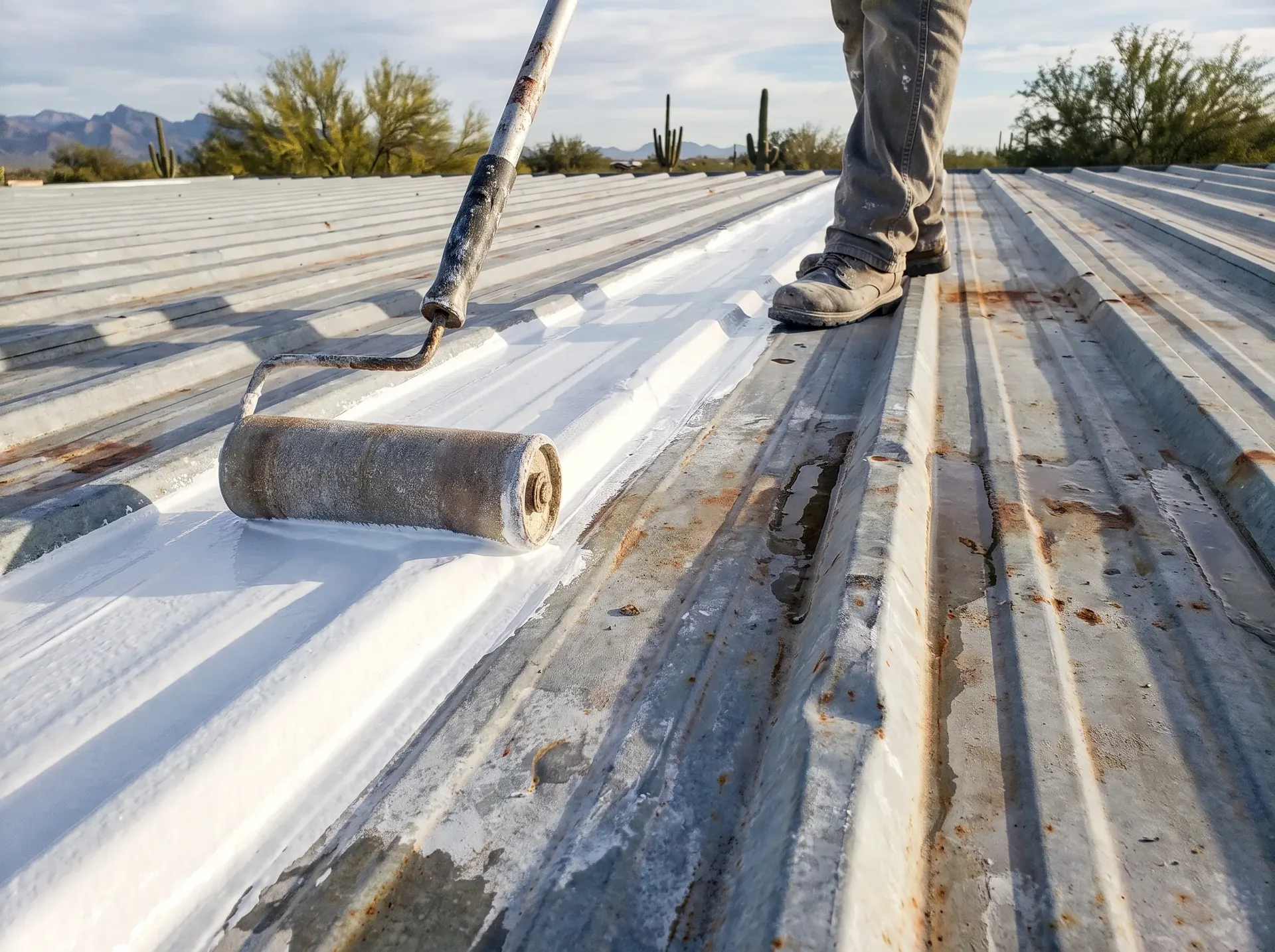
A restoration coating seals every lap and fastener at once and brings the surface temperature down on a roof that is tired rather than finished.
What this involves
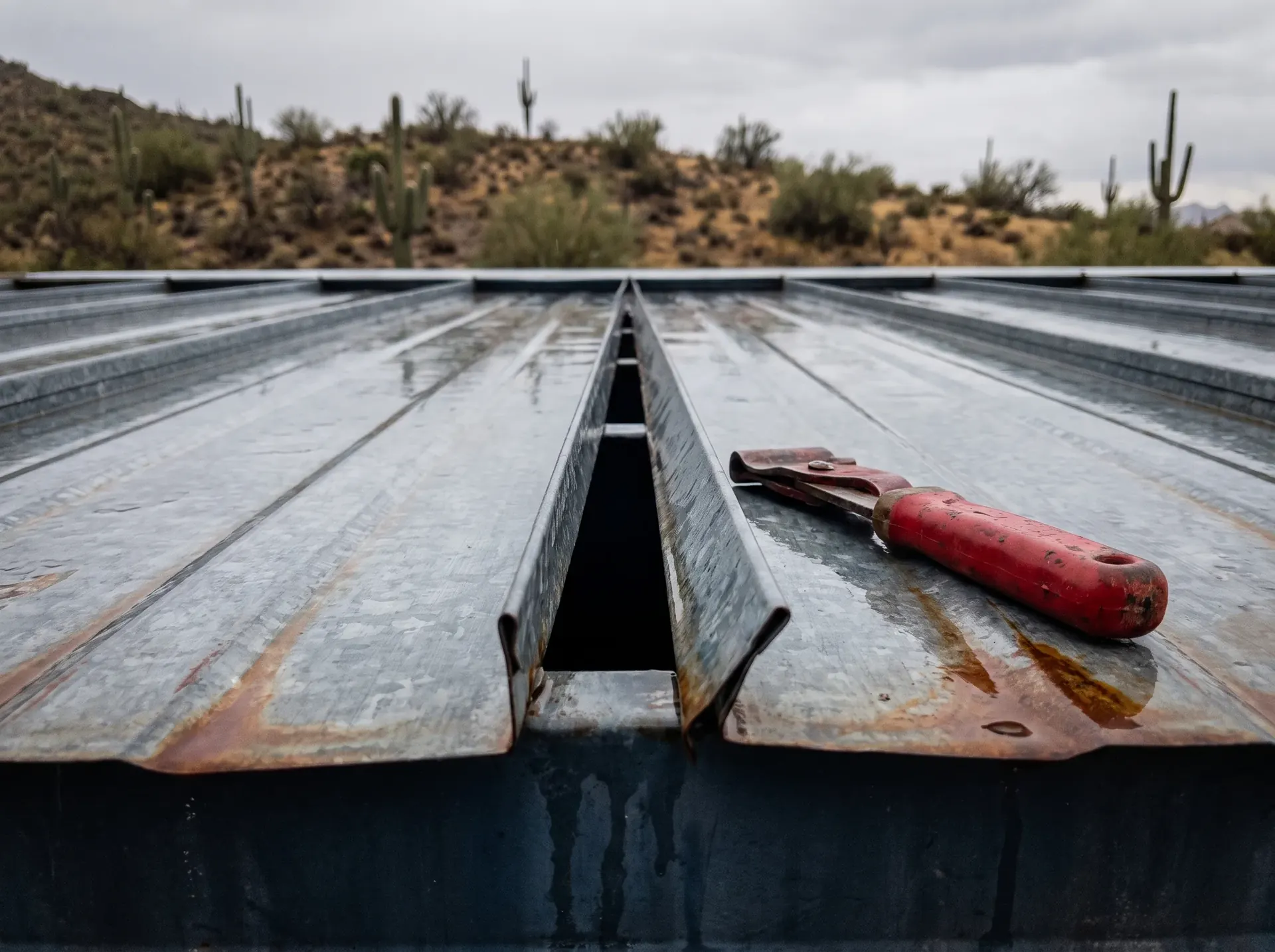
Sprung standing seams, torn fastener holes, storm dented panels and failed end laps, repaired in place or replaced a section at a time.
What this involves
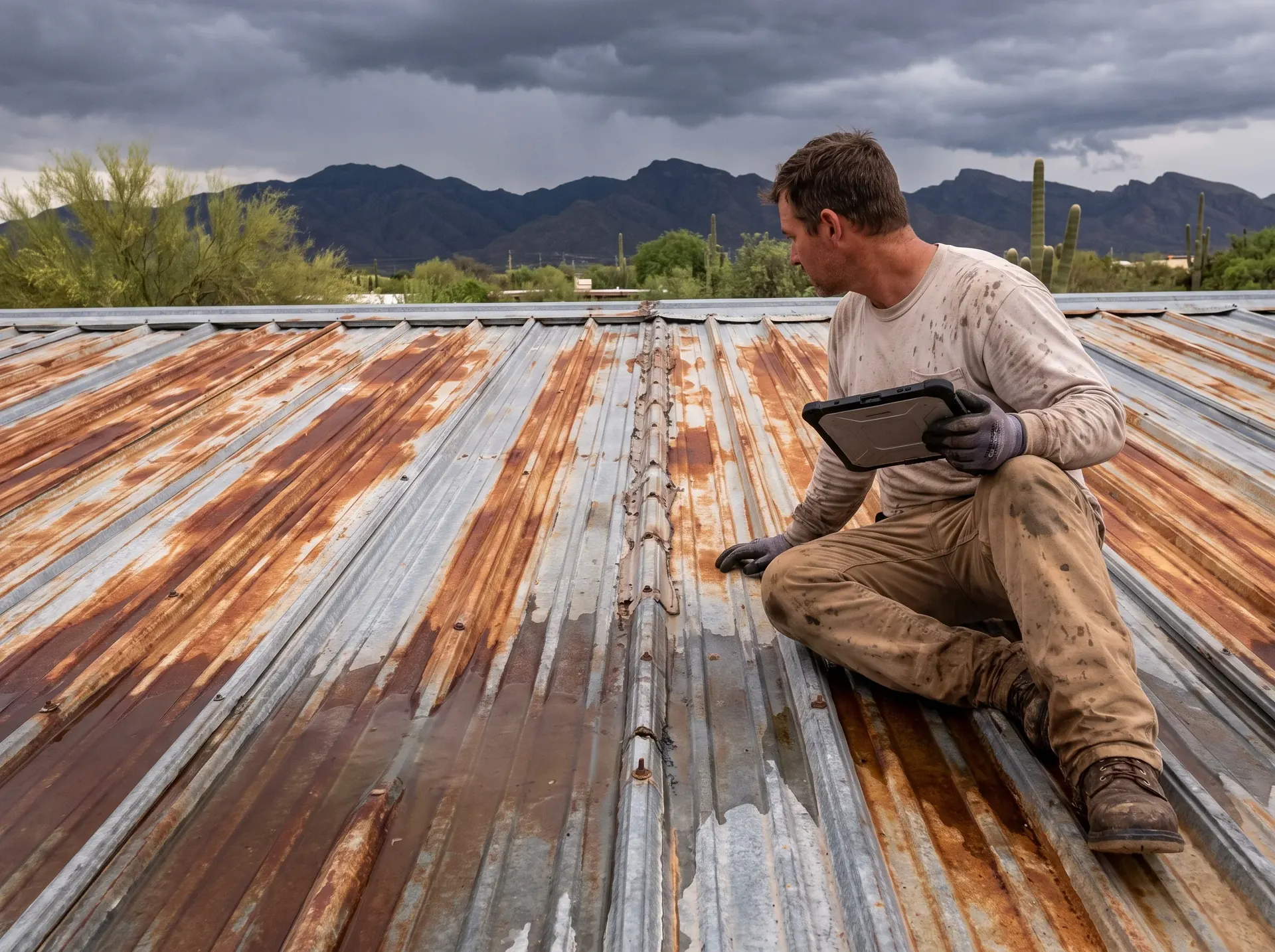
A walked inspection with photographs of every fastener run, lap, penetration and flashing detail, so you can see the condition for yourself.
What this involves
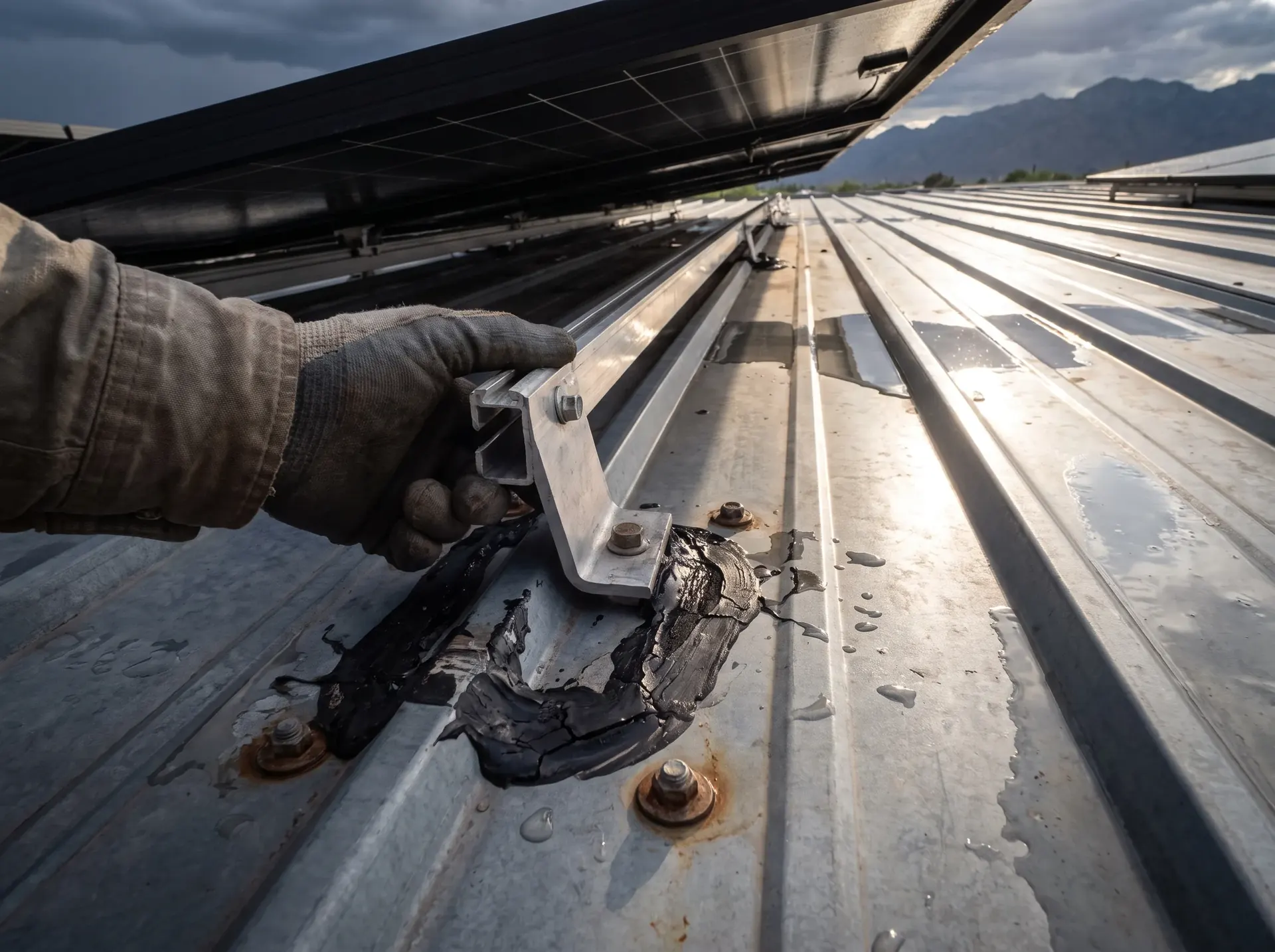
Curb mounted skylights and solar standoffs flashed into a metal roof badly, or not flashed at all. Very common where panels went on after the roof did.
What this involves
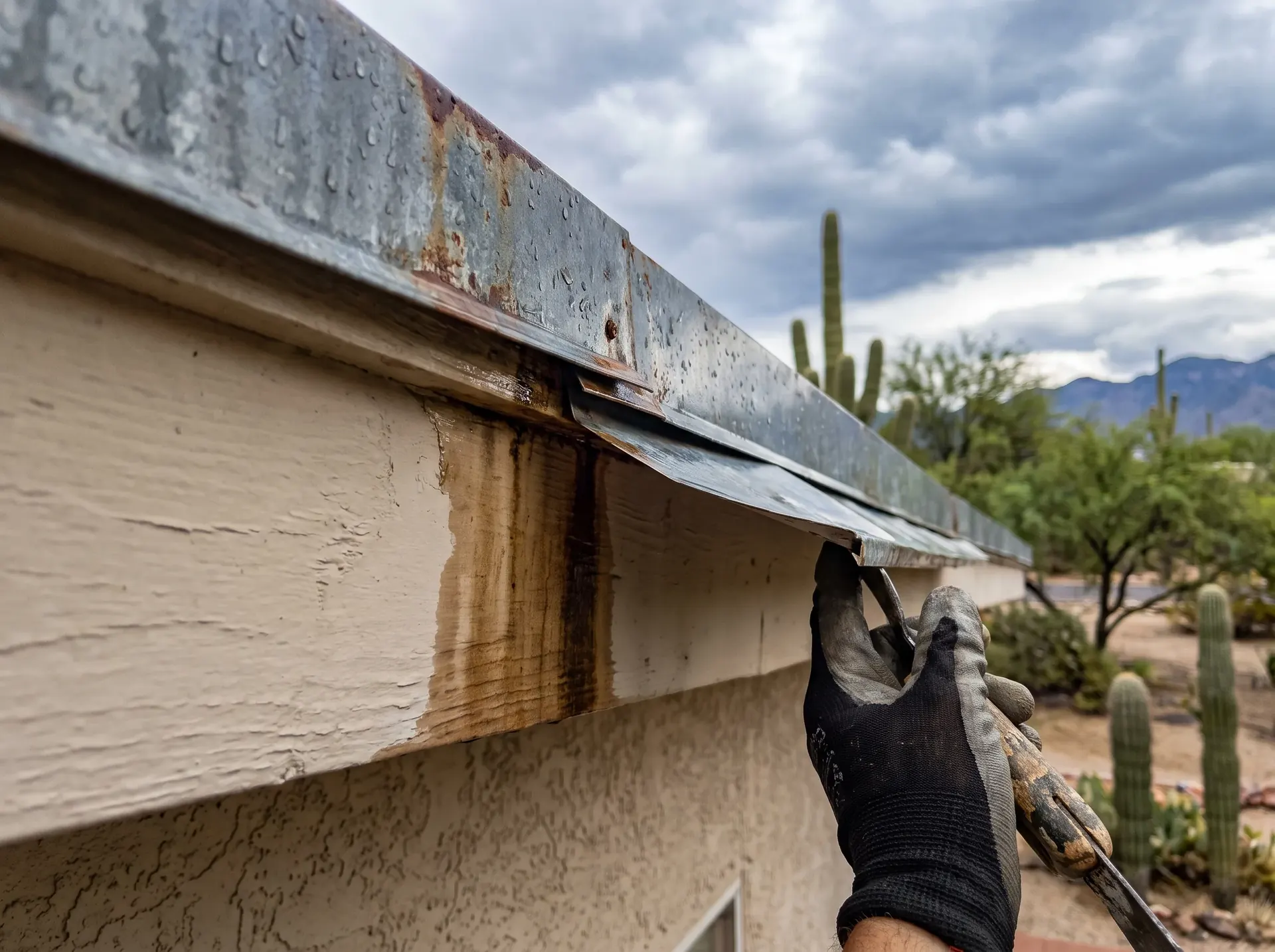
Eave trim, drip edge and gutter detail that lets monsoon runoff get in behind the fascia instead of away from the house.
What this involves
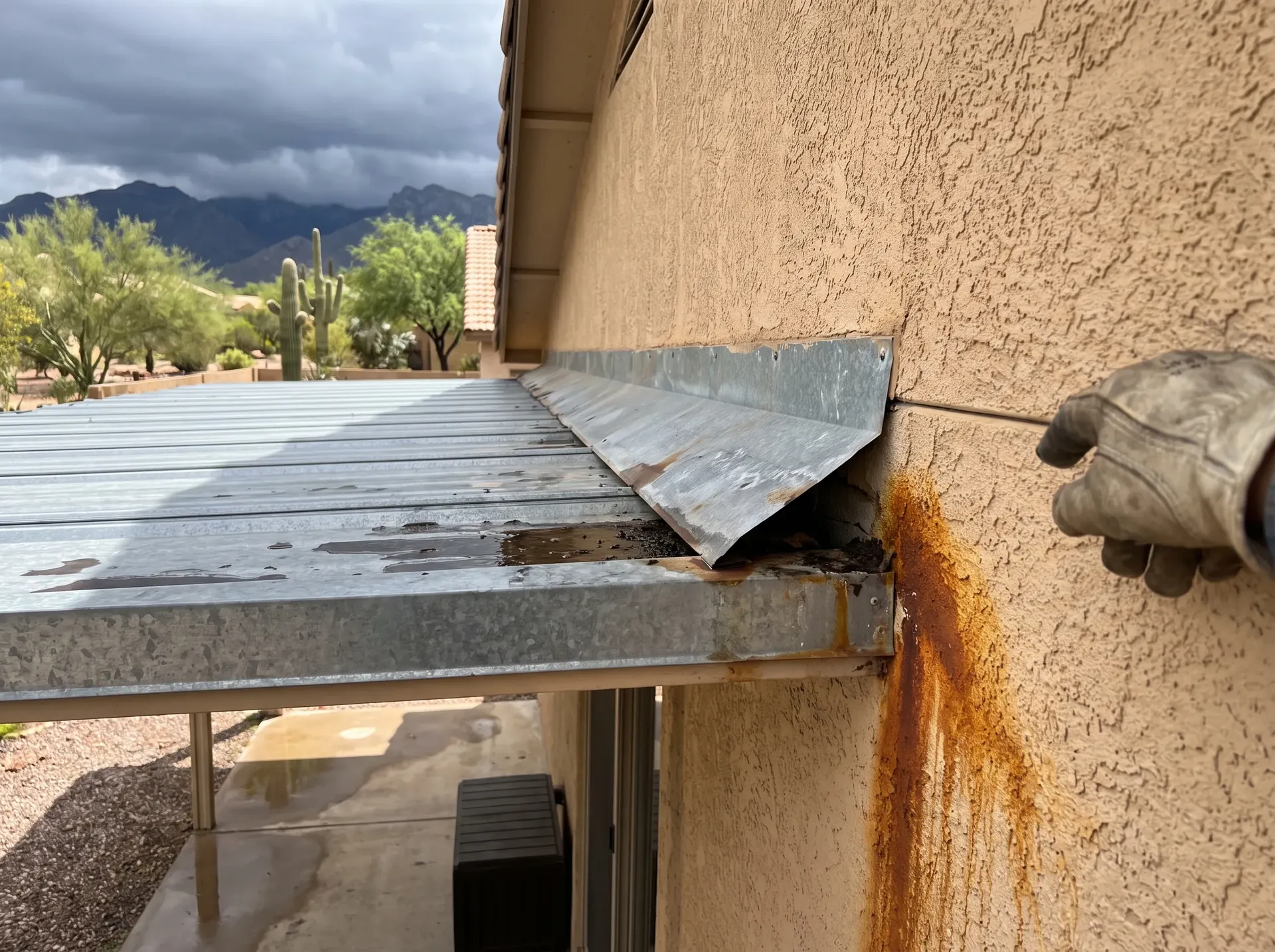
Attached metal patio covers, ramadas and carports. Lower slope than the house, and usually leaking where they tie into the wall.
What this involves
We do not install metal roofs and we do not replace them. When we say a roof can be repaired, that is not a smaller sale we are talking ourselves into. It is the only thing we do.
A tile roofer and a shingle roofer are not doing our trade. Thermal movement, fastener pull out, oil canning, galvanic corrosion at a dissimilar metal contact and the correct sealant for a joint that moves are all specific knowledge, and getting them wrong is how a repair fails in one season.
Water travels sideways along a purlin, sometimes a long way, before it drops. Sealing everything above a ceiling stain is a common repair and a bad one, because it treats the symptom and leaves the leak.
Ultraviolet load, daily thermal cycling, monsoon microbursts, blowing grit off the corridor, hail out toward the Rincons and a handful of freeze nights up at elevation. That is the list here. Ice dams and moss are somebody else's problem.
Where the stain is, when it appears, and whether it takes a storm or just rain. Two of those three tell us more than a photograph of the roof does.
The entry point is found by working backwards from where the water arrives, not by starting on the roof and guessing.
Every fastener run, lap, penetration and flashing detail, whether or not it is the one leaking. You get the photographs.
Including the times the answer is that one boot has perished and nothing else is wrong.
The failed detail, properly, with materials chosen for a joint that is going to keep moving.
What else on that roof is close to needing attention, and roughly when.
We have not collected any reviews yet. When we do they will appear here in full, in the customer's own words.
Anywhere else in Pima County, call and ask.
Almost always, and far more often than people are told. If the panels are structurally sound, the failures that cause leaks are fasteners, sealant, flashing, boots and seams, and every one of those is a repair rather than a replacement. A roof is genuinely finished when the panel itself is perforating across a wide area or the structure under it has been wet long enough to rot.
Penetrations, by a long way. Pipe boots, swamp cooler curbs, vents and the flashing where the roof meets a wall. Panels are simple and they mostly do their job. It is the holes people cut in them, and the details wrapped around those holes, that fail first. Fasteners are the second cause and seams are the third.
Because a lot of leaks need volume and wind to show themselves. A lap joint that is slightly open sheds ordinary rain perfectly well, and only fails when water is driven sideways under it by a monsoon downdraft. That is also why the leak seems to come and go, and why it is worth calling while you can still remember exactly which storm did it.
Exposed fastener roofs do, eventually, and it is the single most predictable failure in this climate. The rubber washer under the screw head is the seal, and heat, ultraviolet and constant thermal movement destroy it. Once the washer has gone hard and the screw has worked loose, every screw hole is an open hole. There are a lot of them.
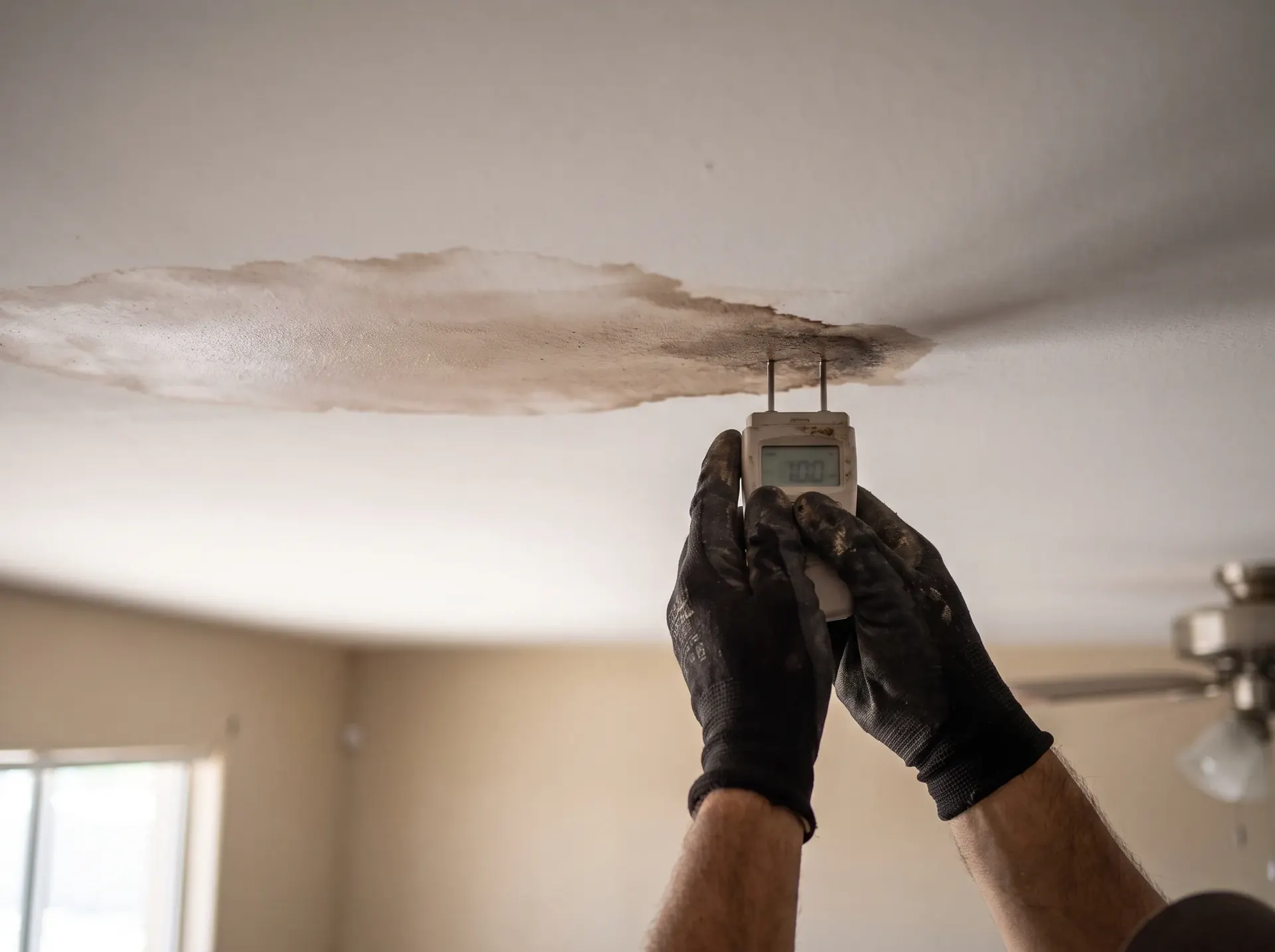
The roof stops being the expensive part. Water tracks along the structure and stays there, and in a climate this dry people assume it will simply evaporate. Under insulation and behind a ceiling it does not. Decking, framing, insulation and drywall are all more expensive to put right than the detail that let the water in, which is usually small.
Where is the water showing up, and does it take a storm to do it? That is usually enough for us to tell you what we are probably looking at before anyone drives anywhere.
Something went wrong sending that. Please call (520) 555-0132.
We have your details. If you said water is coming in right now, that goes ahead of scheduled work. Otherwise expect a call back during opening hours.