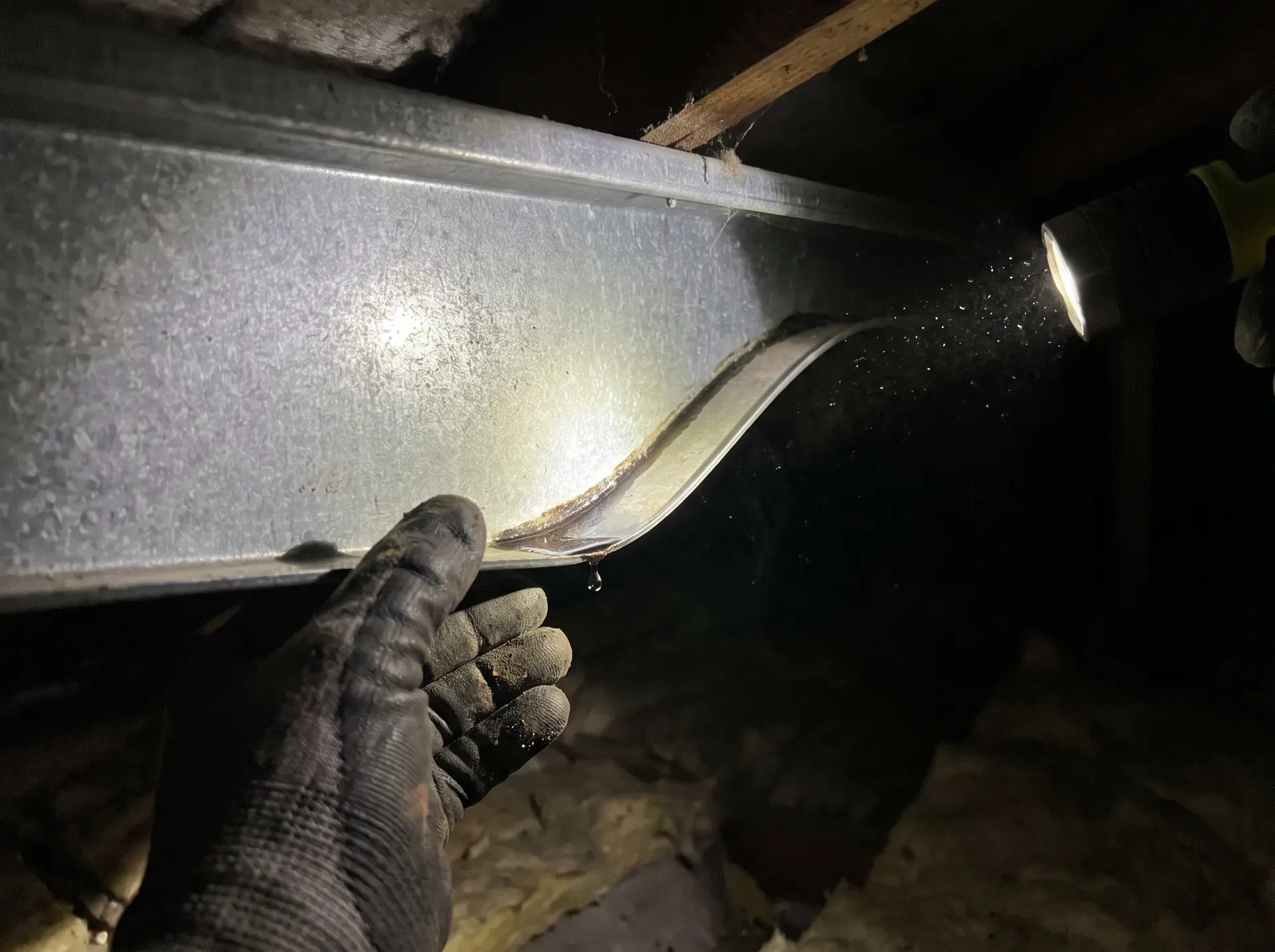
Metal Roof Leak Repair
Water shows up on a ceiling a long way from where it got in. We work backwards from the stain to the real entry point, repair that detail, and leave the twenty other places somebody would have sealed alone.
See how we fix it
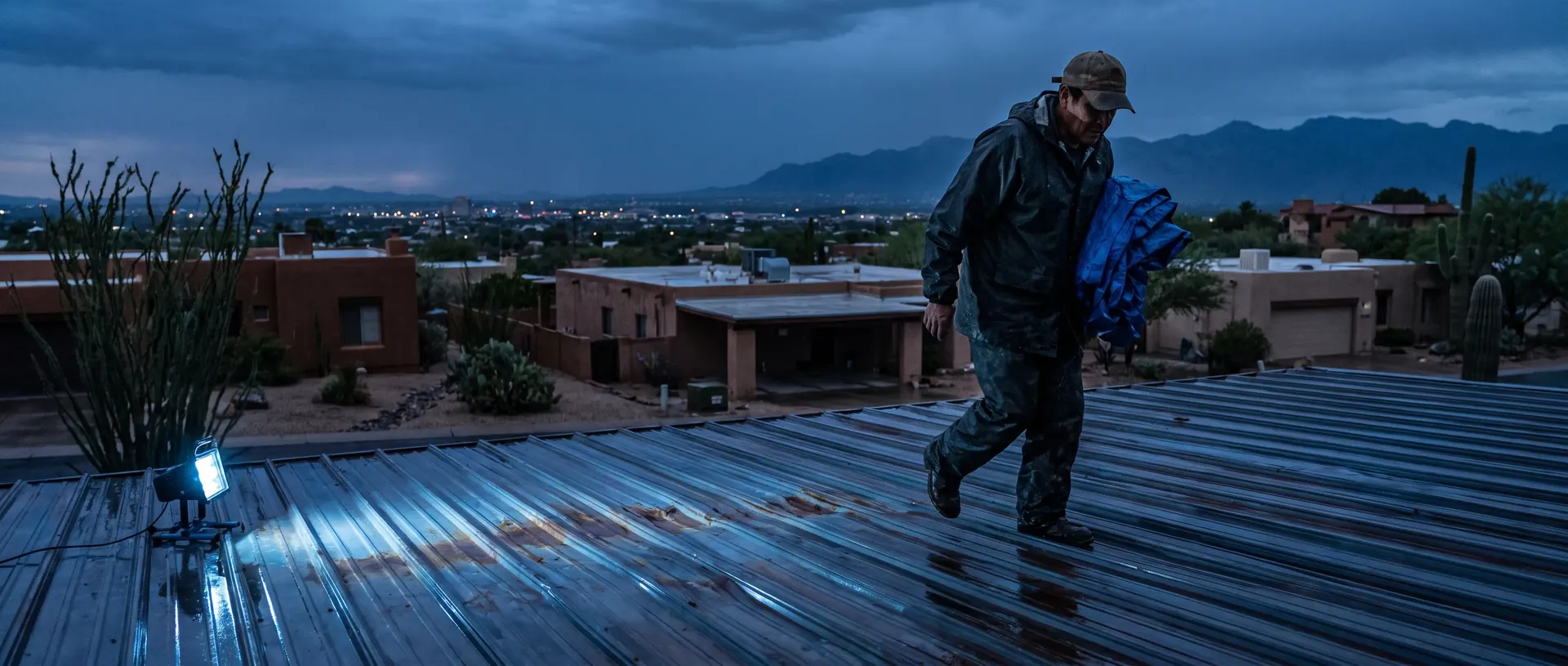
Water is coming in now. The first job is stopping it reaching anything else. The proper repair happens once the roof is safe to stand on.
An emergency roof leak is not one piece of work. It is stabilisation, and then repair, and they happen at different times for good reasons.
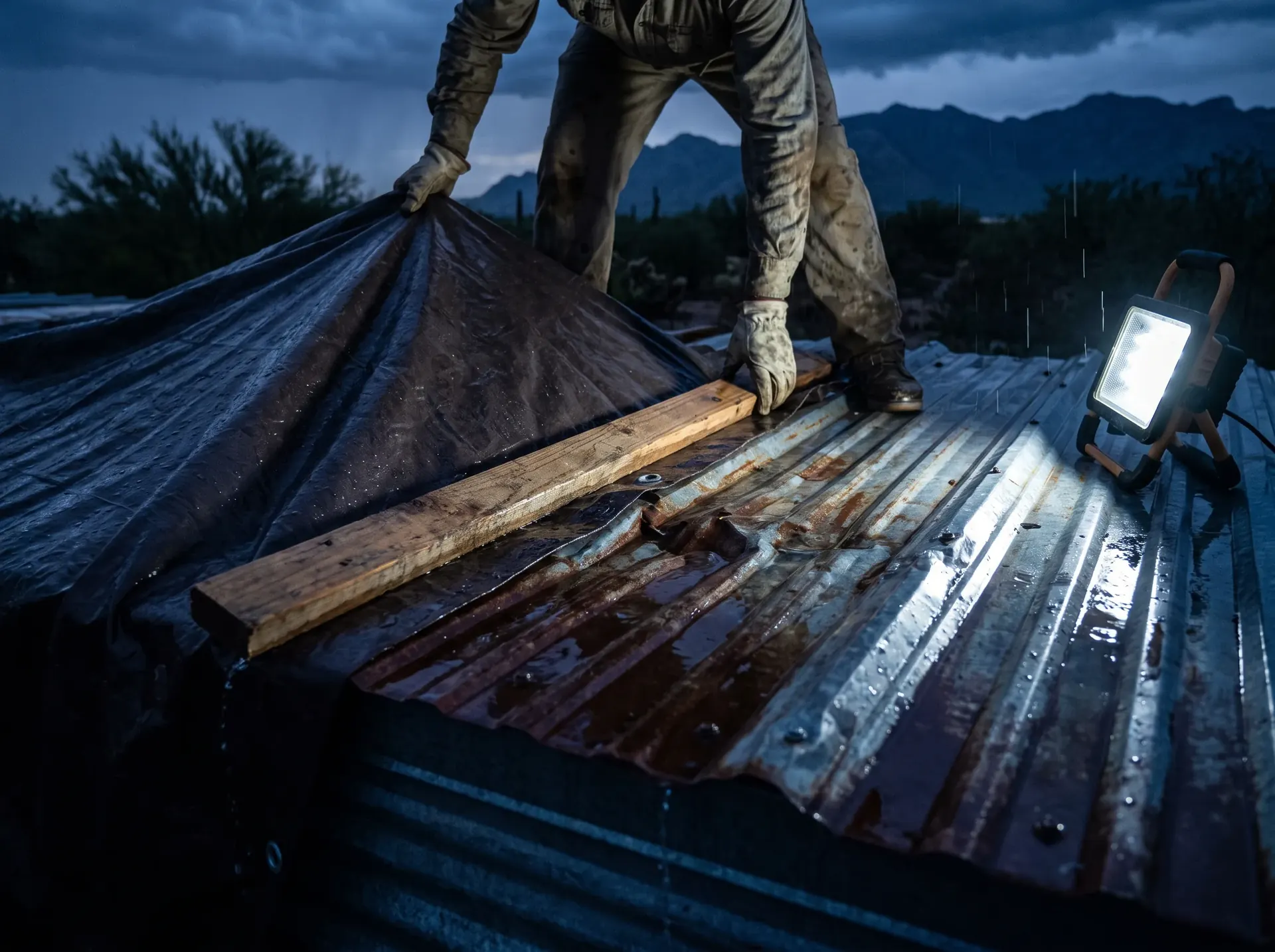
Stabilisation is about the water that is coming in right now. Getting it stopped or redirected, protecting the ceiling, the insulation and whatever is underneath, and making sure nothing turns into an electrical problem. It can often be done from inside, and the parts that cannot are done with a tarp and battens rather than with sealant.
The repair is a different job entirely. It needs a dry roof, decent light, a proper diagnosis of where the water actually entered, and materials that will bond. None of those things exist in the middle of a monsoon cell. Sealant applied to a wet, dirty, moving panel in poor light does not adhere, and by morning it has done nothing except cover the evidence of where the leak was.
So we do the first job when you call and the second job when the roof allows it. Anyone offering to permanently fix a metal roof leak during a storm is offering something that does not work.
Water visibly coming through a ceiling, running down a wall, or dripping steadily from a light fitting or a vent. This is the call that gets taken ahead of scheduled work.
A bulge, a sag, or a spreading damp patch that is still growing. Drywall holds a surprising amount before it releases all at once, and how that water is let out determines whether you lose a patch or a whole sheet.
Panels lifted or peeled back by a microburst, an edge or ridge cap gone, or debris impact that has left the roof physically open. Here the priority is covering the opening properly before the next cell arrives, which in monsoon season may be tomorrow.
Where the water is, how fast, whether it is near anything electrical, and whether a ceiling is bulging. Those answers decide what we tell you to do in the next five minutes.
Usually switching off a circuit, moving things, getting a container underneath, and releasing a bulging ceiling in a controlled way. This part costs nothing and prevents most of the expensive damage.
Someone standing under running water is a different priority from a booked inspection.
Water controlled, contents protected, roof covered where it is open. We do not apply sealant to a wet panel and call it fixed.
Full diagnosis, working back from where the water arrived, exactly as any other leak repair.
You should not be left with a tarp on the roof as the end of the story.
Which is: the water can be controlled and the roof can be covered, and that is the honest limit. Anyone promising a permanent fix on a wet metal roof at night is selling something that will not survive to morning.
Nearly all of what makes an emergency expensive is water reaching insulation and ceilings while everyone waits. The instructions we give on the phone matter more than how fast a truck arrives.
A frightened homeowner at eleven at night is the easiest replacement sale in the trade. We do not do replacements, so this conversation stays about the leak.
A tarp that lifts in the next cell is worse than no tarp, because you stopped worrying about it. Ours are tensioned and battened to stay on.
Whatever the detail that failed, the two jobs below are where most of this work actually lands. If the description above did not quite match your roof, start with one of them.
Water shows up on a ceiling a long way from where it got in. We work backwards from the stain to the real entry point, repair that detail, and leave the twenty other places somebody would have sealed alone.
See how we fix it
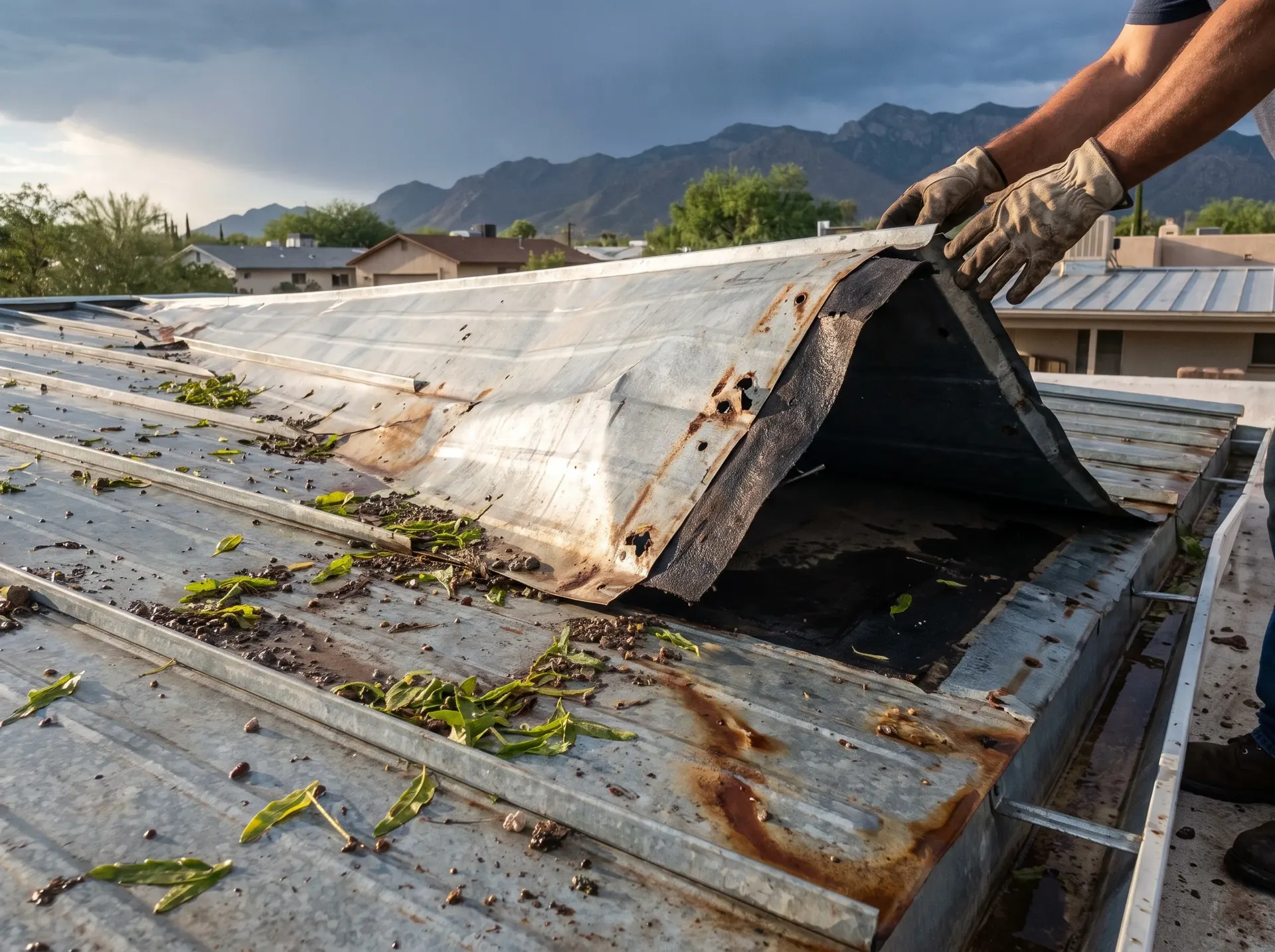
Lifted panel edges, fastener holes torn into slots by wind loading, driven rain forced under laps, and hail bruising out toward the Rincons. Storms break some things and simply expose others.
See how we fix it
Call rather than send a message. If a ceiling is bulging or water is anywhere near a light fitting, say that first.
We have not collected any reviews yet. When we do they will appear here in full, in the customer's own words.
It is if water is actively entering the house, if it is near any electrical fitting, or if a ceiling is sagging under the weight of it. It is not if a stain appeared after a storm and is now dry, although that still needs diagnosing before the next season. When you call, say which of those two you have and it will be treated accordingly.
No, and anyone saying otherwise is describing a temporary cover or a repair that will fail. Sealants and coatings need a dry, clean, stable surface to bond to, and a wet metal panel in a storm is none of those. What can be done in the rain is control the water, protect what is underneath and cover an opening. That is real work and it matters. It is not the repair.
From inside, and only from inside. Contain the water, move anything valuable, and if a ceiling is bulging, put a small hole in the lowest point of the bulge with a container underneath so it drains in one controlled place rather than collapsing. Do not go onto a wet metal roof. That surface has caused more serious injuries in this trade than the leaks ever have.
Switch off the circuit if water is anywhere near wiring, contain and redirect what is coming in, release a bulging ceiling deliberately, photograph everything while it is happening, and call. The photographs matter later, both for the diagnosis and for any conversation with an insurer, and nobody remembers to take them once it has stopped.
Before the season, having the fasteners and penetration details looked at, because those are where nearly all of it starts. During a leak, controlling the water rather than attacking the roof. There is no product that reliably stops an active leak from inside a house, and the ones sold on that promise mostly make the eventual diagnosis harder.
For a metal roof, somebody who works on metal roofs. The failure modes, the fasteners, the sealants that survive a joint that moves all day and the way water tracks along purlins are all specific. A general roofer will often do a competent job, but the diagnosis is faster and the repair lasts longer when metal is the whole trade rather than one of five.
Anywhere else in Pima County, call and ask.
Something went wrong sending that. Please call (520) 555-0132.
We have your details. If you said water is coming in right now, that goes ahead of scheduled work. Otherwise expect a call back during opening hours.