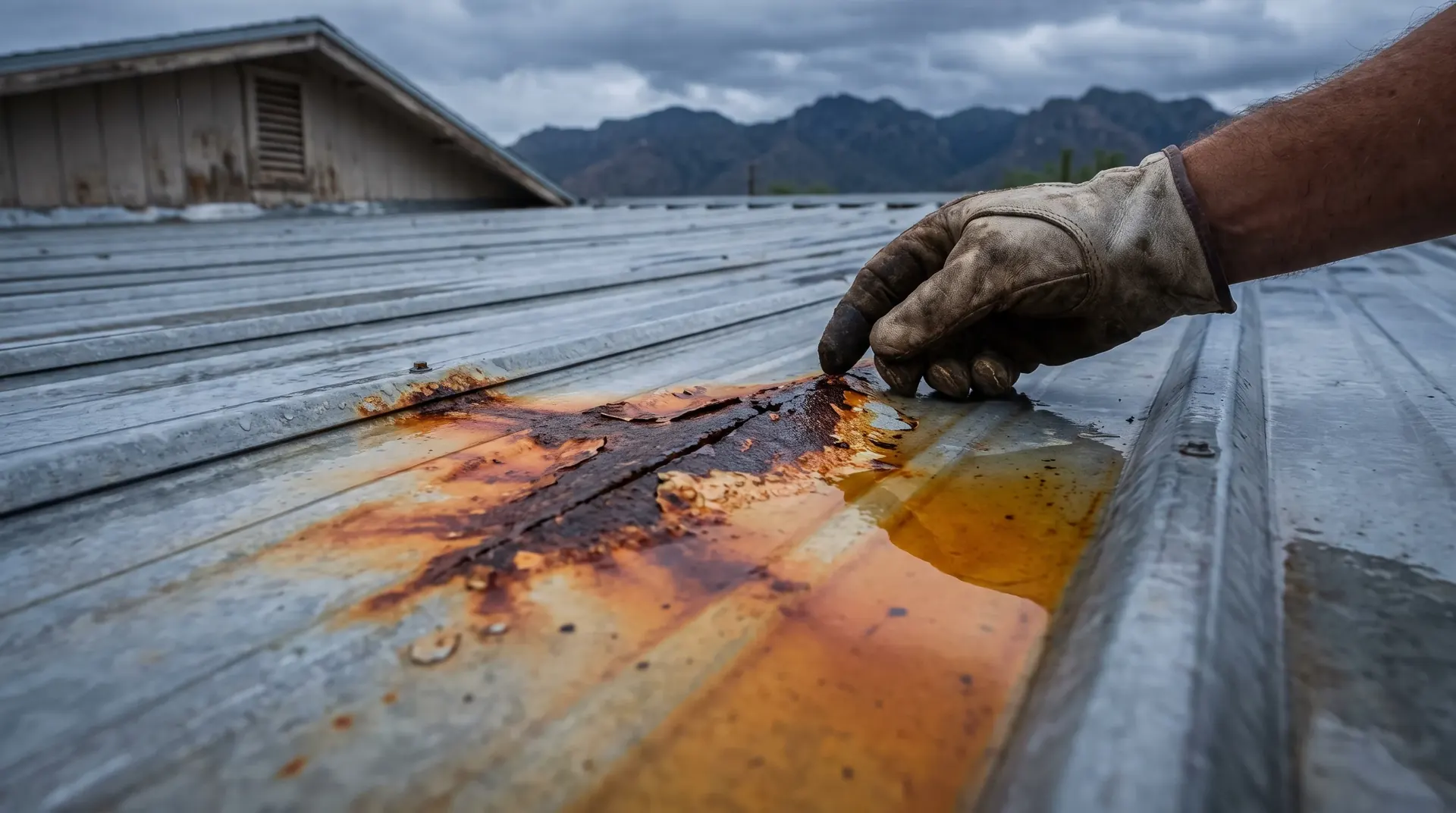
Rust is the reason more sound metal roofs get replaced than any other single thing, and most of the time it is the wrong reason.
Orange on a roof is alarming and it is very visible, so it makes an easy argument for a replacement quote. What it does not tell you by itself is whether the steel underneath is still there. That is the only question that matters, and the answer depends almost entirely on where the rust is rather than how much of it you can see.
Where rust starts, and why that location tells you everything
Coated steel roofing is protected by a factory applied finish. That finish covers the face of the panel completely, and it stops wherever somebody cut the panel or drilled through it.
So corrosion begins almost exclusively at three places. Cut edges, at the eave, the rake, around a valley and wherever a penetration was cut in. Drilled holes, meaning every fastener. And scratches, from a tool, a ladder foot, something dropped, or damage from installation day.
Rust at all three of those is normal ageing on a roof of any age. It is not a defect and it is not evidence of failure. It is the coating doing exactly what it was always going to do at the places it does not cover.
Rust blooming in the middle of an uncut, undrilled, unscratched panel is a different signal, because there was no obvious way in. That is worth taking seriously and it usually means the coating has failed more broadly or something has been sitting on the panel.
The three stages, which are genuinely different problems
Surface rust is a coating failure. The finish has broken and the exposed steel is oxidising, but the panel is still full thickness. Cleaned back to sound metal, treated and recoated, this roof carries on for years. This is most of what people are looking at when they get told they need a new roof.
Progressive corrosion is when it has been running for years, has crept back under the paint film and lifted it in flakes, and has started to reduce the actual thickness of the steel. Still repairable, but the window is closing and the repair means getting back to sound metal rather than painting over the colour.
Perforation is when it has gone through, or thinned the panel so far that it shortly will. Now there is a hole. No coating fixes a hole, and anything applied over one fails at the first storm that drives water at it. This is a section replacement or, if it is widespread, a roof that has genuinely finished.
The desert is slower, and it is not gentle
Tucson helps in one obvious way. No salt air, no persistent humidity, no weeks of standing wet. Corrosion here progresses considerably more slowly than it does on a coast, which is why plenty of desert metal roofs carry visible edge rust for a very long time without anything actually failing.
What the desert does instead is attack the thing that is supposed to prevent rust. The ultraviolet load here is about as high as it gets in the country, and it chalks a coating down over years until the protection is simply gone. Once that happens, the whole panel becomes vulnerable rather than just the cut edges.
There is also one specifically local trap. Everything on a Tucson roof dries within the hour, except where it cannot. Water standing in the low ribs of a nearly flat section, sitting behind a swamp cooler curb, or held against the panel by a mat of mesquite debris in a valley stays wet for days after a monsoon cell. Those spots corrode at a completely different rate from the rest of the roof, and they are exactly where nobody looks.
What it costs to leave it
Nothing, for a while. Then quite a lot, quite quickly.
Surface rust left alone stays cheap for years. What changes the economics is the transition from surface to progressive, because once the corrosion has crept under the film and started removing thickness you are on a different curve. The repair goes from cleaning and coating an area to replacing metal, and the difference is large.
The other cost is the one that arrives later. A perforated panel leaks, usually somewhere nobody notices immediately, and then the expense stops being about the roof at all and starts being about wet insulation, decking and framing.